Ottoman rule

Ottoman rule
Ottoman rule
Approximate reading time: 3 minutes



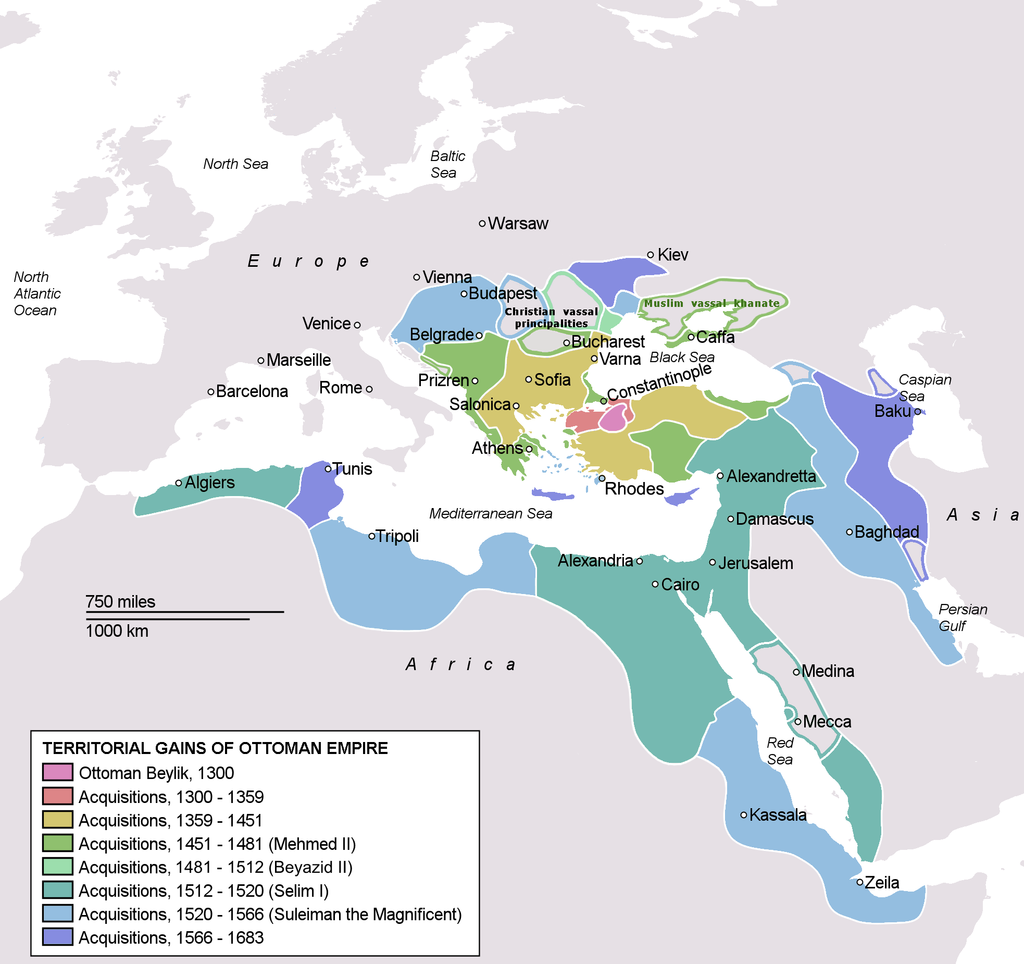
Ottoman rule refers to the period of Bulgaria's subjection to Turkish domination. It lasted five centuries, beginning in the fourteenth century and continuing until Bulgaria's Liberation in 1878. The country underwent major social, economic and cultural changes during this time.
The Ottoman Empire introduced fees and taxes affecting the population. The feudal system broke down and was replaced by the Ottoman timar system, under which timars, or feudal landholdings, were allocated to military officials.
The population suffered extremely severe blows: many men were killed, women were abducted and raped, children fell victim to the so-called blood tax, and many Bulgarians were displaced and subsequently assimilated. Remnants of the culture of the First and Second Bulgarian Empires were persecuted and destroyed, with only a small portion surviving through careful concealment. The Ottoman Empire showed no religious tolerance. Levels of tolerance varied over the centuries, yet many Bulgarians were killed for refusing to become Turks and adopt Islam. Conversion was voluntary or forced, collective or individual. Some converted Bulgarians preserved their language and customs. Today they are known as Bulgarian Muslims, or Pomaks. Others adopted Turkish while retaining many elements of Bulgarian custom in their daily lives.
During the centuries of foreign rule, Orthodox institutions became principal guardians of Bulgarian spiritual life and important channels of contact with the outside world in support of the national cause. An outstanding figure was Petar Bogdan, who wrote a History of Bulgaria in 1667. He played a key role in laying the foundations of the early Bulgarian National Revival and took part in preparations for the Chiprovtsi Uprising in 1688. His activity represented both efforts to preserve Bulgarian culture and active resistance to foreign rule. Bulgarian Catholic clergy also played an important role in maintaining the Bulgarian language and education. Filip Stanislavov, a prominent Catholic writer, was an important representative. In 1651, he published Abagar, the first printed Bulgarian book.
Last but not least was Paisius of Hilendar. He travelled through the Bulgarian lands and monasteries, gathering information from chronicles and writings about Bulgarian achievements. His sources included works by Patriarch Euthymius, the lives of Ilarion Makariopolski and Gabriel of Lesnovo, and writings by Caesar Baronius, Tsar Ivan Alexander, Abbot Mavro Orbini and others. In 1760–1762, he compiled a small collection of accounts called Slav-Bulgarian History. This work is considered one of the most influential factors in the emergence of Bulgarian national consciousness.
The Bulgarian struggle against Ottoman domination was long and bloody. Over hundreds of years, uprisings and rebellions broke out and were suppressed. Resistance evolved from the hajduk movement and numerous revolts to armed revolutionary bands and finally the national revolutionary movement, which produced the April Uprising of 1876 and Liberation in 1877–1878.
Share:


Rulers during this period
