The Lower Danube

The Lower Danube
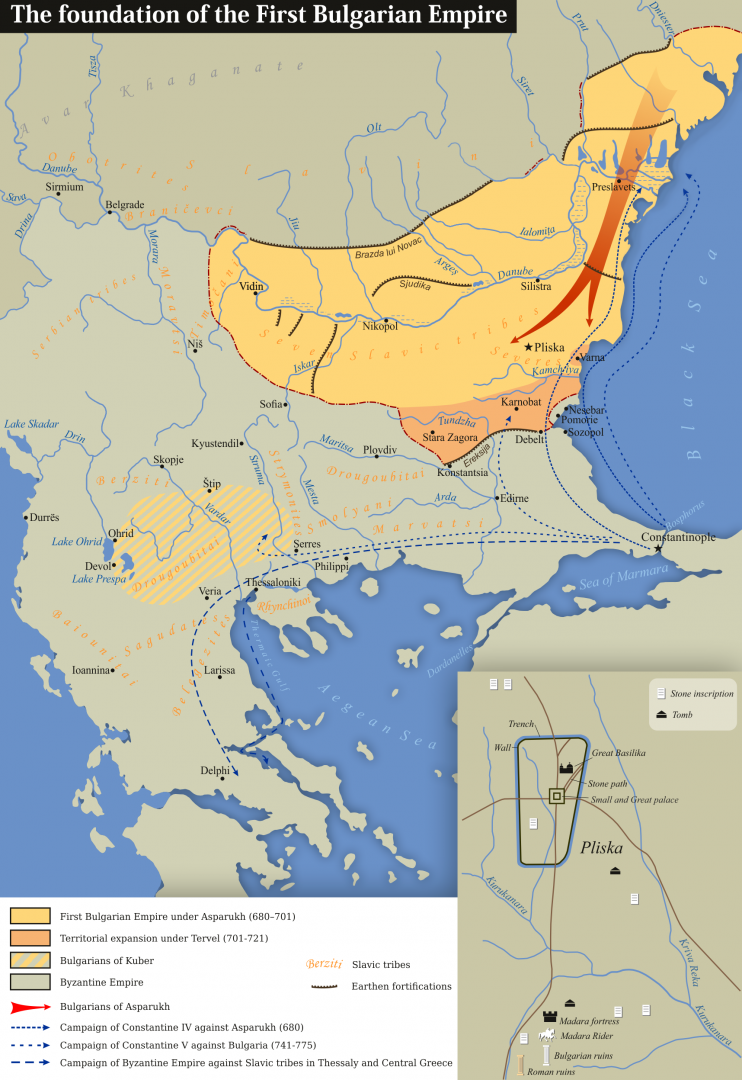
During the First Bulgarian Empire, which existed from 681 to 1018, the Lower Danube region in Bulgaria was of exceptional strategic importance. The Lower Danube served as a natural boundary to the south and south-east of the Bulgarian state and played an important role in the historical and military events of this period.
After Khan Asparuh founded the Bulgarian state in 681, the territories south of the Lower Danube were conquered by the Bulgarians following their successful military operations against Byzantium. The Danube became a natural northern defensive line, protecting the Bulgarian lands from attacks by the Avars, Franks and, later, Magyars. Important Bulgarian strongholds such as Silistra (Drastar), Novae, Sexaginta Prista (modern Ruse), Transmarisca (modern Tutrakan) and Apiaria (modern Ryahovo) stood along the river and served as military and administrative centres.
In the ninth and tenth centuries, particularly under Prince Boris I (852–889) and Tsar Simeon the Great (893–927), the fortified Danubian towns served both as defensive positions and as important trading centres. The Danube ports facilitated trade with Slavic, Byzantine and other Balkan peoples. Stone fortresses capable of withstanding long sieges were built during this period, along with Christian churches after the conversion to Christianity in 864.
During the reign of Tsar Peter (927–969), amid relative peace with Byzantium, the Lower Danube region experienced economic prosperity. This changed in the second half of the tenth century, when attacks by Prince Sviatoslav of Kiev (968–971) inflicted severe damage on the Bulgarian towns along the Danube. One of the greatest battles took place at Drastar: Sviatoslav's siege, during which the Bulgarians offered determined resistance. Later, following an alliance between the Byzantine emperor John Tzimiskes and the Bulgarians, Sviatoslav was defeated and driven back towards Kiev.
The Lower Danube remained a final defensive line during Tsar Samuel's wars with Byzantium in the late tenth and early eleventh centuries. After Preslav and the eastern territories fell under Byzantine rule, towns such as Vidin, Drastar and Nikopol remained important Bulgarian strongholds until Basil II's final conquest of the country in 1018.
The Lower Danube's significance was not confined to its military and economic role: the region was also a centre of cultural and spiritual life. Literary schools developed in some of the Danubian towns, and archaeological excavations in the region reveal monasteries, basilicas and early medieval settlements with well-organised urban structures.
Today, traces of that period can be seen in numerous archaeological reserves and museums along the Danube.
Share:


