Prespa

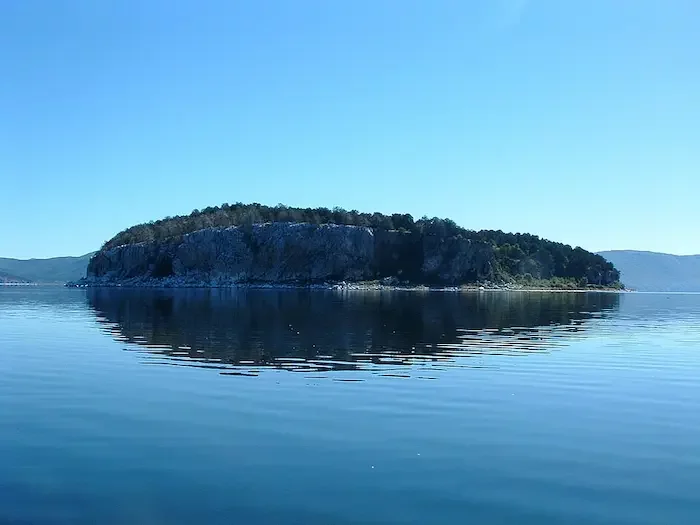
Prespa
Prespa was one of Bulgaria's most significant historical and cultural centres in the final period of the First Bulgarian Empire, particularly during the reign of Tsar Samuel (997–1014). This region, situated in present-day North Macedonia, was a centre of political power, culture and religion in the western part of the Bulgarian state.
Prespa lies in the western Balkan Peninsula, in the valley between the Jakupica and Šar Mountains. Rich in natural resources and strategically important for controlling routes towards the Adriatic Sea and Central Europe, it was exceptionally valuable to Bulgarian rulers.
After the death of Tsar Peter I in 927, the Bulgarian state gradually lost influence in the east, while the western territories saw the growing importance of rulers from the family of Count Vasiliy and, later, Tsar Samuel. After the Byzantine Empire captured Pliska and Preslav, Samuel established his residence in Prespa. This took place around 980, when the Byzantines invaded the Bulgarian lands.
In 976, an uprising against Byzantine rule began under Samuel and his brothers, who took power in the western regions. After a long and determined struggle against Emperor Basil II the Bulgar-Slayer, Samuel succeeded in restoring the Bulgarian state with its centre at Prespa.
Prespa remained the principal residence of Tsar Samuel and his dynasty until his tragic death in 1014, following the defeat at Belasitsa, where Byzantine forces dealt the Bulgarian army a severe blow. This event marked the beginning of the end of the First Bulgarian Empire.
Numerous churches and monasteries were built in Prespa, reflecting both Byzantine influence and Bulgarian artistic traditions. The most significant monument is the Church of St Achillius, known for its frescoes, which rank among the oldest and best-preserved examples of medieval Bulgarian painting. Prespa became a cultural centre where important documents were produced and literary activity developed. Books were preserved and copied here, helping to spread Bulgarian Orthodox culture and identity.
After the Byzantine Empire conquered Prespa following Samuel's death, the town lost its status as capital, but remained an important religious and cultural centre in subsequent centuries.
Today, Prespa lies within North Macedonia and Greece, but the town's historical importance as the capital of Samuel's Bulgaria is recognised and studied by historians and cultural institutions in Bulgaria and the wider region.
Share:


