Thrace

Thrace
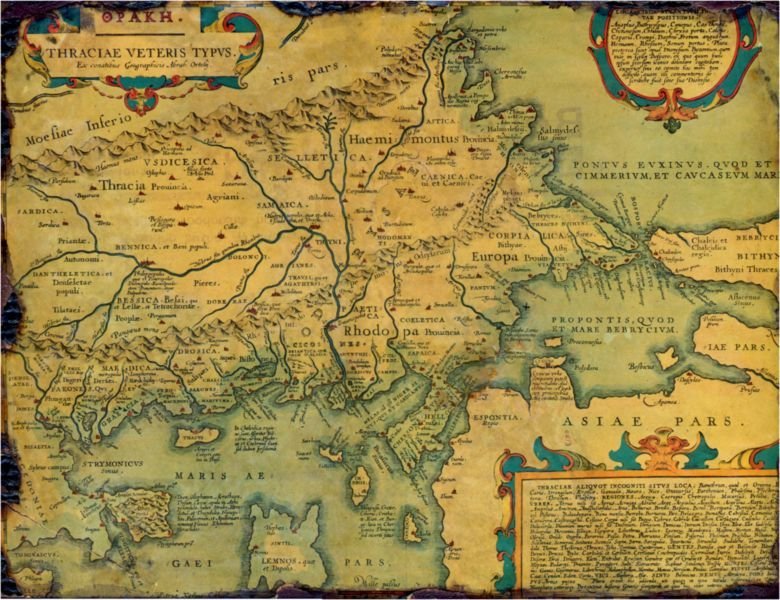
During the First Bulgarian Empire (681–1018), the territory of Thrace in Bulgaria was of great importance. Thrace lies south of the Danube and forms a significant part of the state's southern frontier. At that time, it encompassed a substantial portion of today's Bulgarian lands, including the areas around cities such as Sofia, Plovdiv and Stara Zagora.
As early as antiquity, Thrace was inhabited by Thracian tribes such as the Odrysians, Getae, Bessi and others. In the fifth century BC, the Odrysian Kingdom emerged: the first significant Thracian state, founded by King Teres I. King Sitalces (431–424 BC) greatly expanded its territory and formed alliances with Athens. The Thracians had a rich culture, including unique tombs such as the Kazanlak Tomb, gold treasures such as those of Panagyurishte and Valchitran, and mystical cults of gods such as Dionysus and Zalmoxis.
In the first century AD, the region was finally incorporated into the Roman Empire, forming the provinces of Thrace, Moesia, Dacia and Macedonia. Plovdiv, then Philippopolis, became a key city with Roman roads, amphitheatres and temples. Following the division of the Roman Empire in 395, Thrace remained within the Eastern Byzantine Empire.
In the sixth and seventh centuries, Thrace suffered attacks by Slavs and Bulgars, and many settlements were destroyed or depopulated. Following Khan Asparuh's victory over the Byzantines at Ongal (680–681), the First Bulgarian Empire was established. Khan Krum (803–814) fought fierce battles against Byzantium and succeeded in capturing Serdica (Sofia) in 809, consolidating Bulgarian authority in Western Thrace. Under him, Bulgaria's borders reached Adrianople (Edirne).
Under Tsar Simeon the Great (893–927), Thrace became the heart of Bulgarian culture and literature. Fortresses, churches and monasteries were built during this period in the region around Plovdiv and Bachkovo.
After Peter and Asen restored Bulgarian statehood in 1185, Thrace was soon liberated from the Byzantines. Tsar Kaloyan (1197–1207) defeated the Latins at Adrianople in 1205, consolidating control over Eastern Thrace. During the reign of Tsar Ivan Asen II (1218–1241), Plovdiv, Stanimaka and other important Thracian towns were Bulgarian, and the state reached the Aegean coast.
Following the defeat at Chernomen in 1371, Thrace gradually fell under Ottoman rule. The region retained its importance during the Ottoman period: many Bulgarians in Thrace took part in uprisings, revolutionary committees and the struggle for an independent church. In the nineteenth century, Plovdiv became a centre of the Bulgarian National Revival, with active educational and literary life.
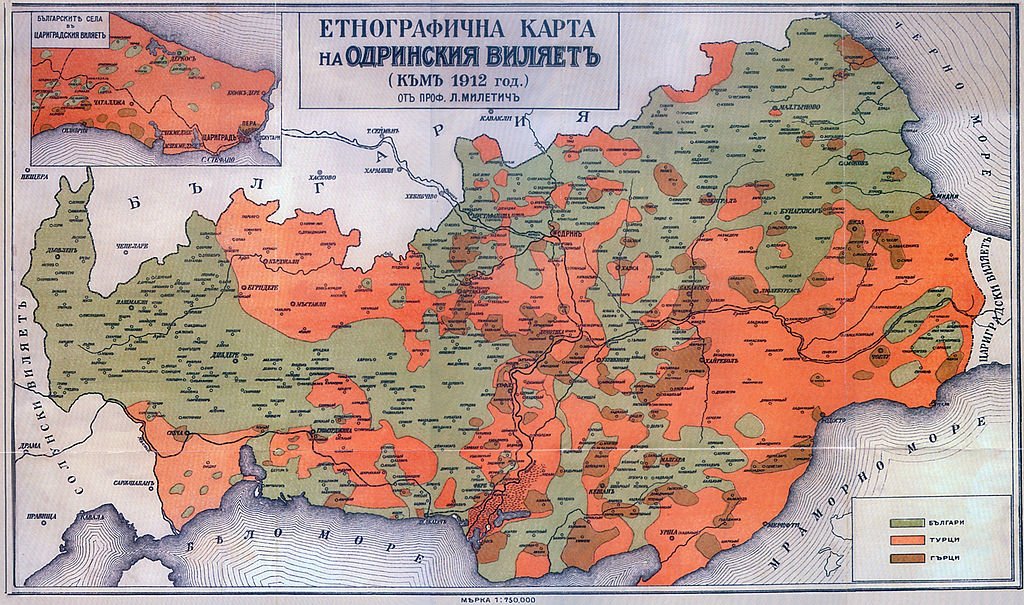
After the Liberation in 1878, Eastern Rumelia, which included Southern Thrace, was an autonomous province, but it joined the Principality of Bulgaria through the Unification of 1885. During the First Balkan War (1912), the Bulgarian army liberated all of Thrace from the Ottomans, including Edirne, but Bulgaria lost much of it after the Second Balkan War (1913).
After the First World War, under the Treaty of Neuilly (1919), Southern Thrace, now in Greece and Turkey, was permanently separated from Bulgaria. Many Thracian Bulgarians were expelled or fled north, settling in the regions of Plovdiv, Burgas and Haskovo.
During the Third Bulgarian Kingdom and the Kingdom of Bulgaria, Thrace remained a cultural and economic centre. Modern cities such as Plovdiv, Haskovo, Stara Zagora and Yambol are important industrial, cultural and educational centres.
Share:


