Lerin

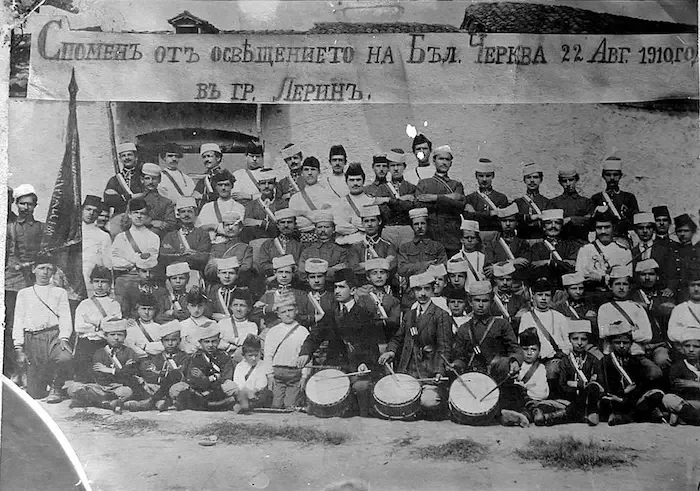
Lerin
Lerin, now known as Florina in northern Greece, is a town with deep historical roots and particular significance for Bulgarian history, especially during the Middle Ages and later periods.
The territory around Lerin was inhabited by ancient Thracian tribes and later entered the Roman Empire's sphere. In the early Middle Ages, after the Roman Empire broke apart, the area came under Byzantine control.
In the ninth and tenth centuries, during the First Bulgarian Empire, Lerin and its surroundings were a recurring focus of the Bulgarian-Byzantine wars. Tsar Simeon the Great (893–927) succeeded in extending Bulgarian possessions to this region. At that time, Lerin was incorporated into the Bulgarian state as part of a diocese of the Bulgarian Church.
During the Second Bulgarian Empire in the twelfth to fourteenth centuries, Lerin again became a zone of fierce fighting between the Bulgarians and Byzantium. The town was an important centre of Bulgarian spiritual life, known for the Monastery of St John the Theologian, which served as a spiritual stronghold for Bulgarians.
In the early fourteenth century, Lerin became the scene of clashes between the Bulgarian tsar Michael Shishman and the Byzantine Empire. In 1330, Michael Shishman campaigned against Byzantium and fought at the Battle of Velbazhd, with the area around Lerin of strategic importance in these conflicts.
After Bulgaria fell under Ottoman rule in the fourteenth century, Lerin and its surroundings remained within the Ottoman Empire, with a Bulgarian population preserving its language and traditions. The Bulgarian National Revival emerged and developed here in the nineteenth century.
Bulgarian National Revival figures worked in the Lerin region, including Vasil Kanchov (1850–1902), who collected ethnographic and historical information on its Bulgarian population. He was one of the most significant researchers documenting the Bulgarian presence in Macedonia, including Lerin.
During the Balkan Wars of 1912–1913, the Bulgarian army succeeded in capturing Lerin and its surroundings, and the town became an important military and administrative centre. Serious territorial disputes arose during this period between Bulgaria, Greece and Serbia.
After the First World War, as a result of the Treaty of Neuilly in 1919, Lerin remained within Greece's borders, despite its substantial Bulgarian population, which preserved its identity and cultural traditions.
Share:


