The Ohrid Region

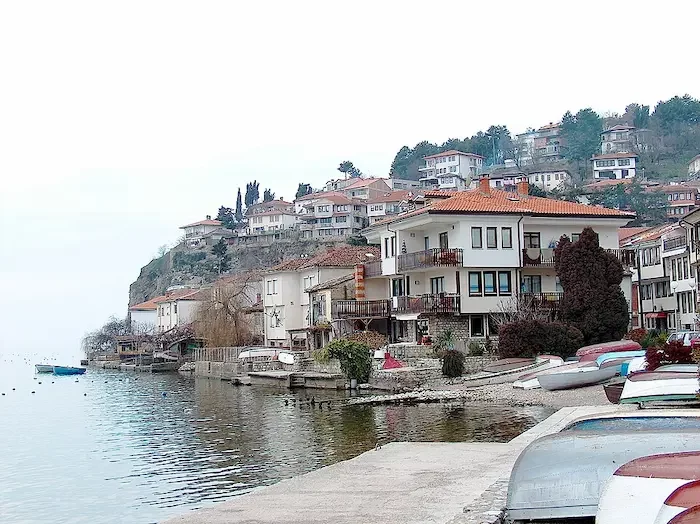
The Ohrid Region
The Ohrid region is an important area around the modern city of Ohrid and Lake Ohrid, on the border between present-day North Macedonia and Albania. During the Middle Ages, it became one of the most important political, military and spiritual centres of Bulgarian statehood, particularly in the late tenth and early eleventh centuries.
Ohrid and its surroundings have been inhabited since antiquity. In the first millennium BC, Illyrian and Thracian tribes lived in the area. During Roman expansion in the first century BC, it became part of the province of Macedonia and later of the Byzantine Empire. In late antiquity, the town was known as Lychnidos, an important settlement on the Roman Via Egnatia.
With the expansion of the First Bulgarian Empire under Khan Krum (803–814), and particularly Tsar Presian (836–852), the Bulgarians reached the Ohrid region. Under Prince Boris I (852–889), following the adoption of Christianity in 864, Christian bishoprics became established in the region and Ohrid began to acquire spiritual importance.
Ohrid's greatest flourishing came during the reign of Tsar Samuel (997–1014). After the capital Preslav fell under Byzantine rule in 971, Samuel, together with his brothers David, Moses and Aaron, established an independent centre of resistance to Byzantium, shifting government to the western Bulgarian lands, chiefly Ohrid and Prespa.
Around 990–997, Samuel proclaimed himself a sovereign ruler, and Ohrid became the capital of the Bulgarian state. After Patriarch German died in 1015, the Bulgarian Church was permanently transferred to Ohrid and became a patriarchate, the Bulgarians' highest spiritual institution.
The Church of St Sophia in Ohrid is considered to have been the seat of this patriarchate. Numerous other churches and monasteries were built in the city, the best known being St Naum, St Clement and St Panteleimon, which became centres of literature and education.
The decline of Samuel's state began after the Battle of Belasitsa on 29 July 1014, in which he suffered a crushing defeat at the hands of the Byzantine emperor Basil II. In 1018, after the death of the dynasty's last tsar, Ivan Vladislav, the Bulgarian state was finally conquered by Byzantium.
Ohrid lost its political independence, but the Byzantines preserved the Church's status by transforming it into the Archbishopric of Ohrid. Although subordinate to Constantinople, it preserved Bulgarian language and traditions, making it an important spiritual and cultural pillar of Bulgarian identity over the centuries.
During the Second Bulgarian Empire (1185–1396), Ohrid was not entirely within the Bulgarian state's borders. Nevertheless, ties between Ohrid and Tarnovo remained strong. The archbishopric retained its influence in the south-western Bulgarian lands. Ohrid's clergy continued to train priests, produce literature and preserve Bulgarian cultural traditions.
After the Balkans fell under Ottoman rule in the fourteenth and fifteenth centuries, the Archbishopric of Ohrid continued to exist under Ottoman control. In 1767, a firman of Sultan Mustafa III finally abolished it and subordinated it to the Patriarchate of Constantinople, an act forming part of the process of Hellenisation.
In the eighteenth and nineteenth centuries, the Ohrid region played an active role in the Bulgarian National Revival. The local population struggled against the Hellenised clergy and demanded the restoration of Bulgarian in worship and schools. In 1870, when the Bulgarian Exarchate was established, a majority of the inhabitants of Ohrid and its region expressed their wish to belong to the Bulgarian Church.
After the Balkan Wars of 1912–1913, the Ohrid region became part of the Kingdom of Serbia and later Yugoslavia. Nevertheless, Bulgarian cultural memory of the region remained alive. During the Second World War (1941–1944), the Ohrid region temporarily came under Bulgarian administration, but after the war it was again incorporated into Yugoslavia.
Today, the city of Ohrid and Lake Ohrid form a UNESCO World Cultural Heritage Site. Although part of the Republic of North Macedonia, Ohrid remains a symbol of Bulgarian spiritual and cultural greatness, associated with the work of Saints Clement and Naum, Tsar Samuel and the Patriarchate of Ohrid.
Share:


