THE FACES OF THE REPUBLIC

Presidents
& prime ministers

The people, terms and transitions that have shaped the government of modern Bulgaria.

Explore the timeline
19902026From transition to today

CURRENT OFFICEHOLDERS

Two institutions. Different responsibilities. A shared history.

01

The head of stateThe presidency and its terms of office.

02

Leading the governmentElected and caretaker governments in one timeline.

About the informationSources and scope ↗

THROUGH THE YEARS

People and terms of office

Follow the succession.
Find out who held office in a given year.

33 profiles by institution

Every term has a story

Includes the Chairman (President) of the Republic and the acting heads of state in 1990.

2026
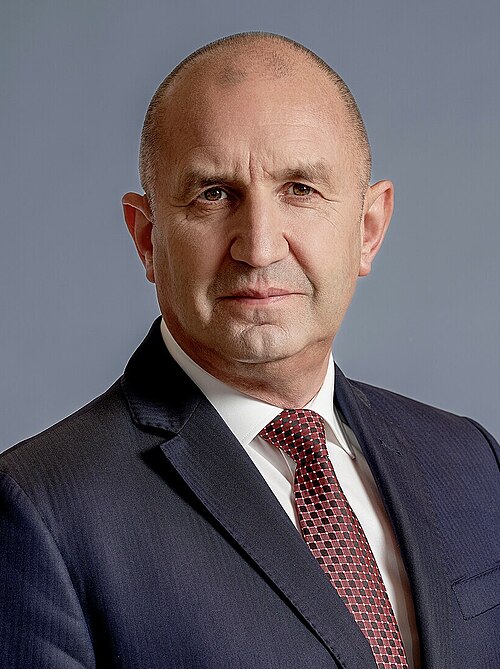
Portrait of Rumen Radev
Prime ministerIn office2026 — present

Rumen Radev

Military pilot and former commander of the Bulgarian Air Force. President from 2017 to January 2026; elected prime minister on 8 May 2026.

Read the biography of Rumen Radev →

Before entering politics, his career was in military aviation. He held flying and command positions and became commander of the Bulgarian Air Force.

Presidency · biographies ↗
Public service and terms 1

Public service and historical context

As president, he appointed Ognyan Gerdzhikov’s caretaker cabinet in 2017 and later those of Stefan Yanev and Galab Donev. His presidential powers ended early in January 2026. On 8 May that year, parliament elected him prime minister, a separate office with different constitutional powers.

Terms in office

  1. Radev government — present

Portrait: Government of Bulgaria · Wikimedia Commons · CC BY 4.0. Image fitted to the frame.
2026
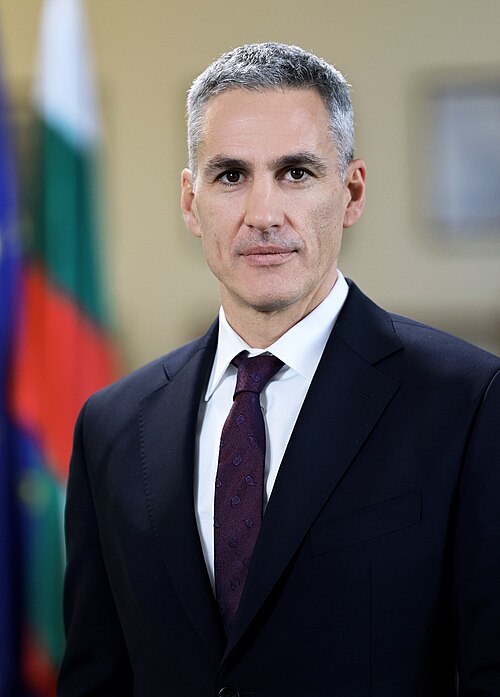
Portrait of Andrey Gyurov
Caretaker government2026

Andrey Gyurov

Economist. Appointed caretaker prime minister by presidential decree on 19 February 2026.

Read the biography of Andrey Gyurov →

An economist with a doctorate from the University of Vienna, his career includes banking analysis, credit-risk management and teaching finance. He worked in banking in the United States and Austria and at the American University in Bulgaria.

Parliamentary hearing · copy at AppointmentsBG (PDF) ↗
Public service and terms 1

Public service and historical context

President Iliana Iotova appointed him by decree in February 2026. His cabinet included separate deputy prime-minister portfolios for justice and European funds. His caretaker term ended with the election of Rumen Radev’s regular government in May, making it a brief transitional administration.

Terms in office

  1. Caretaker government —

Portrait: Unknown authorUnknown author · Wikimedia Commons · CC BY 4.0. Image fitted to the frame.
2026
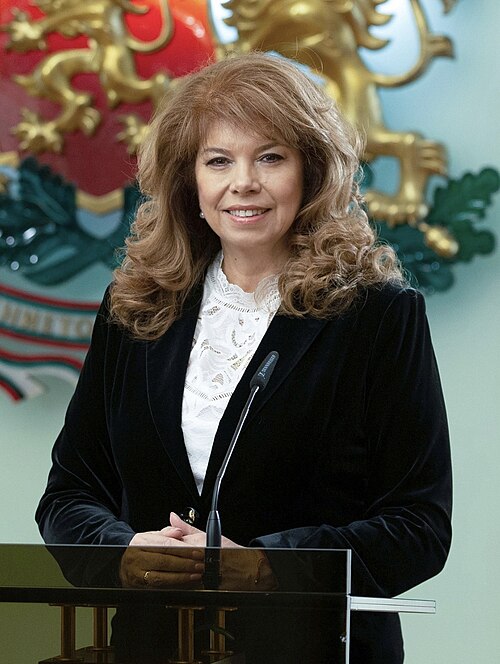
Portrait of Iliana Iotova
PresidentIn office2026 — present

Iliana Iotova

Vice president from 2017. Assumed the presidency on 23 January 2026 following the early termination of Rumen Radev’s presidential term. Won the presidential election on 1 November 2026; her new five-year term begins on 22 January 2027.

Read the biography of Iliana Iotova →

She studied Bulgarian philology at Sofia University and worked as a reporter, editor and presenter at Bulgarian National Television. Before becoming vice president, she served in the National Assembly and European Parliament, working on areas including consumer protection and civil liberties.

Presidency · Iliana Iotova ↗
Public service and terms 1

Public service and historical context

She was elected vice president alongside Rumen Radev in 2016 and again in 2021. In January 2026, she assumed presidential duties following the early termination of his term. As head of state, she appointed Andrey Gyurov’s caretaker government by decree on 19 February 2026. On 1 November 2026, she won the presidential runoff alongside Kiril Valchev; the Central Election Commission declared them elected president and vice president on 3 November. Her new five-year term begins on 22 January 2027.

Terms in office

  1. Succeeded to the presidency as vice president — present

Portrait: Unknown authorUnknown author · Wikimedia Commons · CC BY 2.5 bg. Image fitted to the frame.

2025
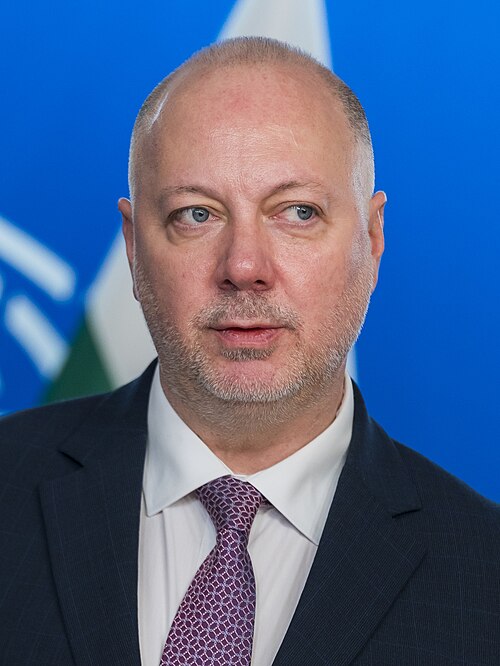
Portrait of Rosen Zhelyazkov
Prime minister2025 — 2026

Rosen Zhelyazkov

Lawyer and former Chairman of the National Assembly. Led the government from January 2025 to February 2026.

Read the biography of Rosen Zhelyazkov →

Before his premiership, he served in several National Assemblies. From April 2023 to April 2024, he was speaker of the 49th National Assembly, adding parliamentary leadership to his experience in the executive.

National Assembly · Rosen Zhelyazkov ↗
Public service and terms 1

Public service and historical context

In July 2025, during his government, the Council of the EU adopted the final legal acts for Bulgaria’s euro adoption. The country joined the euro area on 1 January 2026. This completed years of preparation involving governments, the BNB and European institutions.

Terms in office

  1. Zhelyazkov government —

Portrait: Daina Le Lardic - European Parliament · Wikimedia Commons · European Parliament. Image fitted to the frame.

2024
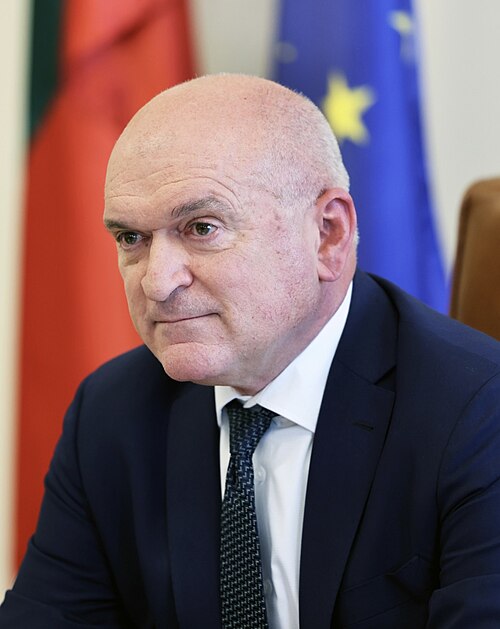
Portrait of Dimitar Glavchev
Caretaker government2024 — 2025

Dimitar Glavchev

Former Chairman of the National Assembly and of the Bulgarian National Audit Office. Led two caretaker governments in 2024–2025.

Read the biography of Dimitar Glavchev →

An economist, certified public accountant and registered auditor, he has extensive experience in financial control and served in several parliaments. In July 2023, he was elected chairman of the National Audit Office.

National Audit Office · Dimitar Glavchev ↗
Public service and terms 2

Public service and historical context

He led two successive caretaker cabinets appointed in April and August 2024. During the second, checks on people at internal land borders with the Schengen area were lifted from 1 January 2025. This followed the earlier removal of air and sea border checks in March 2024.

Terms in office

  1. First caretaker government —
  2. Second caretaker government —

Portrait: Unknown authorUnknown author · Wikimedia Commons · CC BY 4.0. Image fitted to the frame.
2023
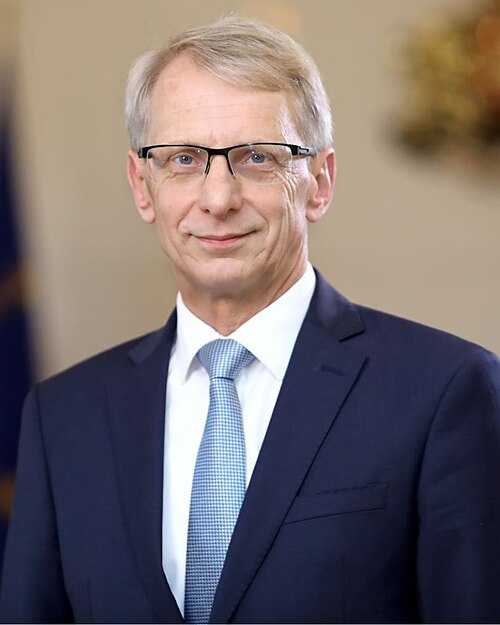
Portrait of Nikolai Denkov
Prime minister2023 — 2024

Nikolai Denkov

Scientist and member of the Bulgarian Academy of Sciences. Prime minister from June 2023 to April 2024.

Read the biography of Nikolai Denkov →

A professor of physical chemistry at Sofia University, he researches foams, emulsions and dispersed systems. He has worked in research and industrial laboratories abroad. Before becoming prime minister, he served as deputy education minister and education minister.

Sofia University · Nikolai Denkov ↗
Public service and terms 1

Public service and historical context

On 31 March 2024, near the end of his government, checks on people at Bulgaria’s internal air and sea borders with the Schengen area were lifted. This was the first stage of accession. Internal land-border checks were lifted later, on 1 January 2025, under the next cabinet.

Terms in office

  1. Denkov government —

Portrait: Unknown author · Wikimedia Commons · CC BY 4.0. Image fitted to the frame.
2023
GD
Caretaker government2022 — 2023

Galab Donev

Former Minister of Labour and Social Policy. Led two successive caretaker governments in 2022–2023.

Read the biography of Galab Donev →

Trained in law and finance, he has professional experience in labour and social policy. He held ministerial posts in 2017 and 2021 and worked in the presidential administration on social policy, demography and healthcare.

Council of Ministers · Galab Donev ↗
Public service and terms 2

Public service and historical context

On 1 October 2022, during his first caretaker government, the Greece–Bulgaria gas interconnector entered operation. It provides access to the Southern Gas Corridor and additional options for diversifying supplies. This was the concluding stage of an infrastructure project prepared and built under more than one government.

Terms in office

  1. First caretaker government —
  2. Second caretaker government —
2022
Portrait of Rumen Radev
President2017 — 2026

Rumen Radev

Military pilot and former commander of the Bulgarian Air Force. President from 2017 to January 2026; elected prime minister on 8 May 2026.

Read the biography of Rumen Radev →

Before entering politics, his career was in military aviation. He held flying and command positions and became commander of the Bulgarian Air Force.

Presidency · biographies ↗
Public service and terms 2

Public service and historical context

As president, he appointed Ognyan Gerdzhikov’s caretaker cabinet in 2017 and later those of Stefan Yanev and Galab Donev. His presidential powers ended early in January 2026. On 8 May that year, parliament elected him prime minister, a separate office with different constitutional powers.

Terms in office

  1. First presidential term —
  2. Second term · ended early —

Portrait: Government of Bulgaria · Wikimedia Commons · CC BY 4.0. Image fitted to the frame.
2021
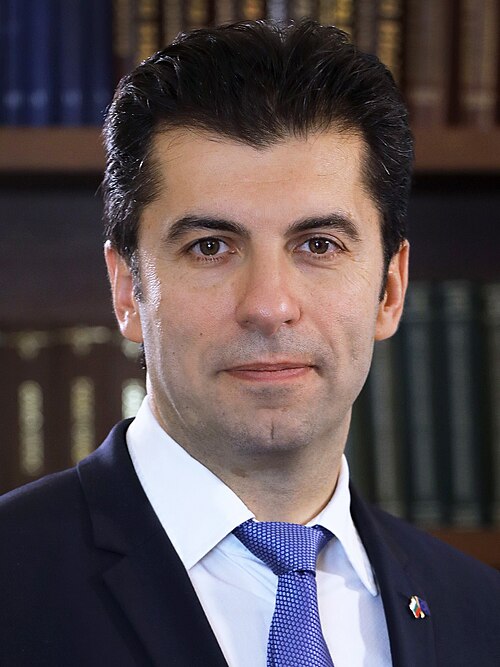
Portrait of Kiril Petkov
Prime minister2021 — 2022

Kiril Petkov

Co-founder of We Continue the Change. Led the coalition government in 2021–2022.

Read the biography of Kiril Petkov →

He studied finance at the University of British Columbia and business administration at Harvard. An entrepreneur, he participated in university initiatives on economic strategy and applied research. In 2021 he served as caretaker economy minister.

National Assembly · Kiril Petkov’s biography ↗
Public service and terms 1

Public service and historical context

During his government, the Council of the EU approved the assessment of Bulgaria’s recovery and resilience plan in May 2022. The plan combines post-pandemic reforms and investments, including green and digital measures. Approval marked the start of implementation, rather than evidence that all planned projects had been completed.

Terms in office

  1. Petkov government —

Portrait: Government of Bulgaria · Wikimedia Commons · CC BY 4.0. Image fitted to the frame.
2021
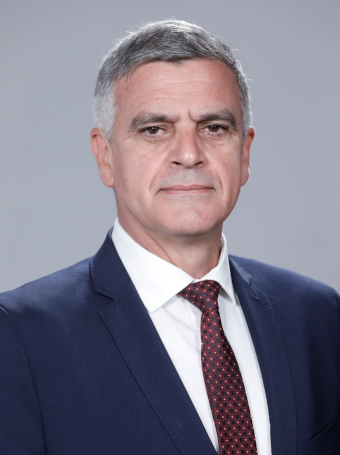
Portrait of Stefan Yanev
Caretaker government2021

Stefan Yanev

Military officer and politician. Led two successive caretaker governments in 2021.

Read the biography of Stefan Yanev →

He graduated from the artillery military school in Shumen, Bulgaria’s military academy and the National War College in Washington. He worked in defence policy, served as defence attaché in the United States and was defence minister in the 2017 caretaker cabinet.

Presidency · Stefan Yanev ↗
Public service and terms 2

Public service and historical context

His two caretaker governments formed part of the succession of political transitions in 2021. In October, during his second cabinet, Bulgaria formally submitted its recovery and resilience plan to the European Commission. Submission was one stage of the process; European approval followed in 2022 under the next government.

Terms in office

  1. First caretaker government —
  2. Second caretaker government —

Portrait: Unknown authorUnknown author · Wikimedia Commons · CC BY 2.5 bg. Image fitted to the frame.

2017
Portrait of Boyko Borisov
Prime minister2009 — 2021

Boyko Borisov

Leader of GERB. Headed three separate governments between 2009 and 2021.

Read the biography of Boyko Borisov →

Before becoming prime minister, he was mayor of Sofia. His three cabinets were separate administrations with differing parliamentary support, with both caretaker and regularly elected governments serving between them.

Sofia Municipality · former mayors ↗
Public service and terms 3

Public service and historical context

During his third term, Bulgaria held its first presidency of the Council of the EU, from January to June 2018, with the Western Balkans among its priorities. The lev entered ERM II in July 2020, and close cooperation with the ECB on banking supervision began in October.

Terms in office

  1. First government —
  2. Second government —
  3. Third government —

Portrait: European People's Party · Wikimedia Commons · CC BY 2.0. Image fitted to the frame.

2017
Portrait of Ognyan Gerdzhikov
Caretaker government2017

Ognyan Gerdzhikov

Lawyer and former Chairman of the National Assembly. Led the caretaker government in 2017.

Read the biography of Ognyan Gerdzhikov →

A professor of civil and commercial law at Sofia University, he has authored textbooks and academic works. Before his caretaker premiership, he was speaker of the 39th National Assembly and an NDSV member of parliament.

Presidency · Ognyan Gerdzhikov ↗
Public service and terms 1

Public service and historical context

Rumen Radev appointed him at the beginning of his first presidential term. The government took over following the dissolution of the 43rd National Assembly, with the election scheduled for 26 March 2017. His caretaker premiership was a distinct episode from his earlier legislative and academic work.

Terms in office

  1. Caretaker government —

Portrait: Press Service of the Prime Minister of the Republic of Bulgaria / Press Service of the President of the Republic of Bulgaria · Wikimedia Commons · CC BY 2.5 bg. Image fitted to the frame.

2014
Portrait of Georgi Bliznashki
Caretaker government2014

Georgi Bliznashki

Professor of constitutional law. Served as caretaker prime minister in 2014.

Read the biography of Georgi Bliznashki →

He graduated in law from Sofia University and developed an academic career in constitutional law. His doctoral research examined the legal status of the National Assembly’s standing committees.

Presidency · Georgi Bliznashki ↗
Public service and terms 1

Public service and historical context

President Rosen Plevneliev appointed him after the 42nd National Assembly failed to form a new cabinet. The immediate task was to prepare the early election on 5 October 2014. Its caretaker status distinguishes this administration from a government serving a full term with its own stable parliamentary majority.

Terms in office

  1. Caretaker government —

Portrait: president.bg · Wikimedia Commons · CC BY 2.5 bg. Image fitted to the frame.

2013
Portrait of Plamen Oresharski
Prime minister2013 — 2014

Plamen Oresharski

Economist and former Minister of Finance. Prime minister from 2013 to 2014.

Read the biography of Plamen Oresharski →

Parliament elected him prime minister on 29 May 2013 with the support of 120 MPs. The approved cabinet included a separate Ministry of Investment Planning, changing the structure of the executive at the time.

National Assembly · the Oresharski government ↗
Public service and terms 1

Public service and historical context

The term was marked by prolonged public protests after parliament elected Delyan Peevski to head the State Agency for National Security on the prime minister’s proposal on 14 June 2013. Parliament reversed the appointment on 19 June. This episode is central to understanding the political crisis and relations between the government, parliament and protesters.

Terms in office

  1. Oresharski government —

Portrait: Ministry of Finance of Republic of Bulgaria · Wikimedia Commons · Public domain. Image fitted to the frame.

2013
Portrait of Marin Raykov
Caretaker government2013

Marin Raykov

Diplomat. Served as caretaker prime minister in the spring of 2013.

Read the biography of Marin Raykov →

A career diplomat, he combined the premiership with the post of foreign minister in 2013. His diplomatic career also includes service as deputy foreign minister.

MFA · press release via BTA ↗
Public service and terms 1

Public service and historical context

The caretaker cabinet governed for 78 days and prepared the transition to a new parliament and elected government. Its measures included rules for managing the funds of companies with more than 50% state ownership and public councils at ministries. These actions are recorded in the Presidency’s May 2013 report.

Terms in office

  1. Caretaker government —

Portrait: MFA Bulgaria from България · Wikimedia Commons · CC BY 2.0. Image fitted to the frame.

2012
Portrait of Rosen Plevneliev
President2012 — 2017

Rosen Plevneliev

Engineer and former Minister of Regional Development. Elected president in 2011, with Margarita Popova as vice president.

Read the biography of Rosen Plevneliev →

His professional career began in engineering and private business. Before becoming president, he headed the Ministry of Regional Development and Public Works.

Presidency · biographies ↗
Public service and terms 1

Public service and historical context

He appointed two caretaker governments, led by Marin Raykov in 2013 and Georgi Bliznashki in 2014. In 2015, his decree scheduled the national referendum on remote electronic voting. Holding the referendum did not itself introduce such a system for elections.

Terms in office

  1. Presidential term —

Portrait: Administration to the President of the Republic of Bulgaria · Wikimedia Commons · CC BY-SA 3.0. Image fitted to the frame.

2007
Portrait of Georgi Parvanov
President2002 — 2012

Georgi Parvanov

Historian. The first Bulgarian president to be re-elected for a second consecutive five-year term.

Read the biography of Georgi Parvanov →

He studied history at Sofia University and completed a doctorate. Before becoming president, he was an MP and leader of the Bulgarian Socialist Party.

Presidency · biographies ↗
Public service and terms 2

Public service and historical context

He initiated the Bulgarian Christmas charity campaign supporting children’s healthcare, continued by subsequent presidents. During his two terms, Bulgaria joined NATO in 2004 and the EU in 2007, following work by successive governments, parliaments and the presidency.

Terms in office

  1. First term —
  2. Second term —

Portrait: Katarzyna Czerwińska · Wikimedia Commons · CC BY-SA 3.0 pl. Image fitted to the frame.

2005
Portrait of Sergey Stanishev
Prime minister2005 — 2009

Sergey Stanishev

BSP leader. Led the coalition government of the BSP, NDSV and MRF from 2005 to 2009.

Read the biography of Sergey Stanishev →

A historian with a doctorate from Moscow State University, he was an MP and BSP leader before becoming prime minister. After his premiership, he continued his political career at European level, including service as an MEP.

Sergei Stanishev · biography ↗
Public service and terms 1

Public service and historical context

On 1 January 2007, during his government, Bulgaria became an EU member, completing an accession process pursued by successive administrations. Membership also changed the institutional framework: the BNB joined the European System of Central Banks, and Bulgaria began participating in the Union’s common policies and institutions.

Terms in office

  1. Stanishev government —

Portrait: © European Union, 1998 – 2026 · Wikimedia Commons · European Parliament. Image fitted to the frame.

2001
Portrait of Simeon Saxe-Coburg-Gotha
Prime minister2001 — 2005

Simeon Saxe-Coburg-Gotha

Former tsar of Bulgaria and leader of the National Movement Simeon II (NDSV). Led the NDSV–MRF coalition government from 2001 to 2005.

Read the biography of Simeon Saxe-Coburg-Gotha →

Having been Bulgaria’s monarch as a child, he returned to public office as an elected prime minister. Early in his premiership, he held talks with NATO on Bulgaria’s application and the reforms required for membership.

NATO · meeting with Simeon Saxe-Coburg-Gotha, 2001 ↗
Public service and terms 1

Public service and historical context

Bulgaria joined NATO on 29 March 2004. The EU Accession Treaty was signed in 2005, with membership beginning in 2007 under the next government. Both milestones formed part of a long process involving several administrations and institutions.

Terms in office

  1. Saxe-Coburg-Gotha government —

Portrait: EU2018BG Bulgarian Presidency · Wikimedia Commons · CC BY 2.0. Image fitted to the frame.

1997
Portrait of Ivan Kostov
Prime minister1997 — 2001

Ivan Kostov

Economist and UDF leader. Prime minister of the United Democratic Forces government from 1997 to 2001.

Read the biography of Ivan Kostov →

An economist and university lecturer also trained in mathematics, he served as finance minister in the governments of Dimitar Popov and Philip Dimitrov before leading the UDF and becoming prime minister.

National Assembly · Ivan Kostov’s election ↗
Public service and terms 1

Public service and historical context

The currency board took effect on 1 July 1997, pegging the lev to the Deutsche Mark and changing the rules for issuing money. In 1998, the government adopted a national EU accession strategy. These measures placed economic stabilisation and European integration at the centre of its programme.

Terms in office

  1. Kostov government —

Portrait: Gabriel VanHelsing · Wikimedia Commons · CC BY-SA 3.0. Image fitted to the frame.

1997
Portrait of Stefan Sofiyanski
Caretaker government1997

Stefan Sofiyanski

Mayor of Sofia and a politician from the Union of Democratic Forces. Appointed caretaker prime minister in February 1997.

Read the biography of Stefan Sofiyanski →

An economist by training, he worked in research and public administration and headed the Committee of Posts and Telecommunications. Elected mayor of Sofia in 1995, he served briefly as caretaker prime minister during his municipal career.

Sofia Municipality · former mayors ↗
Public service and terms 1

Public service and historical context

His cabinet took office at the height of the 1997 crisis and prepared the early parliamentary election. In February, Bulgaria formally applied to join NATO. Preparations for a currency board developed during this transitional phase, but the board itself took effect on 1 July under the next government.

Terms in office

  1. Caretaker government —

Portrait: Unknown authorUnknown author · Wikimedia Commons · CC BY 2.5 bg. Image fitted to the frame.

1997
Portrait of Petar Stoyanov
President1997 — 2002

Petar Stoyanov

Lawyer. Won the presidential election in 1996 and took office on 22 January 1997.

Read the biography of Petar Stoyanov →

He graduated in law from Sofia University. Before his presidency, he served as deputy justice minister and a UDF member of parliament.

Presidency · biographies ↗
Public service and terms 1

Public service and historical context

He took office during the severe political and economic crisis of 1997. On 4 February he mediated an agreement to hold early elections. Early in his term he also publicly stated Bulgaria’s wish to join NATO, a process completed after his presidency ended.

Terms in office

  1. Presidential term —

Portrait: Unknown authorUnknown author · Wikimedia Commons · CC BY 2.5 bg. Image fitted to the frame.

1995
Portrait of Zhan Videnov
Prime minister1995 — 1997

Zhan Videnov

Chairman of the Bulgarian Socialist Party (BSP). Led the government elected after the 1994 parliamentary election.

Read the biography of Zhan Videnov →

He headed a government backed by the Democratic Left’s parliamentary majority. His term coincided with continuing economic restructuring and mounting problems in the banking system and state-owned enterprises.

BNB · 1996 annual report (PDF) ↗
Public service and terms 1

Public service and historical context

Bulgaria applied for EU membership in 1995. At the same time, his administration ended against a backdrop of deep financial and political crisis. The BNB documents bank failures, the depreciation of the lev and hyperinflation in 1996–1997; these processes continued during the change of government.

Terms in office

  1. Videnov government —

Portrait: Unknown authorUnknown author · Wikimedia Commons · CC BY 4.0. Image fitted to the frame.
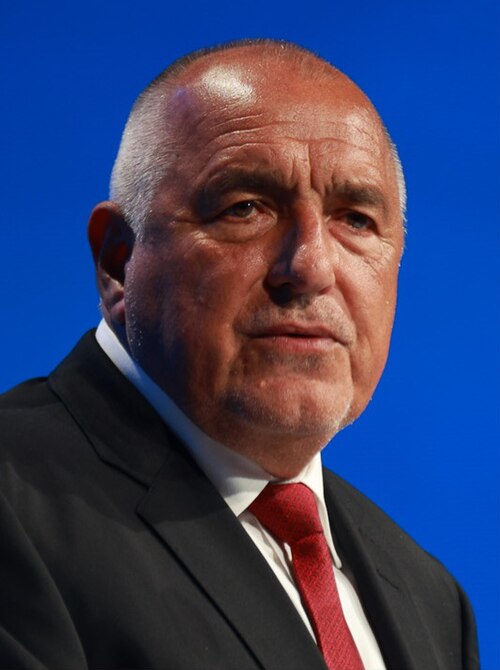
1994
Portrait of Reneta Indzhova
Caretaker government1994 — 1995

Reneta Indzhova

Economist. Bulgaria’s first female prime minister, leading a caretaker government in 1994–1995.

Read the biography of Reneta Indzhova →

She graduated from the Karl Marx Higher Institute of Economics, now UNWE, where she also taught. Her career includes economic research and public administration; in 2012–2014 she headed the National Statistical Institute.

NSI · 145 years of Bulgarian statistics (PDF) ↗
Public service and terms 1

Public service and historical context

Her caretaker government was a short transitional administration between the cabinets of Lyuben Berov and Zhan Videnov. It also marked the first time a woman headed Bulgaria’s Council of Ministers. Her later work at the National Statistical Institute was a separate stage of her career, outside her premiership.

Terms in office

  1. Caretaker government —

Portrait: Kinematografski Izbor · Wikimedia Commons · CC BY 3.0. Image fitted to the frame.

1992
Portrait of Lyuben Berov
Prime minister1992 — 1994

Lyuben Berov

Economist and academic. Led a government formed in December 1992 under a mandate held by the Movement for Rights and Freedoms (MRF).

Read the biography of Lyuben Berov →

A professor and economics lecturer, he also served as foreign minister during the first part of his premiership, from December 1992 to June 1993.

UNWE · departmental history ↗
Public service and terms 1

Public service and historical context

In 1994, during his government, Bulgaria concluded an external-debt restructuring deal with London Club creditor banks. It included repurchasing part of the debt and exchanging liabilities for new bonds. In foreign affairs, relations with the Republic of Macedonia were raised to embassy level in December 1993.

Terms in office

  1. Berov government —

Portrait: Christian Lambiotte / European Communities · Wikimedia Commons · CC BY 4.0. Image fitted to the frame.
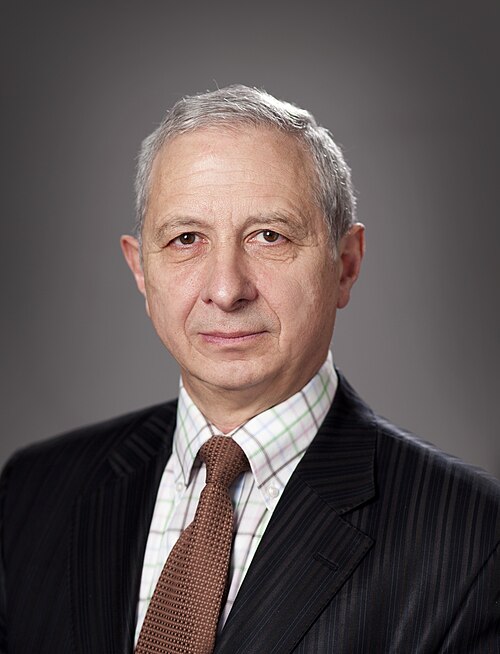
1992
Portrait of Zhelyu Zhelev
President1990 — 1997

Zhelyu Zhelev

Philosopher and co-founder of the Union of Democratic Forces (UDF). Elected by the Grand National Assembly in 1990, he became the first directly elected president in 1992.

Read the biography of Zhelyu Zhelev →

He wrote Fascism, a study of the totalitarian state banned by communist censorship. In 1988 he helped establish the Club for the Support of Glasnost and Perestroika, later becoming the first leader of the Union of Democratic Forces.

Presidency · Zhelyu Zhelev ↗
Public service and terms 2

Public service and historical context

Initially elected by the Grand National Assembly, he also won the first direct presidential election in 1992, with Blaga Dimitrova as vice president. His presidency therefore spanned the transition from provisional institutional arrangements to a five-year term based on a direct vote under the new Constitution.

Terms in office

  1. Elected by the Grand National Assembly —
  2. Term following direct election —

Portrait: Unknown authorUnknown author · Wikimedia Commons · Public domain. Image fitted to the frame.

1991
Portrait of Philip Dimitrov
Prime minister1991 — 1992

Philip Dimitrov

Lawyer and leader of the Union of Democratic Forces (UDF). Headed the government following the 1991 parliamentary election.

Read the biography of Philip Dimitrov →

He graduated in law from Sofia University and practised as a lawyer. After his premiership, he served as Bulgaria’s ambassador to the UN and the United States, headed the EU delegation to Georgia and became a Constitutional Court judge.

Constitutional Court · Philip Dimitrov ↗
Public service and terms 1

Public service and historical context

On 15 January 1992, during his government, Bulgaria became the first country to recognise the independence of the then Republic of Macedonia. The two countries opened consulates-general later that year. This was a specific foreign-policy step during Yugoslavia’s dissolution and the establishment of relations with the new Balkan states.

Terms in office

  1. Dimitrov government —

Portrait: Aleksdonev · Wikimedia Commons · CC BY-SA 4.0. Image fitted to the frame.
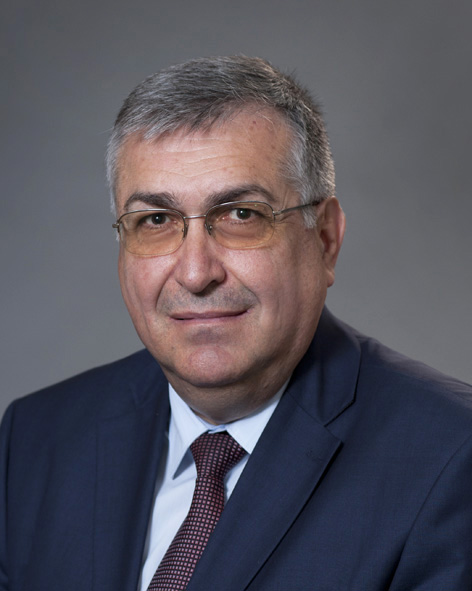
1990
DP
Prime minister1990 — 1991

Dimitar Popov

Lawyer and judge. Led a coalition government that included representatives of different political parties.

Read the biography of Dimitar Popov →

Before becoming prime minister, he worked as a legal adviser and a judge at Sofia City Court. His professional speciality was criminal law relating to transport, and he helped establish the Bulgarian Judges Association.

Bulgarian News Agency · biographical record ↗
Public service and terms 1

Public service and historical context

Under his government, large-scale price liberalisation began on 1 February 1991. This was an important step towards a market economy, accompanied by sharp price increases and serious social consequences. The period illustrates the difficulties of moving from administratively set prices to market relations.

Terms in office

  1. Popov government —
1990
Portrait of Andrey Lukanov
Prime minister1990

Andrey Lukanov

Led two successive governments in 1990, at the beginning of the transition to a multiparty system.

Read the biography of Andrey Lukanov →

He graduated from the Moscow State Institute of International Relations and worked in foreign trade and diplomacy. Before 1990, he was a deputy prime minister and minister of foreign economic relations, involved in managing economic ties with Comecon countries.

Bulgarian State Archives ↗
Public service and terms 2

Public service and historical context

His two cabinets governed during the first year of transition, amid serious foreign-debt and supply problems. During this period, Bulgaria suspended payments on part of its external debt. BNB reports connect the subsequent restrictions on external financing with the difficult course of economic reform.

Terms in office

  1. First government —
  2. Second government —

Portrait: European Communities · Wikimedia Commons · CC BY 4.0. Image fitted to the frame.
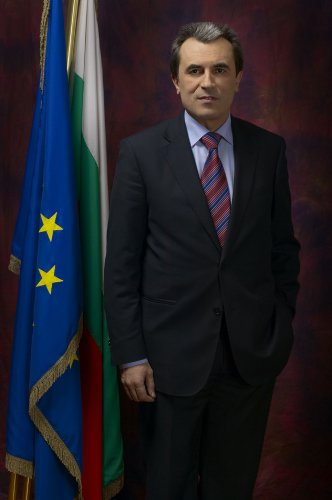
1990
Portrait of Nikolai Todorov
Acting officeholder1990

Nikolai Todorov

Chairman of the Seventh Grand National Assembly. Served as acting head of state until the election of Zhelyu Zhelev.

Read the biography of Nikolai Todorov →

A historian and member of the Bulgarian Academy of Sciences, he specialised in Balkan studies. He founded and led the Academy’s Institute of Balkan Studies, combining academic research with diplomatic and parliamentary work.

Bulgarian Academy of Sciences journal · 5/2021 (PDF) ↗
Public service and terms 1

Public service and historical context

As speaker of the Seventh Grand National Assembly, he participated in the work of the institution that drafted the new Constitution. His brief exercise of presidential duties in July 1990 was a separate transitional episode in that parliamentary career and ended with Zhelyu Zhelev’s election.

Terms in office

  1. Acting head of state —

Portrait: R. Lesage · Wikimedia Commons · CC BY-SA 3.0 igo. Image fitted to the frame.

1990
Portrait of Stanko Todorov
Acting officeholder1990

Stanko Todorov

As Chairman of the National Assembly, he temporarily performed the duties of head of state in July 1990.

Read the biography of Stanko Todorov →

His political career included heading the Council of Ministers in 1971–1981 and the National Assembly in 1981–1990. Earlier, he served as agriculture minister and chaired the State Planning Commission.

Bulgarian State Archives ↗
Public service and terms 1

Public service and historical context

In July 1990, his temporary duties as head of state arose from his position as speaker, rather than a separate presidential election. They lasted only until Nikolai Todorov took over. His much longer period as prime minister falls outside this section’s main timeframe.

Terms in office

  1. Acting head of state —

Portrait: Politburo of the Bulgarian Communist Party official pictures - public domain · Wikimedia Commons · CC0. Image fitted to the frame.
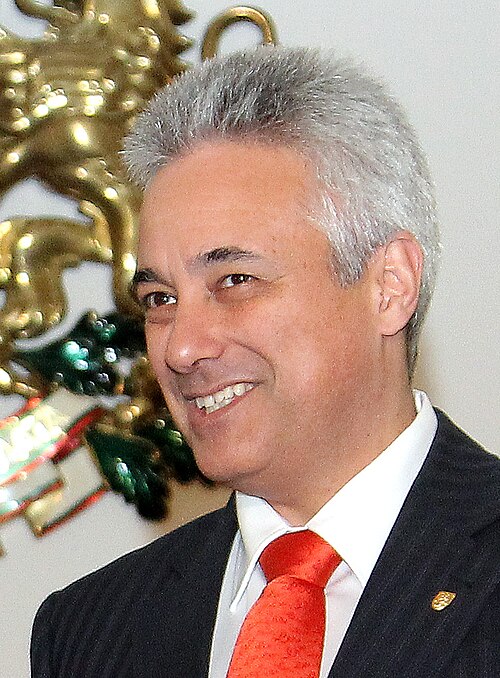
1990
Portrait of Petar Mladenov
President1990

Petar Mladenov

Chairman (President) of the Republic at the beginning of the transition. Elected by the National Assembly on 3 April 1990.

Read the biography of Petar Mladenov →

Before becoming president, he served as foreign minister from 1971 to 1989. A graduate of the Moscow State Institute of International Relations, he took part in removing Todor Zhivkov from the leadership of the Bulgarian Communist Party in November 1989.

Bulgarian State Archives ↗
Public service and terms 1

Public service and historical context

In April 1990, the collective State Council was replaced by an individual head of state. Parliament elected Mladenov under these transitional constitutional arrangements. His office preceded the presidency established by the 1991 Constitution; his term ended with his resignation in July 1990.

Terms in office

  1. Chairman (President) —

Portrait: Bert Verhoeff for Anefo · Wikimedia Commons · CC0. Image fitted to the frame.
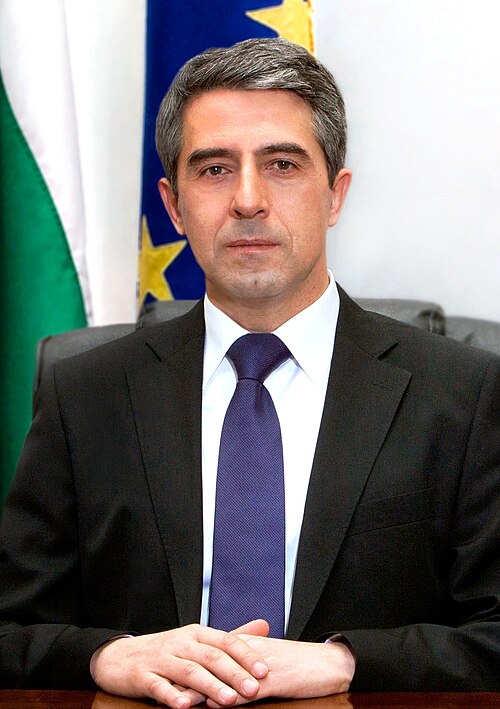
1986
GA
Prime minister1986 — 1990

Georgi Atanasov

Chairman of the Council of Ministers from 1986. His government also held office at the beginning of 1990.

Read the biography of Georgi Atanasov →

He studied history at Sofia University. Before heading the government, he held party and state positions, including deputy chairman of the State Council and chairman of the Committee for State and People’s Control.

Bulgarian State Archives ↗
Public service and terms 1

Public service and historical context

His premiership belongs mainly to the final years of one-party rule. The State Archives biography records his involvement in preparations to remove Todor Zhivkov in November 1989. His cabinet remained in office during the first months of the political transition, until February 1990.

Terms in office

  1. Atanasov government —

ABOUT THIS SECTION

History with sources.

This first edition covers 1990–2026. Governments from 1879–1989 are outside its scope. Georgi Atanasov’s government is included because it was still in office at the beginning of 1990.

Section totals count people, including acting officeholders. Individual terms are listed in each profile. Searching by year shows everyone who held the post during that year; end dates indicate the handover of office.