Voden

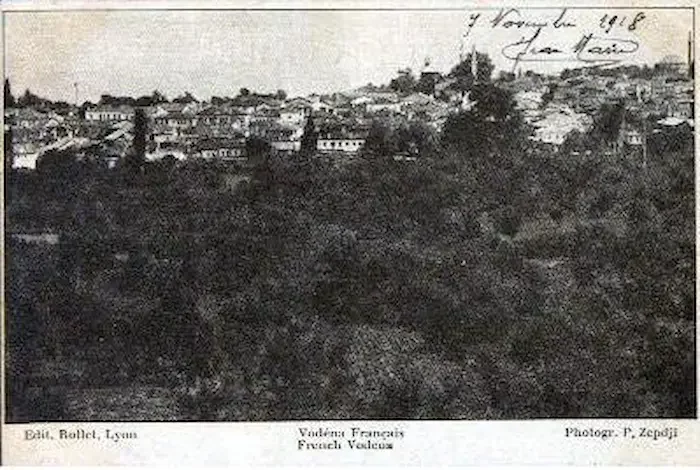
Voden
Voden, now known as Edessa in northern Greece, is a historical area with deep roots in Bulgarian history and culture. Situated in north-western Aegean Macedonia, Voden was a strategically important centre that repeatedly came into contact with, and under the influence of, Bulgarian rulers and states.
The first significant Bulgarian traces in the Voden region date from the First Bulgarian Empire (680–1018). Under Prince Boris I (852–889) and his son Tsar Simeon the Great (893–927), Bulgaria's borders expanded southwards and westwards, incorporating parts of Macedonia. Because of its geographical position, Voden entered the Bulgarian state's sphere of influence.
After the First Bulgarian Empire fell under Byzantine rule in 1018, Voden came under Byzantine control, but its population retained a strong Bulgarian identity. In the twelfth and thirteenth centuries, numerous Bulgarian uprisings against the Byzantines took place here, supported by the Second Bulgarian Empire (1185–1396).
In 1256, Tsar Kaloyan attempted, with limited success, to restore Bulgarian influence in the region, and in 1282 Tsar Ivan Asen III sent troops into Macedonia, including the area around Voden, in a struggle against Byzantine rule.
After the Ottoman Empire conquered the Balkans in the fourteenth century, Voden remained part of Ottoman territory, while continuing as a centre of Bulgarian culture and spirit. The Bulgarian National Revival flourished here in the eighteenth and nineteenth centuries.
Voden was home to numerous Bulgarian schools and churches, and in 1870 the Bulgarian Exarchate gained the right to administer religious and educational affairs, strengthening Bulgarian identity in the town.
During the Balkan Wars of 1912–1913 and the First World War, Voden was the scene of fierce fighting between Bulgarian and Greek troops, with the Bulgarians briefly gaining control of the region in 1912–1913.
After the Second Balkan War and the Treaty of Neuilly in 1919, Voden remained definitively within Greece's borders. Many Bulgarian inhabitants of the region migrated to Bulgaria, but connections with historical Bulgarian culture and memory remained alive.
Share:


