Bessarabia

Bessarabia
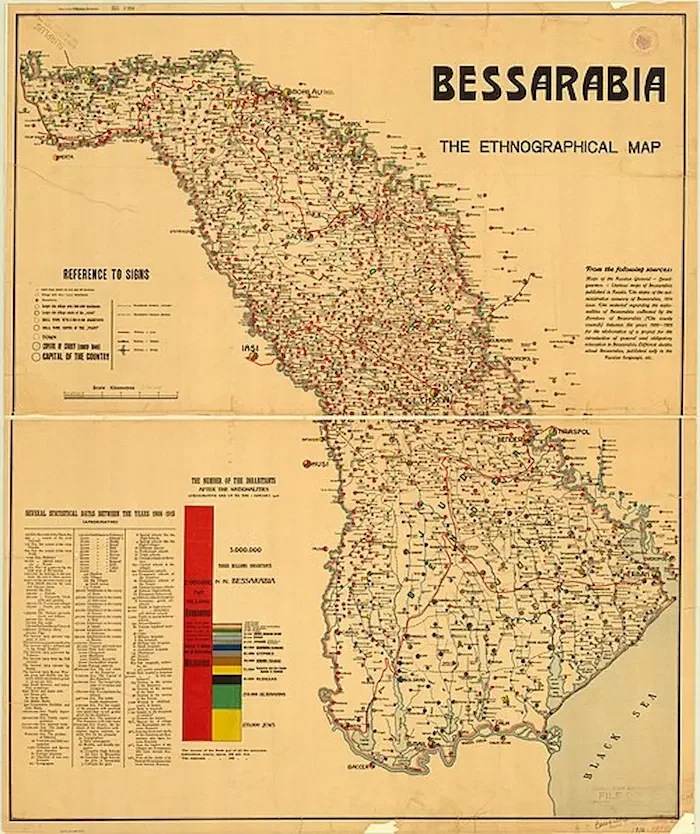
Bessarabia, a historical region between the Prut and Dniester rivers, now part of the Republic of Moldova and southern Ukraine, is one of the most significant centres of the Bulgarian diaspora beyond Bulgaria's ethnic boundaries. From the late eighteenth century, the region became a refuge for thousands of Bulgarians who left their homeland in search of freedom, land and a new beginning.
After the Russo-Turkish wars of the late eighteenth and early nineteenth centuries, particularly the war of 1806–1812, the Russian Empire occupied Bessarabia and actively encouraged Orthodox Slavs to settle in the region. Ottoman pressure, devastated economies and insecurity in the Ottoman Empire's north-eastern regions led thousands of Bulgarian families from Dobruja, Ludogorie and north-eastern Thrace to migrate across the Danube.
With the signing of the Treaty of Bucharest in 1812, Bessarabia officially passed to Russia. This encouraged mass Bulgarian migration to the new Russian territories.
Between 1812 and 1856, dozens of Bulgarian villages and colonies were established, the best known including Tarutino, Kamchik, Bolhrad, Karakurt, Kubey, Cheshmeliy, Artsyz, Orekhovka, Delen and others.
In 1858, the Bulgarian secondary school in Bolhrad opened, the first high school financed by the Bulgarian community and approved by the Russian authorities. Its pupils included numerous future National Revival figures, politicians and public figures.
Well-known alumni and figures include Georgi Sava Rakovski, who stayed briefly in Bessarabia in the 1840s; Ilarion Makariopolski, who maintained active contacts with Bessarabia's spiritual elite; and Andrey Tsanov, a native of Artsyz who became a lawyer and politician in the new Bulgaria.
The Bulgarians of Bessarabia also participated in the struggle to liberate their homeland. During the Russo-Turkish War of 1877–1878, Bulgarian volunteer detachments from Bessarabia served in the regular Russian army, including at the Siege of Pleven and the fighting around Shipka.
After the Liberation, thousands of Bessarabian Bulgarians returned to newly liberated Bulgaria, some taking key positions in government and the army.
Following the Crimean War of 1853–1856 and the Treaty of Paris, southern Bessarabia passed to Moldavia and later to Romania, after the union of Moldavia and Wallachia in 1859. This proved a difficult period for the Bulgarian population, as policies of Romanianisation began.
In 1878, Russia recovered southern Bessarabia, but after the First World War and the collapse of the Russian Empire, the entire region became part of Romania in 1918. Under Romanian rule from 1918 to 1940, pressure for Romanianisation increased, and Bulgarian schools and churches faced restrictions.
Share:


