Macedonia

Macedonia
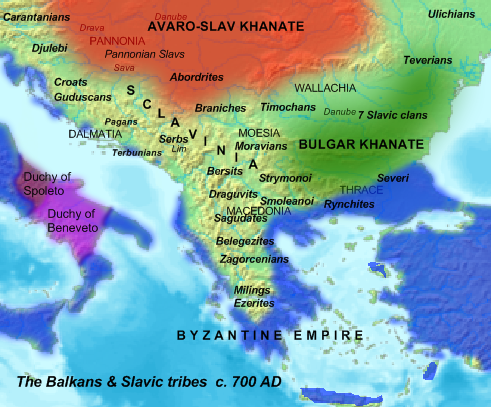
During the First Bulgarian Empire (681–1018), the territory of Macedonia in Bulgaria was one of the state's important regions. Macedonia encompasses a large part of today's north-western and western Bulgarian lands, including the regions around cities such as Skopje, Bitola and Ohrid.
Even before the establishment of the First Bulgarian Empire, in the second half of the seventh century, some Bulgar tribes led by Khan Kuber settled in the area of modern Macedonia. After escaping from the Avars in Pannonia, Kuber occupied the lands around Bitola, Prilep and Skopje, forming an independent Bulgarian community known as Kuber's Bulgaria. This early Bulgar presence laid the foundations for Macedonia's later integration into the Bulgarian state.
After Bulgaria became established as a state, under Khan Presian (836–852) and his son Boris I, the territory of Macedonia was fully incorporated within Bulgaria's borders. In the tenth century, Ohrid became a spiritual and literary centre, and St Clement of Ohrid established one of Europe's first schools there. During the reign of Tsar Samuel (997–1014), Macedonia lay at the heart of the Bulgarian Empire: the capital was moved to Ohrid, which also became the seat of the patriarchate. After Samuel's defeat at Belasitsa in 1014 and his death that same year, Bulgaria was conquered by Byzantium by 1018.
Following the fall of the First Bulgarian Empire, Byzantium established control over Macedonia. Emperor Basil II introduced a special military and taxation system intended to suppress any attempts to restore the Bulgarian state. Nevertheless, in 1040, the uprising of Peter Delyan, a grandson of Tsar Samuel, broke out in Macedonia. He was proclaimed tsar in Belgrade, and the rebels captured Skopje and other towns. Although unsuccessful, the uprising showed that Bulgarian identity in the region remained strong. A further uprising, led by Georgi Voyteh in 1072, was also suppressed by the Byzantines.
Following the uprising of the brothers Asen and Peter in 1185 and the restoration of the Bulgarian state, Macedonia gradually returned to Bulgarian control. Under Tsar Kaloyan (1197–1207), and especially Tsar Ivan Asen II (1218–1241), the Bulgarian state reached its height, incorporating the Macedonian territories. Ohrid remained a religious centre with an autocephalous archbishopric. In the late thirteenth and early fourteenth centuries, Bulgarian authority weakened, allowing the Serbian kingdom and Byzantium to intervene in the region once again.
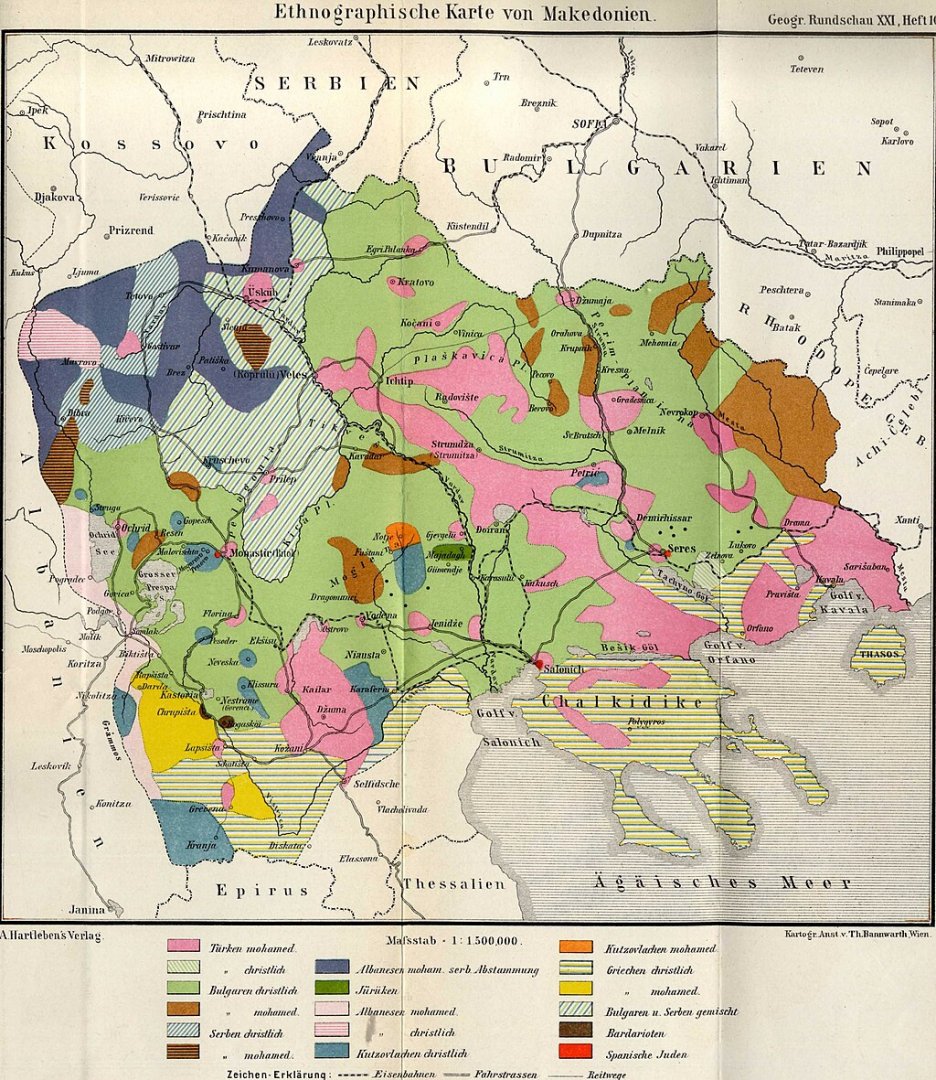
With the fall of Bulgaria and Serbia under Ottoman rule in the late fourteenth century, Macedonia also came under Ottoman control. The Archbishopric of Ohrid retained its autonomy until 1767, when it was abolished at the insistence of the Patriarchate of Constantinople. During this period, the population endured harsh centuries of Ottoman oppression while preserving its language, culture and Orthodox faith. In the eighteenth and nineteenth centuries, Macedonia became part of the Bulgarian National Revival: Bulgarian schools, churches and community cultural centres opened. After 1870, the Bulgarian Exarchate was active in dozens of Macedonian villages and towns. Organised resistance movements also emerged in the late nineteenth century, such as the Internal Macedonian-Adrianople Revolutionary Organization (IMARO), founded in Thessaloniki in 1893.
After Bulgaria's Liberation, Macedonia remained outside the Principality of Bulgaria despite its majority Bulgarian population. In 1903, the Ilinden–Preobrazhenie Uprising broke out, organised by IMARO with the aim of joining Bulgaria, but it was brutally suppressed by the Ottomans. During the Balkan Wars (1912–1913), Bulgaria played an active part in liberating Macedonia, but after the Second Balkan War it lost territorial claims in favour of Serbia and Greece.
During the First World War (1915–1918), Bulgaria temporarily restored control over Vardar Macedonia, and during the Second World War (1941–1944) it again administered these territories. After the war, they remained permanently outside Bulgaria's borders, but cultural and historical ties with Macedonia continued.
Macedonia remains a key element of Bulgarian history. With its saints, revolutionaries, writers and political struggles, the region is both a geographical area and a spiritual and historical symbol of Bulgarian identity.
Share:


