Volga Bulgaria

Volga Bulgaria
Volga Bulgaria
Approximate reading time: 5 minutes
Volga Bulgaria, also known as Volga-Kama Bulgaria or Itil Bulgaria, was a medieval Bulgar state along the Volga. It existed from the seventh to the thirteenth century. It was formed by the Bulgars of Khan Kotrag, one of Kubrat's five sons, after Old Great Bulgaria broke up and they settled in the lower Volga valleys.
Its history is divided into several periods: the early Bulgar pagan period, eighth–tenth centuries; the pre-Mongol Islamic period, tenth–mid-thirteenth centuries; and the Mongol period, mid-thirteenth–mid-fifteenth centuries.
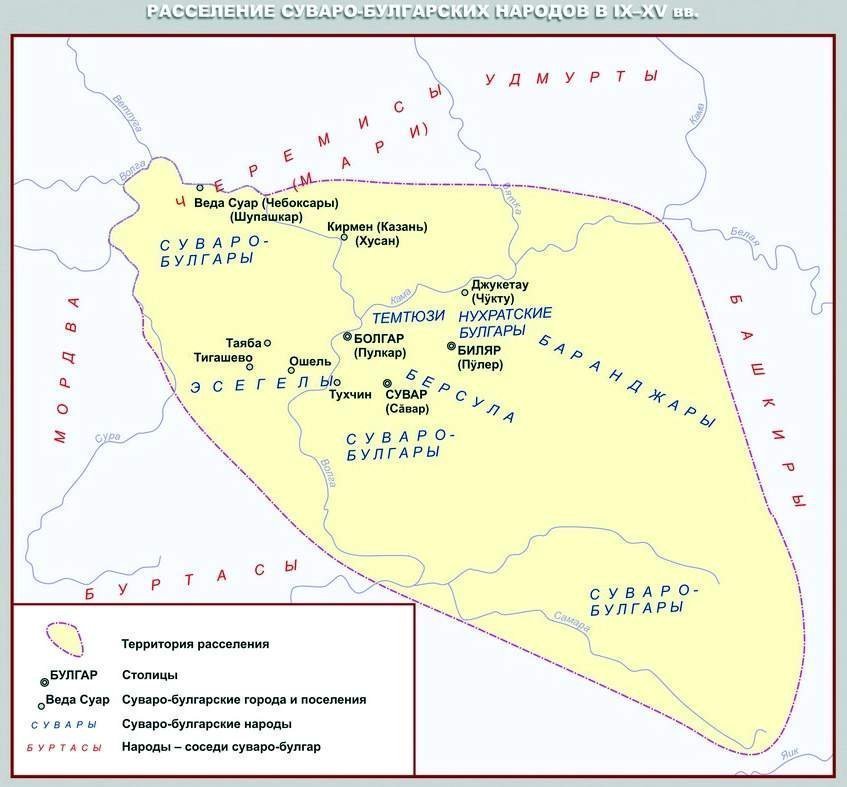
The population was exceptionally diverse, including Bulgars, Barsils, Esegel, Savirs and Baranjars. Contact between them produced strong influences from different cultures. The state included the Kotrag, Savar, Bersul and Esegel tribes, as well as the Bilyars, who founded Bilyar. Its capitals were Bolgar, Bilyar and Suvar. Archaeological finds indicate an Armenian presence in the Middle Volga valley, probably following Arab persecution in 852, when waves of Armenian migrants moved towards Khazaria, Byzantium and Volga Bulgaria. Khwarazmians were also strongly represented. In the second half of the eighth century, Magyars settled along the Upper Volga and Lower Kama. They initially clashed with the Bulgars, but after the ninth century the two groups began to intermingle, as shown by the Tankeyevka cemetery.
Volga Bulgaria gained independence by ending its vassal dependence on the Khazar Khaganate in the late ninth or early tenth century. In the tenth century, the Volga Bulgars expanded their territory, conquered several Finnic tribes and established commercial and diplomatic relations with the Rus. Bolgar and Suvar became its principal cities. As they developed into economic and political centres, a struggle for supremacy arose, ultimately won by Bolgar. Centralisation began during this period, accelerating the state's development and international recognition. According to the generally accepted account, the Volga Bulgars adopted Islam from the Arabs in 922 under their ruler Almish ibn Shilki. They embraced a form of Hanafi Islam with Central Asian characteristics. Accounts indicate that some people remained non-Muslim after its official adoption without religious conflict resulting.
Evidence from the next two centuries records cultural and political development. Volga Bulgaria's decline began in the thirteenth century and was closely linked to Mongol attacks. After a series of battles, it finally capitulated to Mongol rule.
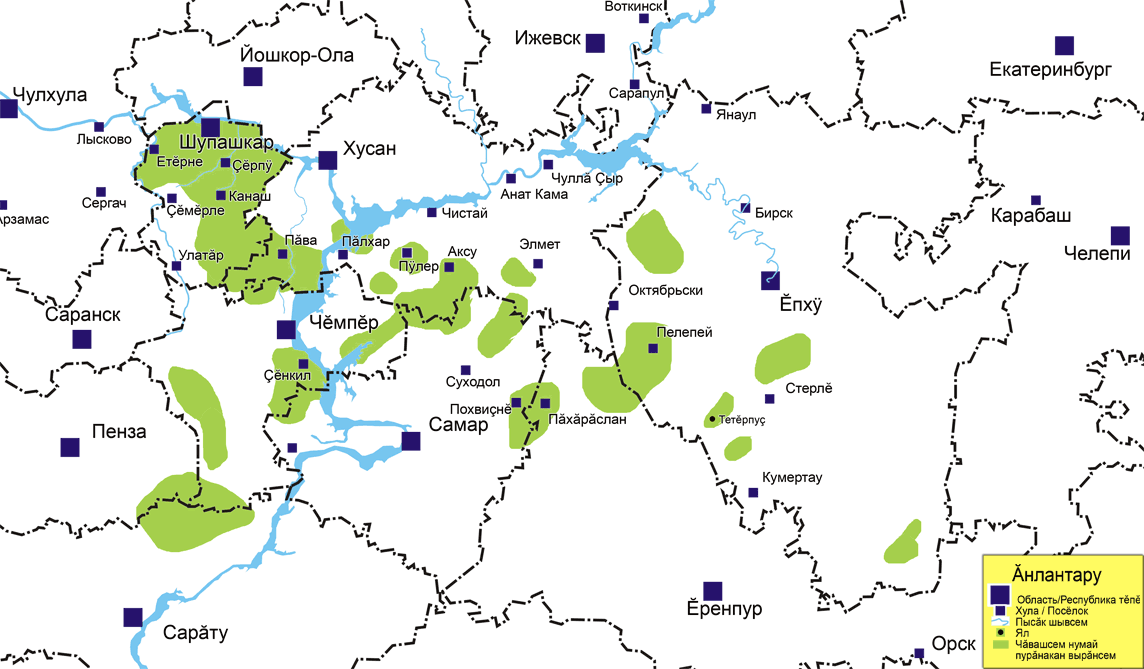
Today, the state's former territories lie within the Russian Federation, and their population consists mainly of Bulgars, forming the populations of the present-day republics of Tatarstan and Chuvashia. A movement in Tatarstan seeks to rename the republic and affirm Bulgar roots and culture. In 2017, a request was also sent from there to Krasimir Valchev for the history of Volga Bulgaria to be included in Bulgaria's history and civilisation curriculum.
Share:


Rulers during this period