The Belgrade Region

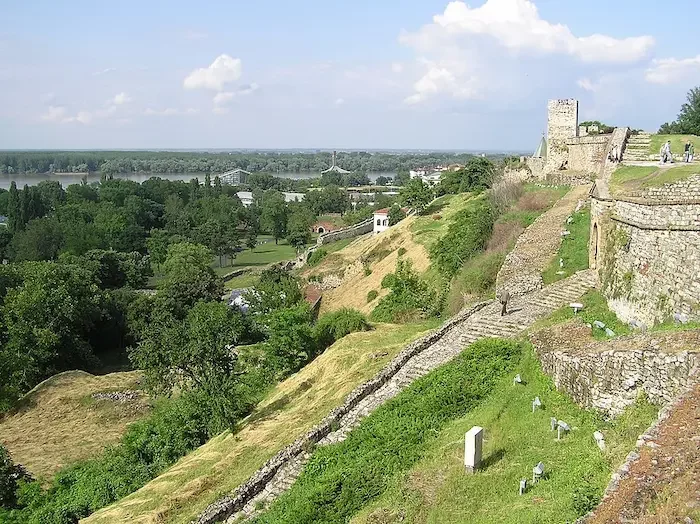
The Belgrade Region
The Belgrade region, in modern Serbia around the confluence of the Sava and Danube rivers, was an important strategic territory on the western periphery of the First Bulgarian Empire. During the tenth and eleventh centuries, it repeatedly came under Bulgarian control, most significantly under Tsar Peter I (927–969) and Tsar Samuel (997–1014).
The Belgrade region encompasses lands along the middle course of the Morava, the Toplica River and the modern area of Belgrade, strategically situated where the Sava joins the Danube. The region serves as a crossroads between the Carpathians, Pannonia and the central Balkan Peninsula. Since antiquity and the early Middle Ages, major roads linking Europe with Byzantium have passed through it, making it a desirable and frequently contested territory.
After Tsar Simeon the Great died in 927, power passed to his son Peter. Although this period was marked by peace with Byzantium, recognised by the treaty concluded in 927, Bulgaria retained control of its western territories, including the Belgrade region.
Belgrade, called Alba Bulgarica in some sources at the time, served as a western outpost of Bulgarian authority.
During this period, the Bulgarian state was stable, and the Belgrade region was under the direct influence of the Cometopuli, local Bulgarian aristocrats governing the western lands.
Following the Byzantine invasion from the east in 971, much of the former Bulgarian territory fell under Byzantine rule. The western regions, including Belgrade, remained outside Byzantine control, however, and rallied around the four sons of Count Nicholas: David, Moses, Aaron and Samuel.
Between 976 and 986, Samuel conducted a series of military campaigns against Byzantium and neighbouring Serbian principalities.
The Belgrade region became part of the effectively independent western Bulgarian state ruled by Samuel.
In 996, Tsar Samuel launched a major military offensive, reaching Srem and Belgrade and consolidating Bulgarian authority in the region.
After his coronation as tsar in 997, Belgrade became established as an important city within the restored Bulgarian Empire.
Bulgarian authority in the Belgrade region demonstrates the strength and geopolitical ambitions of the First Bulgarian Empire. Control of Belgrade meant access to important commercial and military routes, as well as a buffer against Magyar and Byzantine attacks.
After Tsar Samuel's death in 1014, Bulgaria gradually lost its territories. In 1018, following the final Byzantine victory, the Belgrade region was also annexed by the Byzantine Empire and incorporated into its territory.
Share:


