The Kastoria Region

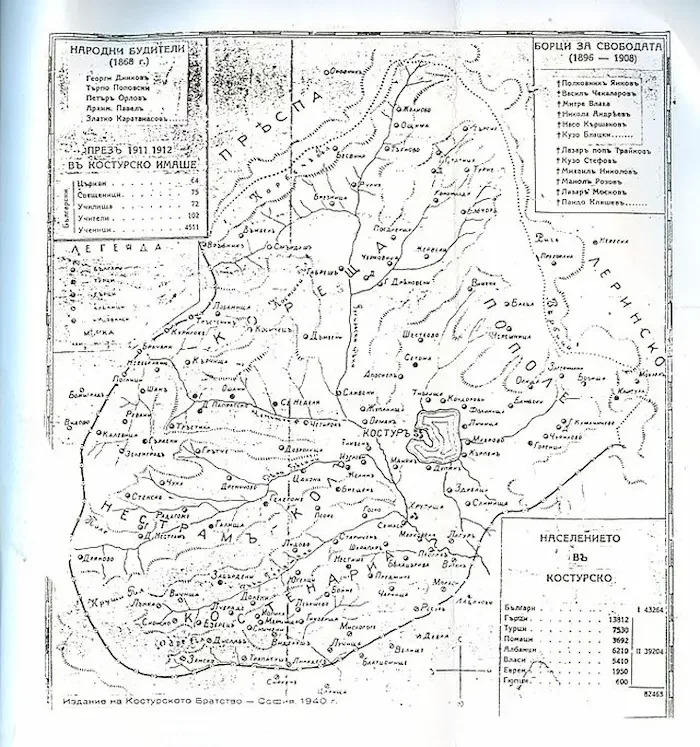
The Kastoria region, known in Bulgarian as Kostursko, around the modern town of Kastoria in north-western Greece, holds a special place in Bulgarian history and cultural memory. Despite its present political affiliation, for centuries it formed an integral part of the Bulgarian ethnic, linguistic and spiritual sphere.
In the tenth century, under Tsar Samuel (997–1014), the Kastoria region was incorporated into the First Bulgarian Empire. After the Byzantine conquest in 1018, it remained within Bulgaria's spiritual orbit through the Archbishopric of Ohrid, recognised by Byzantium as the ecclesiastical successor to the Bulgarian Patriarchate. Church documents list the Diocese of Kastoria among the Bulgarian dioceses, confirming the population's continuing Bulgarian character.
The population of the Kastoria region speaks a south-western Bulgarian dialect. This is attested by numerous linguists and travellers, including Vasil Kanchov, who recorded ethnic Bulgarians living in the region in the late nineteenth century, and National Revival figures such as Atanas Shopov and Yordan Hadzhikonstantinov.
After the Bulgarian Exarchate was established in 1870, the population of the Kastoria region voted in large numbers to join it, rejecting the Patriarchate of Constantinople. Bulgarian schools and churches opened in villages such as Zagorichani, Dambeni, Smardesh and others, becoming centres of Bulgarian education and national consciousness.
The Kastoria region played a key role in preparing and carrying out the Ilinden Uprising. Leading figures such as Kiryak Shkurtov, Lazar Poptraykov and Hristo Uzunov commanded revolutionary detachments, obtained supplies from Bulgarian villages and waged armed struggle against Ottoman rule and Greek andartes. The insurgents fought under Bulgarian flags bearing the inscription “Freedom or Death”.
After the suppression of the uprising, the Balkan Wars and the Greek-Turkish population exchange of 1923, thousands of Bulgarians from the Kastoria region were forced to leave their homes. They settled in Plovdiv, Gotse Delchev, Asenovgrad, Sofia and other Bulgarian towns and villages, where their descendants still live, preserving the Kastoria dialect, customs and family memories.
During the 1930s and 1940s, memoirs and books about the Kastoria region were published in Bulgaria, describing the Bulgarians' suffering after the area became part of Greece. Memorial plaques, community cultural centres and local associations such as the Kastoria Brotherhood preserve a living Bulgarian memory of the region.
Share:


