The Battle of Ongal

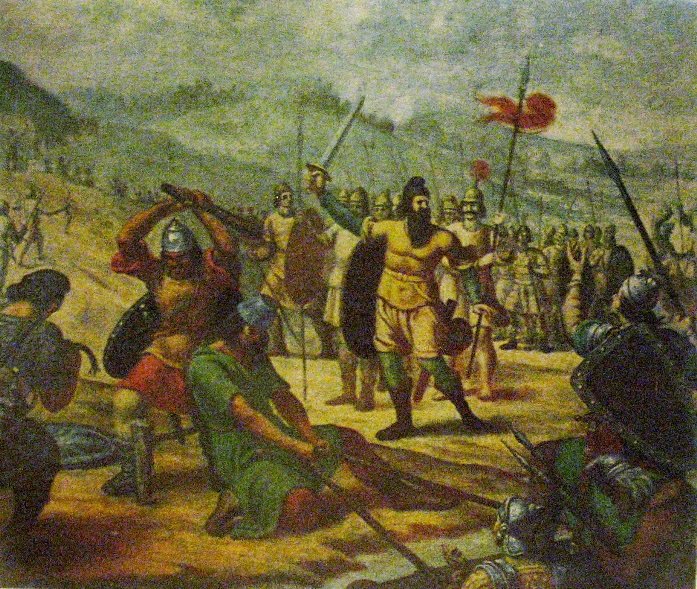
The Battle of Ongal
After crossing the Danube, the Bulgars settled along its lower course and built a fortified area covering around fifty square kilometres at Ongal. From this protected base, they gradually advanced into Dobruja, pushing the Byzantine presence southwards. In 680, Emperor Constantine IV Pogonatos decided to expel them. An army of around twenty thousand under his command besieged Ongal and repeatedly failed to penetrate its defences. Khan Asparuh's much smaller force organised its defence and launched numerous surprise counterattacks, which soon demoralised the enemy and prompted a gradual withdrawal. The Bulgarians immediately went on the offensive, and their cavalry inflicted a crushing defeat on the Byzantines. According to a Byzantine chronicler, they “destroyed most of them by the sword”.
The victory at Ongal was the decisive step leading to the establishment of the Bulgarian state in the summer of the following year. After the defeat, Constantine IV withdrew towards Constantinople, and the Byzantine army disintegrated. Asparuh's victory secured the Bulgars' presence south of the Danube and began their permanent establishment in the Balkans. In 681, following a peace treaty with Byzantium, Bulgaria was officially recognised as an independent state, an event considered the beginning of Bulgarian statehood. The battle also consolidated Asparuh's authority and strengthened the alliance between Bulgars and Slavs, who gradually became integrated into the new state. The fortifications at Ongal remained an important defensive position north of the newly formed state for some time.
Share:


