Kan Asparuh

Kan Asparuh
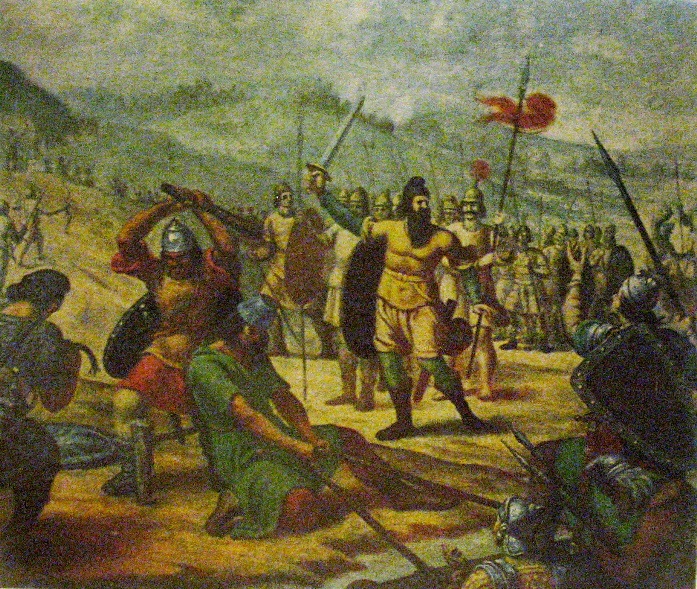
Asparuh
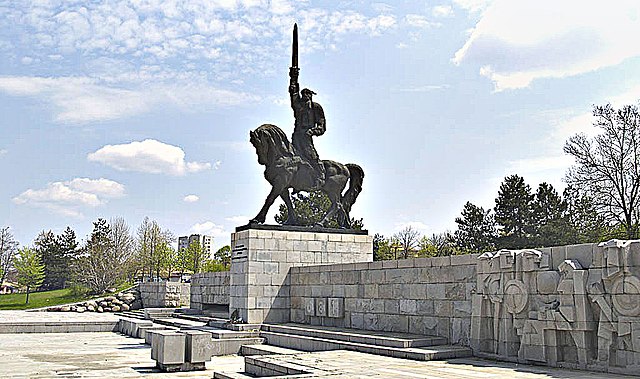
Khan Asparuh was the founder of the First Bulgarian state (681). He was the third of the five sons of Khan Kubrat, the founder of Old Great Bulgaria in the northern Black Sea region. They belonged to the Dulo dynasty, which had ruled since 628. According to the historical source known as the Nominalia of the Bulgarian Khans, he lived for 61 years, which would place his birth around 639–640. Other historical accounts state that he died in a war against the Khazars around 700–701.
Asparuh belonged to the Dulo dynasty, which had ruled Great Bulgaria since 628. The exact year of his birth is unknown, but he is thought to have died around 700 in battle against the Khazars. A document called the Nominalia of the Bulgarian Kans states that he lived for 61 years, which would mean that he was born around 639–640.
Little information survives about Asparuh’s life before 671. The exact name of the khan who founded the Bulgarian state is also disputed, as it appears in several forms: Ispor/Espor and Isperih/Esperih. According to the history of the Volga Bulgarians known as the Jagfar Tarihi, whose authenticity is disputed, his father placed him at the head of the Onogur (Unogundur) tribe. They lived north-east of the Sea of Azov and defended Bulgaria against the Khazars. When the Khazars attacked in 671, the forces of Asparuh and his brother were defeated. The Onogurs withdrew westwards, while the Utigurs headed north and settled at the mouth of the River Kama.
The greatest amount of historical information and testimony concerns Khan Asparuh’s military and political leadership and his activities around the lower Danube. After Kubrat’s death, Asparuh and his uncle Shambat attempted to claim the throne of Great Bulgaria, but were defeated by Bat Bayan with Khazar support. Following this failure, Asparuh withdrew to the town of Bashtu (present-day Kyiv) together with the Bulgars who followed him. He probably crossed the river with at least 20,000–30,000 Bulgars. The remaining Bulgars settled in present-day Moldavia as a shield against the Khazars. Because of the constant threat of Khazar attacks, in 671 Asparuh moved the centre of his possessions to the mouth of the Danube. From 671 to 680, Bulgaria controlled territories stretching from the Dnieper in the east to the Carpathians in the west, in what is now south-eastern Ukraine and Moldova. These included parts of present-day Wallachia that had been conquered after 671.
During this period, the Bulgars made annual incursions across the Danube into the Byzantine provinces of Moesia and Thrace. The former was effectively under the control of Slavic tribes. In 679, Bulgarian troops even reached Adrianople (present-day Edirne), where they were defeated by the Byzantines.
Bulgaria’s relocation of its state centre to the Danube and its frequent incursions across the river caused alarm in Constantinople, where the lands up to the Danube were regarded as Byzantine territory temporarily beyond the central government’s control. This circumstance, together with fears that the Danubian Slavs might join the Bulgarian state, prompted the Byzantine emperor Constantine IV to launch a campaign against the Bulgars in 680. In fact, the war had begun as early as 672 with Bulgarian attacks, but until 679 it was largely one-sided, as Byzantium was occupied by a serious conflict with the Arab Caliphate. The defeat of the Arabs allowed Constantine IV to turn his attention northwards and attempt to repel the Bulgarian threat. His first action was the decisive defeat of the Bulgarian army at Adrianople in 679, which removed the threat to Thrace. The situation escalated in 680 with the Battle of Ongal between Khan Asparuh and the Byzantine emperor Constantine IV Pogonatos. The war ended in a Byzantine defeat. Khan Asparuh succeeded in conquering eastern Moesia and making peace with the local Slavic tribes, thereby establishing the First Bulgarian state in 681.
At the beginning of his rule, Khan Asparuh distinguished himself through diplomacy. He managed to conclude peace and an alliance with the newly conquered territories inhabited by Slavic tribes and to integrate them into the new Bulgarian state, requiring them to guard its southern and western borders. The centre of this union was the military settlement of Pliska, which had previously been a Slavic settlement. The Bulgarian state was called Sarakt and, following an old Turkic tradition, was divided into three parts: left, right and centre. Central authority belonged to the khan, the left wing to the kavhan and the right wing to the ichirgu-boil. The territory inhabited by the Bulgars was called Bulgaria, while the territories with Slavic populations were known as Sclaviniae and were governed by an appointed Slavic prince.
In 700, during the formation of the First Bulgarian Empire, Khan Asparuh died in one of the many battles fought to defend the country. This episode is significant because it marked the beginning of the Bulgarian people’s historical development. Asparuh’s death did not halt the Bulgarians’ progress; rather, it strengthened their determination to remain independent and consolidated the foundations of the new state. After his death, his brother Tervel took over the principality and continued the struggle to expand and establish it.
Share:


