Modern Bulgarian literature

Modern Bulgarian literature
Modern Bulgarian literature
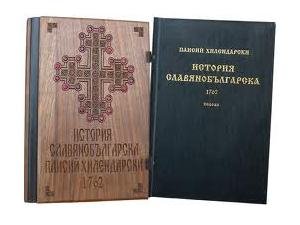
Modern Bulgarian literature includes all literary works produced after the publication of Paisius of Hilendar's celebrated Slav-Bulgarian History. It covers the Bulgarian National Revival and the period from Bulgaria's Liberation to the present.
Like the Renaissance, the Bulgarian National Revival was a period of radical change in the arts, including literature. A new literature emerged, together with the modern concept of literature itself. A new system of genres developed while largely retaining lines of continuity with earlier periods. On the one hand, medieval genres such as saints' lives and eulogies gradually lost relevance. On the other, the National Revival saw the first Bulgarian novellas, short stories, verse forms such as the ode, elegy and ballad, and drama and comedy. The expressive means of the novel also took shape during this period.
The literature of the Bulgarian National Revival can be divided into three principal, largely concurrent strands. The first was the natural development of older forms: written and oral, literary and folkloric. The second involved translations and adaptations of foreign works to Bulgarian settings, producing a more complex system of genres. The third represented the transition between old and new, encompassing various phenomena and the revival of older forms.
Bulgarian literature during the National Revival is divided into two main periods. The first, from the mid-eighteenth century to the 1840s, is known as the publicistic and educational period. It laid the foundations of Bulgarian education, first through church schools and then secular schools. The first Bulgarian textbooks appeared, including Petar Beron's Fish Primer. This period is associated with the writers Paisius of Hilendar and Sophronius of Vratsa. The first Bulgarian encyclopaedias, newspapers and journals were also created, and interest in Bulgaria's historical past was awakened. The second period was shorter, lasting about three decades from the 1840s to Bulgaria's Liberation. Known as the literary period, it saw the emergence of important writers such as Nayden Gerov, Georgi Rakovski, Dobri Chintulov, Hristo Botev, Petko Slaveykov, Lyuben Karavelov, Dobri Voynikov and Vasil Drumev. They shaped and developed Bulgarian literature during this critical historical period.
Share:


