The September Uprising

The September Uprising
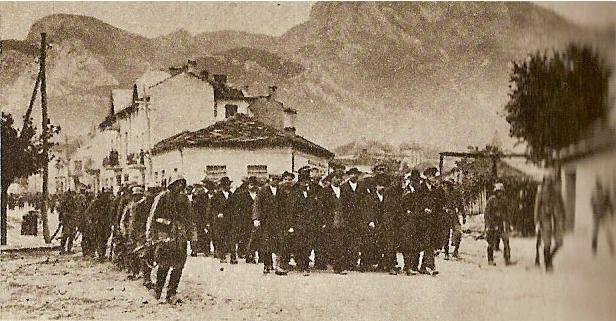
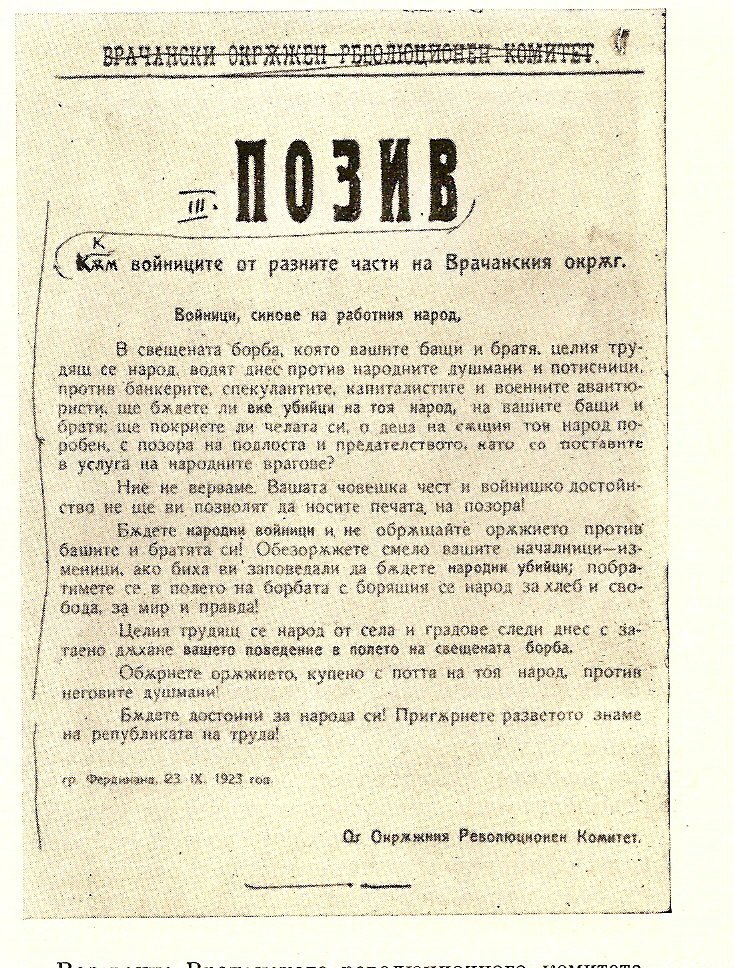
The coup of 9 June 1923, which ousted the Bulgarian Agrarian National Union (BANU) and replaced it with Aleksandar Tsankov's government, together with the mass popular uprisings of June 1923, led to the September Uprising of 1923. Some members of the Central Committee of the Bulgarian Communist Party (BCP) decided to prepare a new uprising. Its organisers included Georgi Dimitrov and Vasil Kolarov. The BCP received no support from any other party for a “United Front” against Tsankov's government. These plans also found no international support. In these circumstances, the uprising broke out on 14 September 1923. It attracted the greatest participation in north-western Bulgaria, where the General Headquarters was established. The towns of Montana, Berkovitsa, Byala Slatina, Knezha and Oryahovo were captured. Rebel activity also concentrated in southern Bulgaria, around Stara Zagora, Nova Zagora, Chirpan and Kazanlak. Despite mass participation, the uprising was doomed to fail because it was not nationwide and communists in the country's main economic and administrative centres did not join it. The government suppressed the insurgent activity in about a week.
The uprising ended in failure. Afterwards, many of its organisers withdrew into the territory of former Yugoslavia. Aleksandar Tsankov's government killed large numbers of communists and agrarians without trial or sentence.
Share:


