The Revolt of Nikoulitzas Delphinas

The Revolt of Nikoulitzas Delphinas
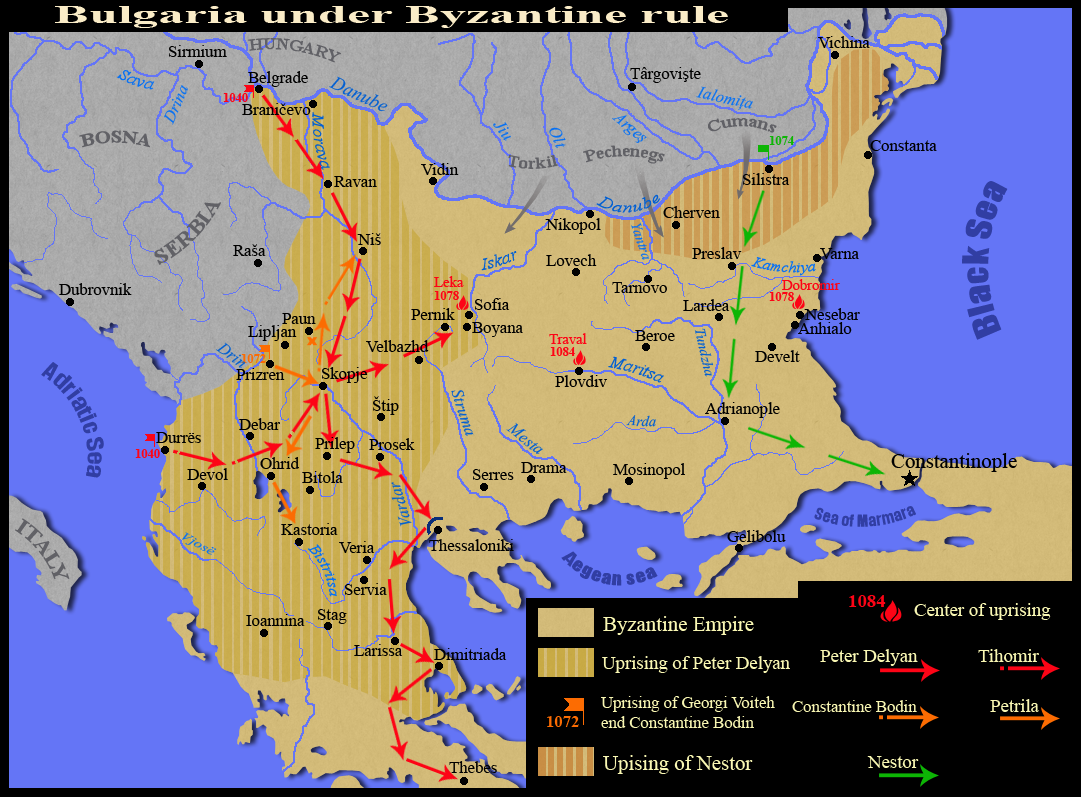
In June 1066, the anti-Byzantine revolt of Nikoulitzas Delphinas broke out in Larissa, in Thessaly. Its background included Emperor Constantine X Doukas's tax increases and the appearance of Halley's Comet that spring, which frightened the population.
Led by the protospatharios and city governor Nikoulitzas Delphinas of Larissa, a descendant of the nobleman Nikoulitzas, the rebels, mainly Bulgarians and Vlachs, rose against Byzantine authority. He was the only person not deported when Larissa became a Bulgarian town in 981.
Initially, Delphinas was unwilling to join the uprising and travelled to Constantinople to warn the emperor of the developing danger. Despite the warning, the emperor ignored him, considering that his properties might suffer. Alarmed by Halley's Comet, Nikoulitzas returned.
The uprising grew, but the Byzantine aristocrat successfully betrayed the rebels. Having already disclosed the conspiracy, Delphinas tried to stop the uprising by exploiting tensions between Bulgarians and Vlachs. He failed to divide the people, who wanted military action. Delphinas decided to lead the rebellion, divided the army and set out towards the Gulf of Thessaloniki, capturing Kitros Fortress. The other force, headed by Nikoulitzas, moved north towards Servia.
Near Servia, the rebels encountered the town's garrison, which declared its readiness to surrender. Instead of entering the town, Nikoulitzas allowed it to leave, leading to a siege of Servia. The three rebel leaders, including Nikoulitzas himself, were arrested, but after a three-day siege the garrison surrendered.
After the surrender, Nikoulitzas Delphinas wrote to the emperor, who sent Andronikos Philokales, katepano of the theme of Bulgaria, with an army to consolidate control of the region. Nikoulitzas betrayed the rebels, bringing the uprising to an end. He was sent to Constantinople, where he is believed to have been honoured by the emperor, although some sources say he was imprisoned.
Although the revolt failed to achieve its aims, it demonstrated anti-Byzantine sentiment in the region and contributed to later social and political developments in the Bulgarian lands.
Share:


