The Kresna–Razlog Uprising


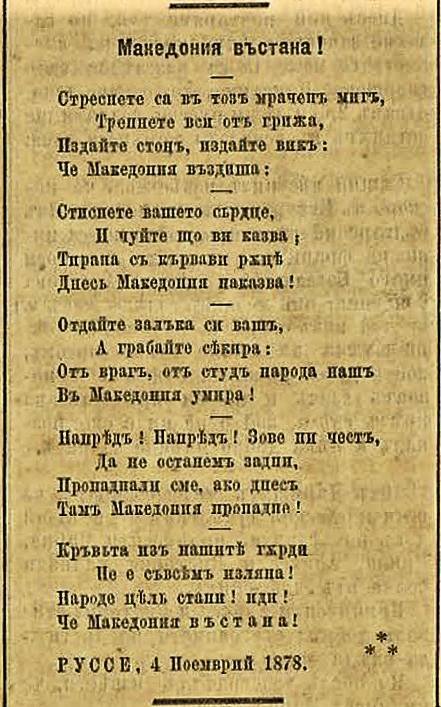
The Kresna–Razlog Uprising
The Kresna–Razlog Uprising was a revolt by Macedonian Bulgarians in 1878–1879 against Ottoman rule, following the Congress of Berlin's decisions to leave Macedonia outside the newly formed Principality of Bulgaria.
Bulgarians in Macedonia sent petitions, memoranda and appeals to the governments of the Great Powers and the Provisional Russian Administration, protesting against the decision to leave their lands within the Ottoman Empire. Despite these peaceful protests, armed-detachment operations became increasingly organised, with the involvement of church figures and intellectuals.
On 5 October 1878, a combined force of around 400 insurgents attacked the Ottoman garrison at the Kresna inns. After eighteen hours of fighting, the Ottoman troops surrendered. The uprising also spread to areas such as Nevrokop, Demir Hisar, Serres, Malashevo and elsewhere. Successful operations in the Kresna and Razlog regions liberated forty-three villages.
Despite these heroic efforts, the Ottomans went on the offensive, and Kresna was burned on 11 November 1878. The uprising was crushed in the Razlog region. Divisions in the leadership, intrigue, clashes among the uprising's leaders and the Ottoman army's advance brought about its failure.
New insurgent actions were attempted in early 1879, but the leadership split had a deeply damaging effect. Later, in April 1879, Grigor Ognenov took charge of Macedonia's military administration. The division between supporters of detachment-based tactics and organised military action remained one of the reasons for the uprising's failure.
The Kresna–Razlog Uprising of 1878–1879 ended in failure for the Bulgarian insurgents. Despite their heroic efforts and the detachments' early victories, divisions in the leadership, internal conflicts and the Ottoman army's advance led to its suppression.
After the uprising, the Ottoman administration took reprisals against its participants. Many leaders and rebels were captured and executed.
Share:


