Nestor's Revolt

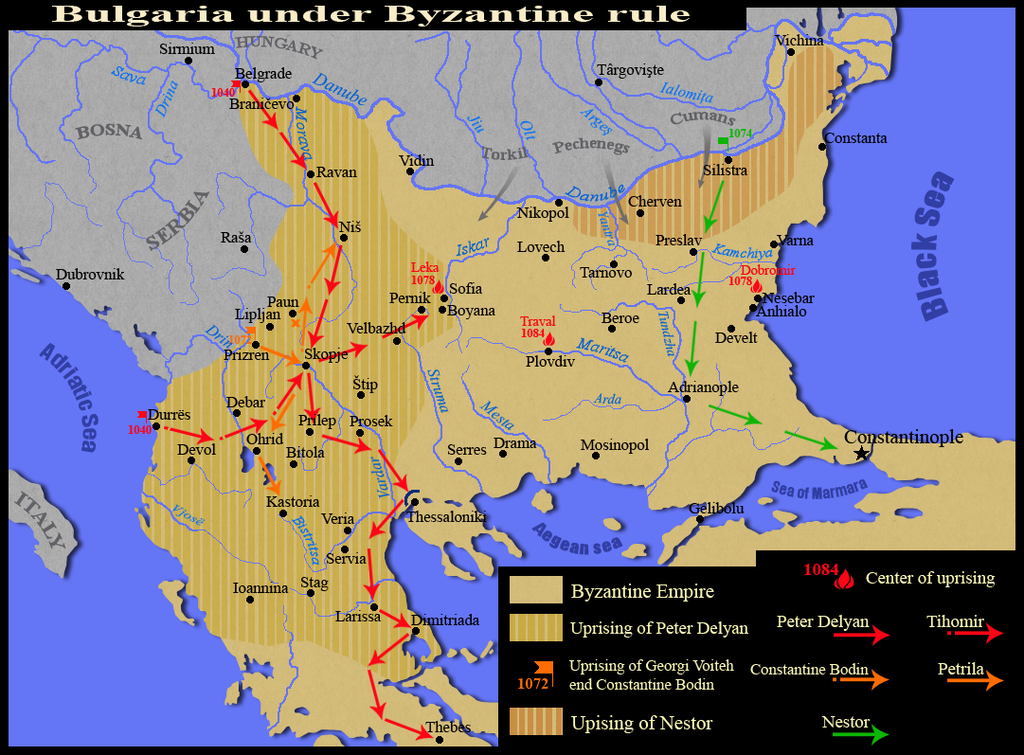
Nestor's Revolt
In the early eleventh century, Byzantium experienced serious political instability. The lands around the Danube had long been left unprotected by Byzantine garrisons, which also frequently had to incorporate Bulgarian mercenaries. Because of the empire's financial difficulties, these Bulgarian border units went unpaid for long periods, with priority given to the Byzantine army. The Danubian territories also suffered frequent devastating Pecheneg raids. These events prompted part of Dobruja's population to unite and rebel against the prevailing conditions. The local Bulgarians in Drastar (Silistra) opposed Byzantine taxation policy. The Byzantine emperor Michael VIII Doukas decided to resolve the matter diplomatically and appointed the local boyar Nestor governor of the region. Nestor succeeded in winning the Pecheneg tribe to his side and invaded Eastern Thrace with it. He demonstrated considerable military superiority, and the Byzantine troops at Edirne were unable to resist him. The revolt reached the gates of Constantinople, but the Byzantines managed to bribe the Pechenegs with gifts. Sensing the approaching danger, Nestor was forced to abandon his attack on the Byzantine capital and withdraw northwards towards Dobruja.
Nestor's revolt failed to win independence for the Bulgarian state, but achieved significant territorial and material gains for some areas with Bulgarian populations. On the retreat northwards towards Dobruja, people and livestock were taken from Eastern Thrace to the camps along the Danube. Until 1091, Drastar and extensive territories in northern Dobruja remained outside Byzantine control.
Share:


