Treaty of London

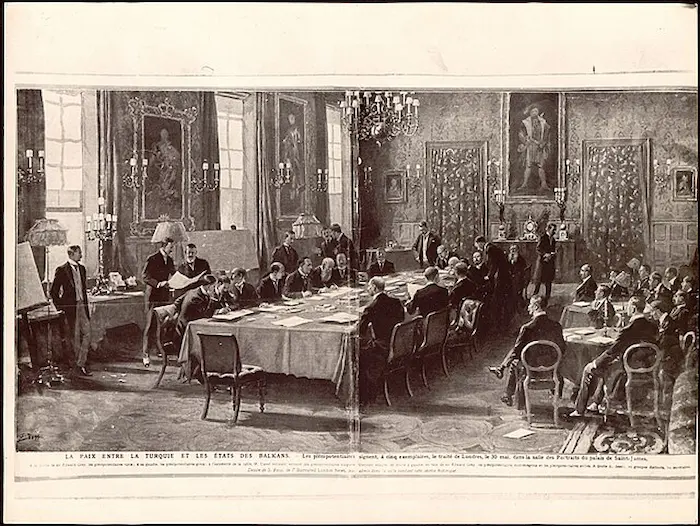
Treaty of London
The Treaty of London was signed at St James’s Palace in London on 30 May 1913, officially ending the First Balkan War. This conflict pitted the Balkan League—Bulgaria, Serbia, Greece and Montenegro—against the Ottoman Empire, with the aim of liberating territories inhabited by Christians.
Under the treaty, the Ottoman Empire ceded all territories west of the Enos–Midia line, which ran from the Aegean Sea to the Black Sea, ending almost five centuries of its domination over large parts of the Balkans. These lands included Thrace and much of Macedonia, but the treaty did not settle their precise division among the victors, sowing the seeds of future conflict.
Bulgaria, Serbia, Greece and Montenegro were parties to the treaty, but the division of Macedonia, a key region subject to numerous claims, remained unresolved. This uncertainty created intense tension among the former allies, especially between Bulgaria and Serbia, which would soon lead to the Second Balkan War.
The Great Powers—Great Britain, France, the Russian Empire, Austria-Hungary, Germany and Italy—did not sign the treaty itself, but strongly influenced the negotiations and the agreements reached as they sought to preserve the regional balance of power.
The Treaty of London ended the First Balkan War but failed to secure lasting stability in the Balkans. Unresolved territorial disputes among the allies remained a threat that could develop into another military confrontation.
Share:


