Tophane Agreement

Tophane Agreement
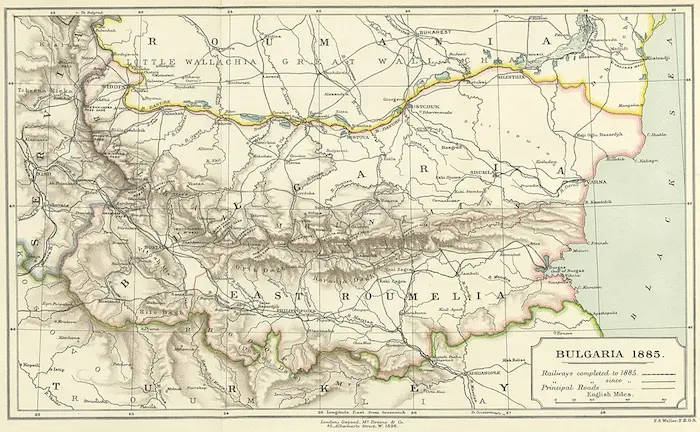
On 6 September 1885, Bulgaria experienced an important historical moment: the Unification of the Principality of Bulgaria and Eastern Rumelia. This was a unilateral act that took the Great Powers and the Ottoman Empire by surprise, as it had been carried out without their consent. Nevertheless, the unification expressed the national desire for a united and strong Bulgarian state.
After prolonged diplomatic efforts and international negotiations, the Tophane Agreement was signed on 5 April 1886 in the historic district of Tophane. Through this document, the union of Eastern Rumelia with the Principality of Bulgaria was officially recognised by the Ottoman Empire and the Great Powers, including Russia, Great Britain, Austria-Hungary, France, Germany and Italy.
Prince Alexander of Battenberg assumed the post of Ottoman governor of Eastern Rumelia. The principality experienced internal destabilisation when the conditions under which Unification had been confirmed became known. A coup known as the Coup of 9 August took place, followed by a counter-coup, but afterwards the prince left the country under pressure from Russia and abdicated. His abdication plunged the country into a year-long political crisis.
Despite this official recognition, when the agreement was signed Bulgaria was still a vassal under Ottoman rule, albeit with extensive autonomy as the Principality of Bulgaria.
Share:


