Prince Alexander of Battenberg

Prince Alexander of Battenberg
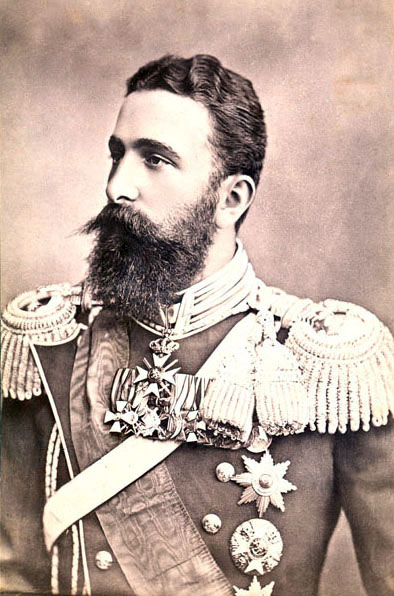
Alexander of Battenberg
Alexander I of Bulgaria, also known as Alexander of Battenberg, was prince of the Principality of Bulgaria from 26 June 1879 to 26 August 1886. His election as Bulgarian ruler took place by mutual agreement of the Great Powers in accordance with the Treaty of Berlin, although Russia played the decisive role.
He is described as a military man with no political experience, but he undertook the task of governing the new state in accordance with the Tarnovo Constitution, even though he considered it too liberal. He expressed a desire for the unification of all Bulgarians but sought to observe international treaties. In April 1881, following the government's limited achievements, he carried out a coup and established his own personal regime, which lasted until December 1883. He brought Russian generals sent by the Russian emperor into government, but his differences with them over Bulgaria's development prompted him to take firmer steps to reduce Russian influence.
During the Unification of Bulgaria, Alexander declared himself "Prince of Northern and Southern Bulgaria" and moved to Plovdiv, where he sought to stabilise relations between the different ethnic groups and guaranteed peace and security for all inhabitants, regardless of race or religion. He took diplomatic steps to secure recognition of the Unification, but Russia firmly opposed it and recalled the Russian officers from the Bulgarian army. As a result, Serbia invaded with its troops, beginning the Serbo-Bulgarian War.
Prince Alexander went to the front line and led the young Bulgarian army. He was forced to agree to an armistice under pressure from Austria-Hungary, but the victory won in the war strengthened the Bulgarian army's international prestige and contributed to recognition of the Unification. This success, however, ran counter to Russia's interests, and Russia began a campaign to remove the prince.
On 9 August 1886, following a military coup, Prince Alexander was forced to abdicate. He returned to Germany and later served in the Austrian army. He entered into a morganatic marriage and had two children. He died in 1893 after an unsuccessful operation for peritonitis. His remains were brought to Bulgaria and lie in the Mausoleum of Prince Alexander I in central Sofia.
Share:


