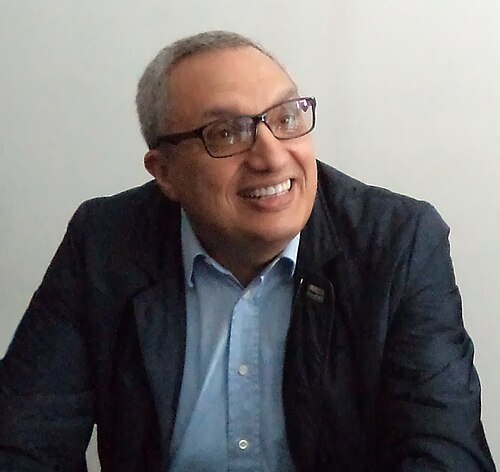
OFFICES OF STATE
Terms of office
- Prime minister — Kostov government
Education and economic background
Ivan Kostov was an economist and university teacher before becoming a leading political figure of the transition. The biography presented to the National Assembly records economic education, additional mathematical training and academic work. This professional background helps explain his emphasis on financial stabilisation, the budget and changes in ownership.
Finance minister and UDF leader
In the early 1990s Kostov served as finance minister in the governments of Dimitar Popov and Philip Dimitrov. He subsequently became leader of the Union of Democratic Forces. By the time he became prime minister in May 1997, he had experience of the first wave of economic transformation. His cabinet followed the banking and currency crisis and Stefan Sofiyanski’s caretaker administration.
The currency board and stabilisation of the lev
The currency board began operating on 1 July 1997. It changed monetary rules by linking lev issuance to foreign-exchange backing and a fixed exchange rate. Following the hyperinflationary crisis, restoring confidence in money was a prerequisite for normal economic activity. Preparations preceded Kostov’s cabinet, while implementation and maintenance involved the government, parliament and Bulgarian National Bank.
Privatisation and structural reform
Privatisation and restructuring of state enterprises and banks accelerated under Kostov. The IMF’s 2000 assessment recorded substantial ownership change, trade liberalisation and lower inflation. These measures transformed the economy while raising questions about sale terms, new owners’ performance and the social consequences of restructuring.
The following IMF consultation noted economic recovery and changes in pensions and healthcare, while also identifying a need for stronger banking supervision and corporate governance. Financial stabilisation and institutional quality are connected but distinct tasks; success in one area does not automatically establish success in every other.
Opening negotiations with the European Union
EU accession negotiations with Bulgaria formally opened on 15 February 2000. The decision followed European assessment of the country’s preparation and established a concrete framework for legislative and administrative change. Opening negotiations was an important development during this period, while membership followed in 2007 after further work by subsequent governments.
Results and contested legacy
Kostov’s government ended in July 2001. Its record is associated with post-crisis stabilisation, extensive ownership transformation and the opening of European negotiations. Assessments of privatisation and the social cost of reform continue to differ. A useful historical reading compares macroeconomic indicators with specific decisions and their circumstances rather than reducing the entire period to a single slogan.
Sources and documents
References accompany each section. Speeches and reports by political figures also reflect their own perspective.
- National Assembly · Ivan Kostov’s election ↗www.parliament.bg
- BNB · 1997 annual report (PDF) ↗www.bnb.bg
- BNB · history ↗www.bnb.bg
- IMF · economic assessment, April 2000 ↗www.imf.org
- IMF · consultation with Bulgaria, March 2001 ↗www.elibrary.imf.org
- Council of the EU · opening accession negotiations, 15 February 2000 (PDF) ↗www.europarl.europa.eu
- European Union · Bulgaria ↗european-union.europa.eu
Reference data last reviewed: . End dates in the timeline indicate the handover of office.
Portrait credit
Gabriel VanHelsing · Original · CC BY-SA 3.0
