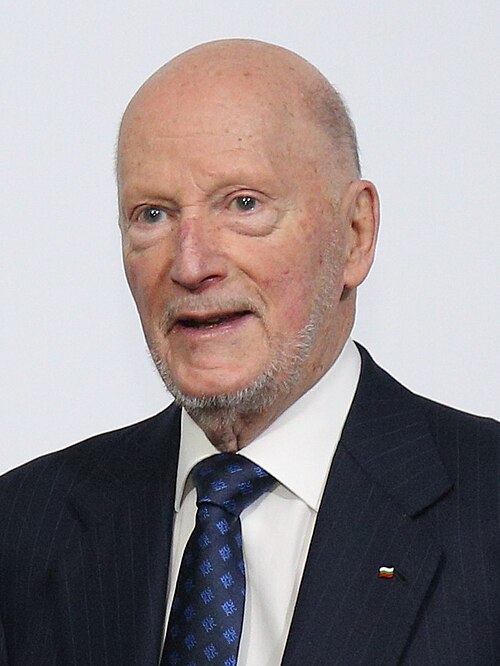
OFFICES OF STATE
Terms of office
- Prime minister — Saxe-Coburg-Gotha government
Childhood, monarchy and exile
Simeon Saxe-Coburg-Gotha is the son of Tsar Boris III. After his father’s death in 1943 he became tsar as a child, with state functions exercised through a regency. He left Bulgaria with his family in 1946 after the republic was proclaimed. This early biography distinguishes him from every other prime minister in the contemporary period.
Returning to Bulgarian politics
In 2001 Simeon returned to live in Bulgaria and entered active politics. In July he became prime minister of the republic. His royal and prime ministerial roles were fundamentally different: the government operated under the parliamentary Constitution of 1991 and derived its authority from parliamentary support rather than hereditary succession.
Preparation for NATO membership
Simeon visited NATO headquarters as prime minister in October 2001. The official account shows that membership was then an objective requiring preparation and commitments. Bulgaria was invited in 2002 and joined on 29 March 2004. This was one of the most significant international developments within his term.
The EU Accession Treaty
The treaty for Bulgaria and Romania’s accession to the European Union was signed on 25 April 2005. Signing completed a major negotiating stage, but was not itself the date of membership. Ratification and fulfilment of commitments followed, and Bulgaria entered the EU on 1 January 2007 under the next government.
Two historical eras in one biography
Simeon’s premiership ended in August 2005. His biography connects the end of Bulgaria’s monarchy with its post-1989 political system. Assessment should distinguish the symbolism of his return, the cabinet’s specific decisions and longer international processes. NATO membership and the EU treaty are documented milestones that also built on earlier administrations’ work.
Sources and documents
References accompany each section. Speeches and reports by political figures also reflect their own perspective.
- Bulgarian News Agency · Simeon II returns to politics ↗www.bta.bg
- National Assembly · Constitution of Bulgaria ↗www.parliament.bg
- NATO · meeting with Simeon Saxe-Coburg-Gotha, 2001 ↗www.nato.int
- NATO · Bulgaria’s accession ↗nato.int
- Council of the EU · Accession Treaty ↗www.consilium.europa.eu
- European Union · Bulgaria ↗european-union.europa.eu
Reference data last reviewed: . End dates in the timeline indicate the handover of office.
