Revolutionary Yane Sandanski

Revolutionary Yane Sandanski
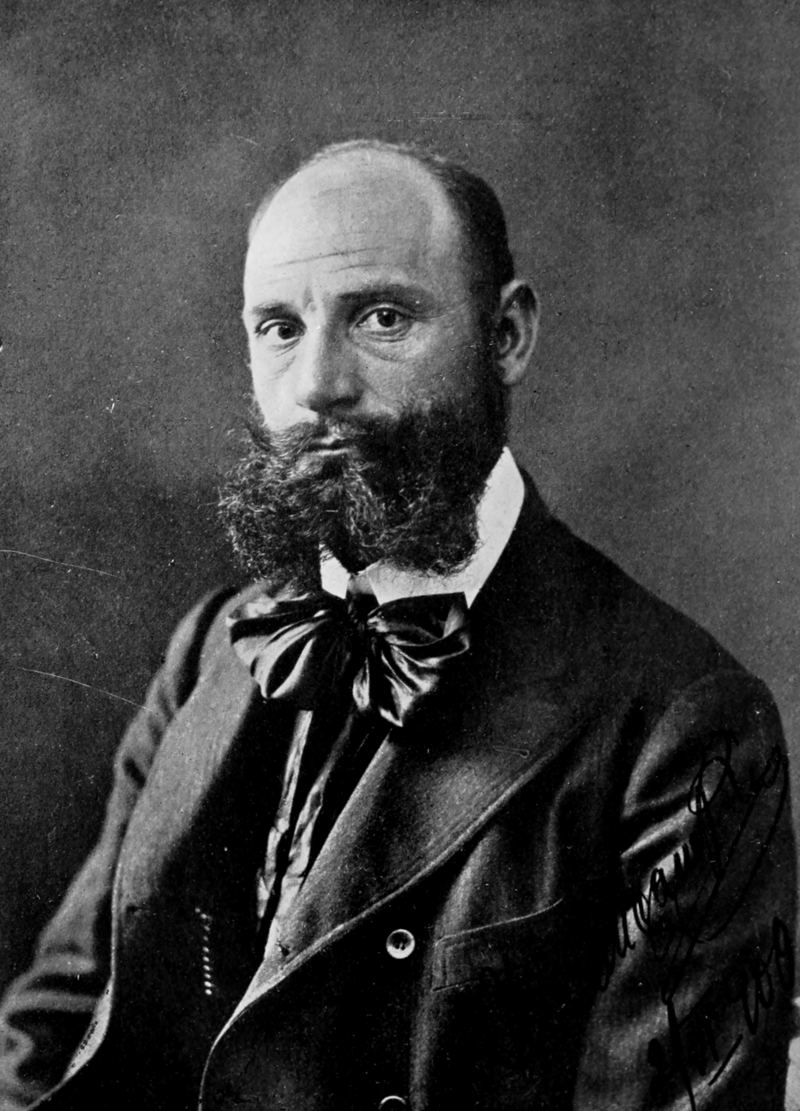
Yane Sandanski
Yane Ivanov Sandanski, also called the Eagle of Pirin, was a Bulgarian revolutionary active in the late nineteenth and early twentieth centuries. He is known as an activist of the Supreme Committee and the long-serving leader of the Serres Revolutionary District of the Internal Macedonian-Adrianople Revolutionary Organisation (IMARO). Sandanski was also known as the Tsar of Pirin, Sandan Pasha and the Old Man.
In the summer of 1895, after the Supreme Committee was established, the structures of the local Macedonian Charitable Society in Dupnitsa joined the new organisation under the name "Edinstvo" (Unity). Sandanski became involved in Edinstvo's activities and decided to help prepare the armed-detachment campaign. In the autumn of 1895, the Serres detachment, formed near Rila Monastery and led by Stoyo Kostov, passed through Dupnitsa. Yane Sandanski joined the detachment, which headed towards the Rhodope Mountains. After attacking and burning the Pomak village of Dospat, the detachment withdrew to Bulgaria and disbanded.
Sandanski continued working actively as a petition writer and participated in the Supreme Committee's activities. In 1897, a new Supreme Committee detachment led by Krastyo Zahariev was formed in Dupnitsa. Yane Sandanski joined this detachment, which entered the Pirin region. It had a serious clash with Turkish troops at Debeli Rid but managed to escape from about 150 Ottoman soldiers without losing any members. Later, in a battle at Lopovo, Sandanski was wounded in his left arm, and one member of the detachment was killed. Todor Sandanski, Yane's elder brother, brought him back to the Principality for treatment.
That same year, Yane Ivanov Sandanski learnt details about the condition of the Internal Macedonian-Adrianople Revolutionary Organisation (IMARO) from Nikola Maleshevski, who also arranged his first meeting with Gotse Delchev. Together with Hadzhidimov, they reformed the Supreme Macedonian Committee in Dupnitsa and directed its activities towards closer cooperation with IMARO. Sandanski initially served as vice-chairman, Georgi Panicharevski became chairman, and Hadzhidimov secretary. After the teachers were dismissed, Sandanski assumed the society's leadership.
In July 1900, Sandanski and Maleshevski represented the Dupnitsa society at the Seventh Macedonian-Adrianople Congress in Sofia. At the congress, Sandanski voiced his objections to the organisation's statutes, opposing the Sofia Committee's view that the Macedonian question should be resolved through diplomacy rather than revolution. After the congress, during the conflict between Sarafov's and Tsonchev's supporters in the Supreme Committee, Sandanski adopted a position close to that of the Internal Organisation.
In April 1901, Sandanski and Maleshevski participated as delegates at the Eighth Congress and supported the resolution for cooperation with the Internal Organisation and for the "elimination of national and chauvinistic hostilities" in the Balkans. During this period a rupture developed between the Supreme Macedonian Committee and IMARO, the principal dispute concerning whether the time had come for an armed uprising. Sandanski firmly sided with IMARO, believing that the right moment for such action had not yet arrived.
Share:


