Revolutionary Todor Kableshkov

Revolutionary Todor Kableshkov
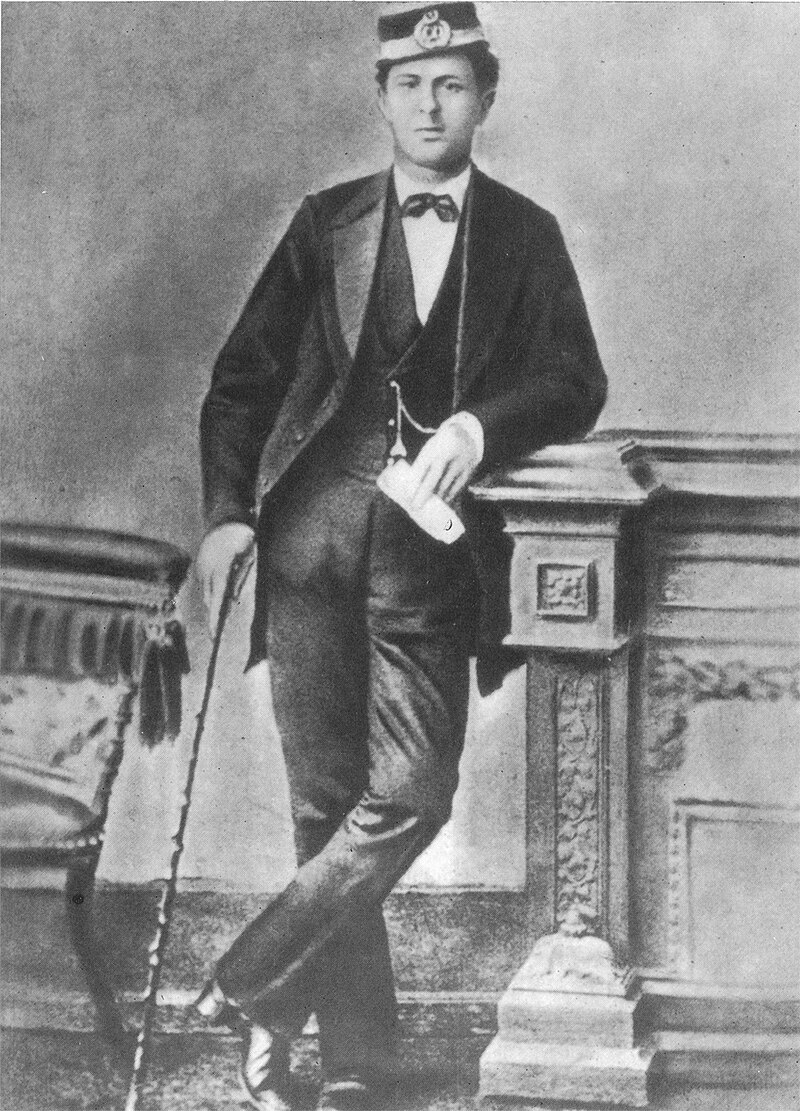
Todor Kableshkov
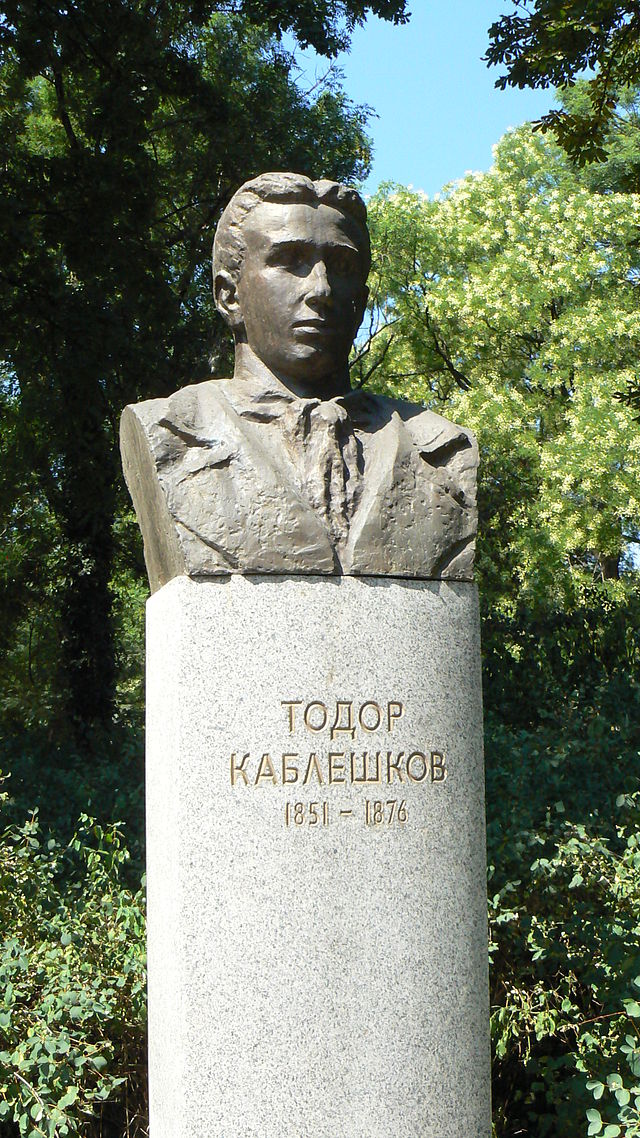
Todor Lulchov Kableshkov was a Bulgarian revolutionary born on 13 January, or 1 January Old Style, 1851 in Koprivshtitsa. He came from a wealthy family; his father was Hadzhi Lulcho Kableshkov. He had an elder brother, Iliya Kableshkov, who was killed by rural patrolmen in 1858.
Todor returned to Koprivshtitsa in 1871 and began revolutionary activities. On 1 January 1872 he established "Trudolyubie" (Diligence) as a cooperative society for the people's economic and cultural advancement.
Todor Kableshkov worked as a telegraph operator in Adrianople, where he organised his first symbolic revolt, assisted revolutionaries in Belovo and helped establish a community cultural centre in Golyamo Belovo. In the spring of 1875, after a brief stay in Koprivshtitsa, he settled in Tatar Pazardzhik as a timber merchant and actively supported revolutionary work in the region. He tried to gauge sentiment among the Bulgarians in Sofia, Samokov, Pirot and other towns. In the autumn of 1875 he returned to Koprivshtitsa, where he learnt of the failure of the Stara Zagora Uprising, which prompted him towards more active revolutionary work.
Todor Kableshkov fell in love with the teacher Maria Balgarova, who helped make the flag of the Koprivshtitsa insurgents. Despite their separation, he gave Maria his photograph and a pair of small scissors to use to sew a new flag or, if necessary, to cut her veins so that she would not fall into Turkish hands. Todor Kableshkov frequently travelled to Filibe, where he visited Hristo G. Danov's bookshop and bought new Bulgarian books. During his journeys he also organised and strengthened revolutionary committees in various villages.
In the autumn of 1875, after the Stara Zagora Uprising ended, prominent revolutionaries including Nikola Obretenov, Stoyan Zaimov, Georgi Benkovski, Stefan Stambolov, Ilarion Dragostinov and others established the Giurgiu Central Revolutionary Committee in Giurgiu. They divided the Bulgarian lands into four revolutionary districts and decided that the uprising would begin on 1 May. Panayot Volov was elected chief apostle, or revolutionary organiser, in the Panagyurishte district, with Georgi Benkovski as his assistant.
In January 1876, Volov and Benkovski crossed the River Danube at Oryahovo and visited Plovdiv, but soon realised that the committee network was better developed in the Sub-Balkan valleys and moved the revolutionary centre to Panagyurishte. Much was done for the cause in Panagyurishte, Klisura, Bratsigovo, Peshtera, Tatar Pazardzhik, Kalofer, Belovo and other settlements, where active supporters included Todor Kableshkov, Kocho Chestimenski, Zahari Stoyanov, Nayden Popstoyanov, Ivan Arabadzhiyata and others.
On 13 January, Panayot Volov established a second committee in Koprivshtitsa, involving Nayden Popstoyanov, Tancho Shabanov, Father Nikola Belchov, Tsoko Budin, Todor Kableshkov and others. Here a decision was adopted to proclaim the uprising on 1 May. Volov authorised Kableshkov to establish revolutionary committees and drew up important plans for the uprising.
On 1 May, Ottoman irregulars concentrated around Koprivshtitsa, supported by regular troops with artillery. The Turks entered the town, which was subjected to looting and violence. The Turkish army, led by Hafiz Pasha, carried out reprisals, destroying Panagyurishte and Klisura, while the insurgents were betrayed by the wealthy notables. Kableshkov tried to help Klisura but found it under bombardment and withdrew to Koprivshtitsa. News arrived from Panagyurishte that the town was being shelled by artillery and that some Bulgarians had betrayed the uprising, delaying the troops.
On 1 May, the Turks reached Koprivshtitsa and besieged it. Although the insurgents attempted to defend themselves, the town fell into Turkish hands. Hasan Bey and Hafiz Pasha participated in the looting and mass killing in the town, relying on brutality and violence. This formed part of the general bloody suppression of the Belovezh Uprising of 1876. Koprivshtitsa witnessed a tragedy: its inhabitants suffered killings and violence, and the town was looted and devastated.
Share:


