Revolutionary Stamat Tanchev

Revolutionary Stamat Tanchev
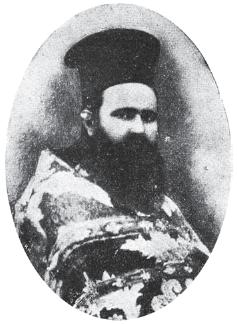
Stamat Tanchev
Father Stamat Georgiev Tanchev was a Bulgarian clergyman, revolutionary and activist in the Bulgarian National Revival in Macedonia. He was born in 1857 in the village of Bugarievo, then part of the Ottoman Empire and now Nea Mesimvria, Greece. Tanchev became a priest at the Bulgarian Church of Saint Demetrius in Thessaloniki and was elected chairman of the city's Bulgarian community.
As early as 1894 he joined the Internal Macedonian-Adrianople Revolutionary Organisation (IMARO), initiated by Dame Gruev. During his involvement in revolutionary activity, Tanchev distinguished himself as an active participant in the struggle for an independent church and undertook organisational work.
IMARO's Gevgelija leader Iliya Doktorov described him as one of Dame Gruev's most trusted assistants. Tanchev helped organise secret meetings between Dame Gruev and representatives from the provinces and was entrusted with substantial organisational responsibilities. He maintained constant contact with terrorists and played an important role in sending and receiving clandestine mail from the provinces.
In 1901, during the Thessaloniki affair, Tanchev was arrested and sent into exile in Bodrum Fortress, Asia Minor. Despite this ordeal, he remained devoted to the revolutionary struggle. He was arrested again in April 1903 following the Thessaloniki bombings, for which he was imprisoned, tortured and sentenced to life imprisonment. Soon, however, he was released again.
Stamat Tanchev's life came to a tragic end in 1904, when Greek terrorists killed him outside the door of his home in Thessaloniki. The principal organiser of his murder was Alexandros Aivaliotis. Tanchev was the brother of the teacher Bozhin Tanchev and the father of the revolutionaries Dimitar Popstamatov and Petra Popstamatova.
Hristo Silyanov described him as a man whose stern appearance inspired respect. After his martyr's death, he is remembered as a victim of the cause of freedom and independence for the Macedonian Bulgarians.
Share:


