Tsar Simeon the Great

Tsar Simeon the Great
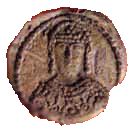
Simeon the Great
Tsar Simeon I was the first Bulgarian tsar and ruled the First Bulgarian Empire from 893 to 927. He was born around 863–864 and was the third son of Prince Boris I and Princess Maria of Khan Krum’s dynasty. He had three brothers—Vladimir, Jacob and Gabriel—and two sisters, Anna of Bulgaria and Eupraxia of Bulgaria. Boris originally intended to place his eldest son, Vladimir, on the throne. For this reason, Simeon was destined to become a senior cleric. Around 878, he was therefore sent to the Magnaura School in Constantinople to receive a theological education, studying Greek and philosophy. Around 888, he returned to the Bulgarian state and settled in Preslav. There, together with other monks, he worked on translating theological literature from Greek into Old Bulgarian. Simeon I died of a heart attack on 27 May 927.
In 889, Prince Boris I voluntarily abdicated and designated his eldest son, Vladimir, as his successor. During his short reign, Prince Vladimir-Rasate attempted to restore paganism as the religion of the Bulgarian state. Boris I then briefly returned to the throne in 893. At the end of that year, the ecclesiastical and national Council of Preslav was held and took several important decisions: Boris’s son Simeon was to ascend the throne; the Bulgarian capital was to move from Pliska to Preslav; Byzantine clergy were to be expelled from the country; and Bulgarian was to become the official language of worship.
Tsar Simeon I was distinguished not only by his learning and spirituality but also by his skill in diplomacy and warfare. Soon after ascending the throne, he ended the long-standing peace treaty with the Byzantine Empire. The wars between Bulgaria and Byzantium can be divided into two phases: the first from 895 to 897, and the second in 913–914. The initial military conflicts were caused by the relocation of the Bulgarian marketplace from Constantinople to Thessaloniki. This directly affected the Bulgarian state’s economic interests, as additional taxes had to be paid. Simeon then invaded Thrace with his troops for the first time and won a victory. He subsequently entered lengthy, unsuccessful diplomatic negotiations with the Byzantine aristocracy under Emperor Leo VI the Wise. The Byzantines made an agreement with the Magyars and attacked and devastated north-eastern Bulgarian territory. In turn, Simeon won the Pechenegs over to his side, and in 896 they jointly drove the Magyars out of Bulgarian territory. In the summer of 896, Simeon inflicted a heavy defeat on the Byzantines at the Battle of Bulgarophygon, or Burdizon, in eastern Thrace. The Bulgarian marketplace was then moved back to Constantinople, bringing the first phase of warfare with Byzantium to an end. Following this victory, Simeon increasingly turned his thoughts to the Byzantine throne. In 913 he therefore marched towards Constantinople, where Patriarch Nicholas Mystikos symbolically crowned him “tsar of the Bulgarians”. He gained an opportunity to become regent for the still-underage Emperor Constantine VII Porphyrogenitus, but the empress thwarted these plans. After this failure, on his return to Bulgaria, Simeon captured Adrianople and devastated eastern Thrace.
The decisive battle between Bulgarians and Byzantines in this conflict took place on 20 August 917 on the River Achelous near Anchialus, present-day Pomorie. The Bulgarians inflicted a devastating defeat on the Byzantine army.
After this battle, disputes began with the Serbian principality, which Simeon incorporated into Bulgaria by 924. Through this act, Bulgaria’s borders reached three seas.
Share:


