Revolutionary Peyo Yavorov

Revolutionary Peyo Yavorov
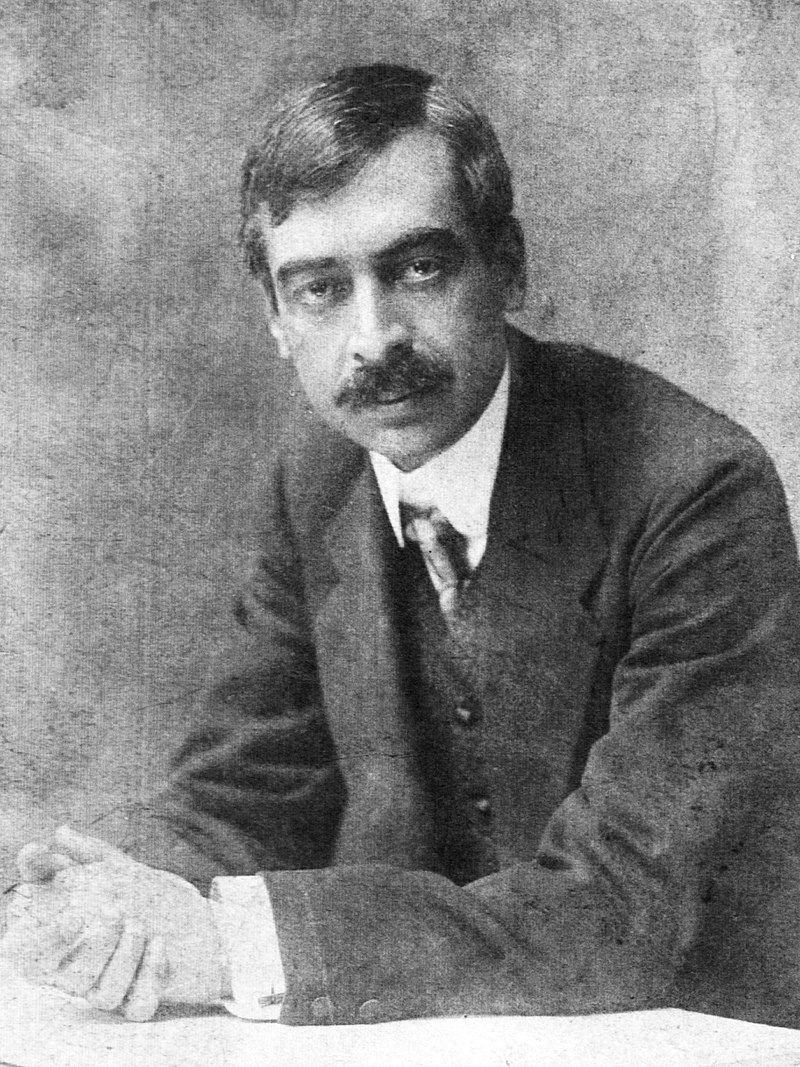
Peyo Yavorov
Peyo Totev Kracholov, also known as Peyo Yavorov, was a Bulgarian poet, Symbolist and revolutionary, and a voivode of the Internal Macedonian-Adrianople Revolutionary Organisation. He is regarded as one of the greatest Bulgarian poets of the twentieth century. He used various pseudonyms, including Dzhemo, I. Krachev, Othello and Peycho.
In 1902, Yavorov entered Macedonia as a member of Mihail Chakov's detachment. Soon afterwards he was captured by a Supremist detachment and returned to Bulgaria. He began working as an editor of publications associated with the Macedonian-Adrianople revolutionary movement. His first publication was the poem "Forward" in the newspaper "Glas Makedonski" (Macedonian Voice). Yavorov became a member of Yane Sandanski's detachment and supported Gotse Delchev. In 1909 he published his memoir and essay collection "Hajduk Longings: Memories of Macedonia, 1902–1903".
With the assistance of Dr Krastyo Krastev and Pencho Slaveykov, Yavorov settled in Sofia and became a contributor to and editor of the literary journal "Misal" (Thought). He wrote the poem "Calliope" and published the poetry collection "Poems" (1901), followed by "Sleepless Nights" (1907), which transformed Bulgarian lyric poetry. He worked as a librarian and dramaturge at the National Theatre, presenting the plays "At the Foot of Vitosha" (1910) and "When Thunder Strikes, How the Echo Fades" (1912).
Yavorov travelled abroad to develop his literary knowledge and became acquainted with modern French poetry. In 1910 he published "Following the Shadows of the Clouds", and during the Balkan War of 1912 he volunteered for the Macedonian-Adrianople Volunteer Corps, commanding Partisan Detachment No. 15. He became the first mayor of Nevrokop after its liberation in 1912.
Lora Karavelova, daughter of the statesman Petko Karavelov, married Peyo Yavorov in 1912. Before he left for the front in Kyustendil, their marriage was overshadowed by a tragic love that would end fatally. Their correspondence, preserved to this day, reveals a fervent and passionate love, but one also filled with doubt.
On 29 November 1913, Lora shot herself, and Yavorov made an unsuccessful suicide attempt. The shot pierced only his temple and left him blind. Devastated by the court proceedings and accusations that he was a murderer, on 29 October 1914 the poet took poison and shot himself. His body was buried in Sofia, and his work, steeped in tragedy, remains part of the history of Bulgarian literature. Peyo Yavorov took his own life after profound emotional blows: the loss of Gotse Delchev, Mina Todorova's death and accusations that he had murdered Lora.
Share:


