Revolutionary Panayot Volov

Revolutionary Panayot Volov
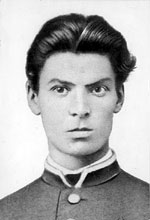
Panayot Volov
Panayot Volov, known by the pseudonym Petar Vankov, was an important participant in the Bulgarian national revolutionary movement of the nineteenth century. He was one of the initiators, founders and leading figures of the Giurgiu Revolutionary Committee and the April Uprising of 1876.
The name "Volov" came from his father, Vicho Simeonov, who had been forced to kill someone else's ox and paid compensation for it, earning him the nickname "Volov". This nickname was passed on to his son as a surname.
Panayot Volov taught natural history, physics and mathematics and used his lessons to encourage patriotic feelings among his pupils. He organised evening schools, supported the local "Napredak" community cultural centre and, together with his colleagues, organised theatrical performances.
In 1874, Volov attended the general assembly of the Bulgarian Revolutionary Central Committee in Bucharest and became chairman of the Shumen Local Revolutionary Committee. Under the cover of a school inspector, he organised or revived committees in 14 settlements in the Shumen region.
In the autumn of 1874, Panayot Volov guided a reconnaissance mission by the Russian colonel Georgy Bobrikov, making tours to inspect Shumen's fortifications and the fortress of Preslav. In December of the same year, Volov provided Hristo Karavelov with funds to buy 12 revolvers.
In early 1875, Volov was arrested for his involvement in a conflict between local young people and European engineers building the Kaspichan–Shumen–Yambol railway. He became a leader of the protest against the wedding of a French engineer and a local girl. After several months in prison, he was released and left Bulgaria for Romania.
Georgi Benkovski and Panayot Volov played a key role in organising the April Uprising of 1876. Their organisational efforts led to the creation of numerous local revolutionary committees involving many local patriots. Disagreements arose within the leadership, but Volov showed resolve and tactical judgement when he yielded precedence to Benkovski, considering him more worthy.
When the uprising broke out in April 1876, Volov was in Panagyurishte, where he and his fellow apostles, or revolutionary organisers, raised the population in revolt. He formed a detachment of 150 men and directed fighting against the Turks and Tatars in the region while seeking support from Koprivshtitsa. In the following days he strengthened the detachment's positions in Klisura and took part in clashes with Ottoman irregulars. On 26 April he received an appeal for help from Klisura, but when he arrived, the town was already in flames and the insurgents had withdrawn.
After the uprising was crushed, Volov and Benkovski headed towards the Tarnovo Balkan Mountains with a detachment of a hundred men but encountered defeats and pursuit. The detachment dwindled to 27 men, fighting sporadic engagements and rapidly losing people. On 20 May, Volov and the remaining eight men were outside Tarnovo, but the failure of the uprising prompted him to try to escape to Romania. He and the other apostles split into three groups, with Volov deciding to avoid detection.
However, Volov, together with Georgi Ikonomov and Stoyan Angelov, was betrayed, wounded while attempting to swim across the River Yantra and died. His remains were placed in the Pantheon of National Revival Heroes in Ruse. Thus ended the life of Panayot Volov, one of the initiators and leaders of the Bulgarian revolutionary struggle during the liberation era.
Share:


