Kan Omurtag

Kan Omurtag
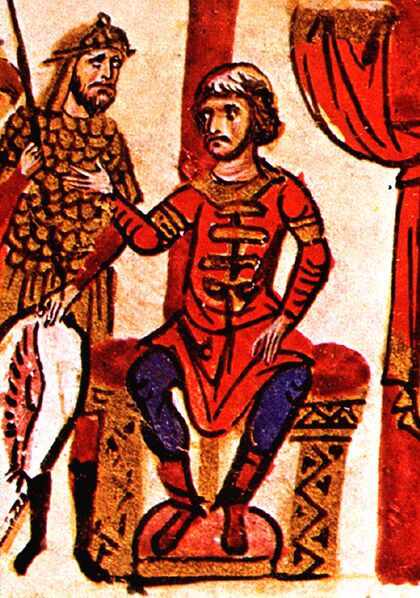
Omurtag
Omurtag (Greek: Μορτάγων, Ομουρτάγ) was a Bulgarian ruler and a son of Krum. He ruled Bulgaria from 814 to 831. He concluded a 30-year peace treaty with Byzantium, which helped him continue consolidating the state internally. He undertook extensive building activity and expressed concern about increasing Byzantine influence, which prompted him to persecute Christians.
According to the medieval historian Rasho Rashev, his name may have been Murtag; it is also recorded as Murtagon. His accession followed a brief period of political instability after Krum’s death. Various hypotheses exist about the roles of the Bulgarian leaders, but it is generally accepted that Omurtag succeeded his father after a short period of turmoil in the government.
After Krum’s death, the Bulgarians continued hostilities in 814–815, rejecting the Byzantine offer of peace. The Byzantines organised a naval landing near Nesebar and successfully captured the town, opening a front behind the Bulgarians. Subsequent Byzantine operations enabled them to recover the more important fortresses in eastern Thrace.
In 815, Omurtag concluded a 30-year peace treaty with Byzantium. The treaty, which involved a reciprocal oath-taking ceremony in Constantinople, was important for regional stability. It also provided for the clarification of the boundaries in Thrace and the settlement of questions concerning the Slavs living in the region.
Despite his short reign, Omurtag continued the policy of territorial expansion and consolidation of the state. He combined an active foreign policy with the strengthening of internal stability and building activity, remaining an important figure in the history of the First Bulgarian state.
Khan Omurtag holds a significant place in Bulgarian history through his building activity, which contributed to the development of the Pliska–Preslav culture. Surviving sources and commemorative inscriptions testify to the restoration of Pliska and the construction of a new khan’s palace with a throne hall.
New palaces and fortresses were built, underscoring the economic strength of the state during this period. The capital, Pliska, was restored after its destruction in 811 by the Byzantine emperor Nikephoros. The new palace, pagan temple and renewed city fortifications demonstrate the high standard of construction. Omurtag left a famous inscription reflecting both his building activity and the idea of life’s eternal cycle.
In his inscriptions, the khan describes details of the buildings constructed, including the new palace on the Danube and the bridge over the Tutsa. These achievements are regarded as a major economic and cultural development and gave the capital its distinctive appearance.
Omurtag is also associated with the persecution of Christians in Bulgaria. Territorial expansion brought many Christians into the state. They became the targets of persecution for political reasons rather than because of their religious beliefs.
Khan Omurtag died in 831 and was succeeded by his son Malamir. The reasons for his death are unclear, and there are various hypotheses about the events that followed. Nevertheless, he remains an important figure in the history of the First Bulgarian state, combining an active foreign policy with internal consolidation and development.
Share:


