Revolutionary Nikola Obretenov

Revolutionary Nikola Obretenov
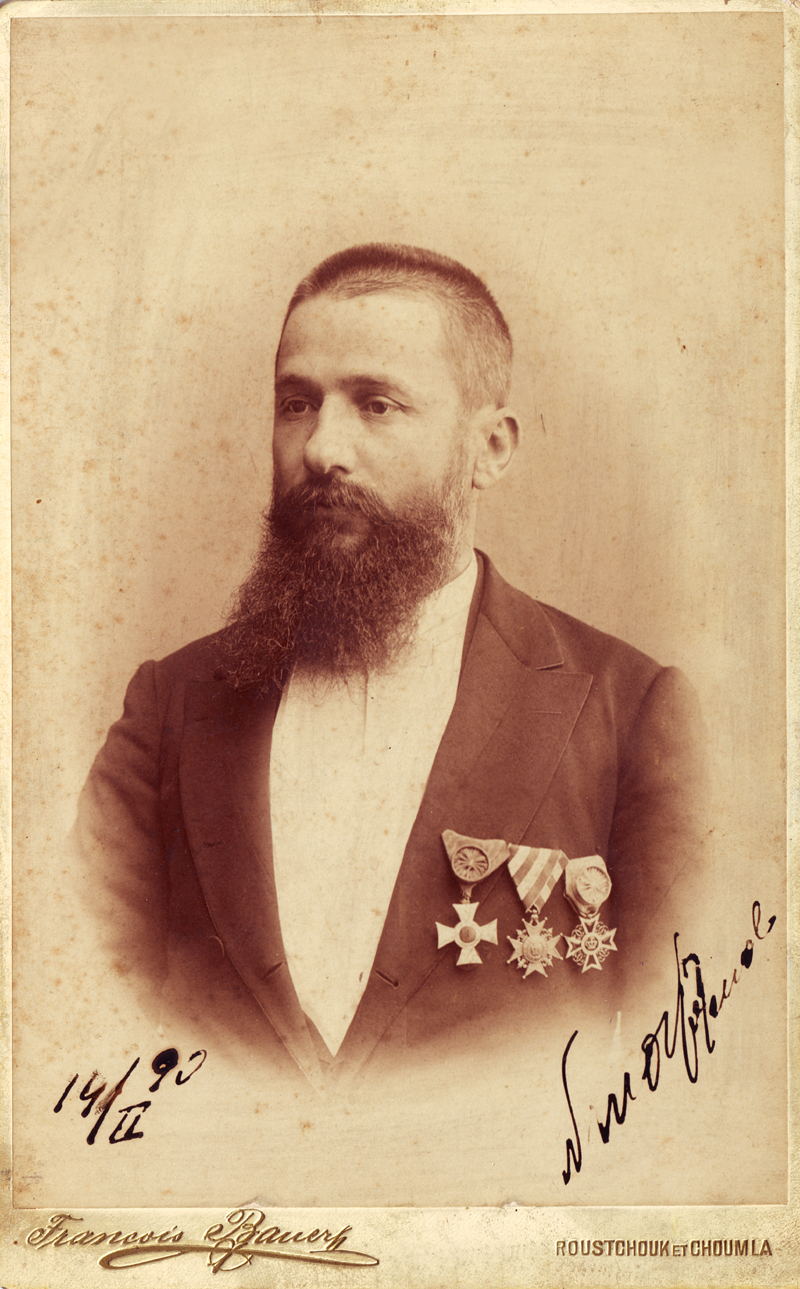
Nikola Obretenov
Nikola Tihov Obretenov was a Bulgarian national revolutionary and participant in the revolutionary activities of the Bulgarian Revolutionary Central Committee (BRCC), the Internal Revolutionary Organisation (IRO) and the Giurgiu Revolutionary Committee. He played an important role in preparing and carrying out the April Uprising of 1876 in Bulgaria.
In November 1867, Obretenov became librarian and a board member of the "Zora" community cultural centre in Ruse, one of the BRCC's secret meeting places. In June 1871, Hristo Ivanov, known as Golemiya, invited him to join the revolutionary struggle and serve as a courier between Bulgaria and the BRCC in Bucharest.
On 29 June 1871, Obretenov went to Bucharest and presented his recommendations to the BRCC chairman, Lyuben Karavelov. With Dimitar Gorov of Giurgiu, he developed a clandestine route for transporting mail, printed materials and arms between Bulgaria, Giurgiu and Ruse.
In December 1871, Nikola Obretenov, Toma Kardzhiev and Radi Ivanov founded the IRO's Ruse Local Revolutionary Committee. The committee was established on 10 December 1871 in the home of his mother, Baba Tonka Obretenova. Other revolutionaries joined later.
In 1873, Obretenov met Stefan Stambolov, who expressed a wish to join the struggle as Vasil Levski's replacement.
In 1874, Obretenov attended the BRCC meeting in Bucharest at which Lyuben Karavelov was re-elected chairman. In 1875 he continued his active revolutionary work, attended BRCC meetings and played an important role in preparations for the uprising.
In 1876, Obretenov and the other apostles set out for their assigned revolutionary districts, playing a decisive role in preparing and organising the uprising that broke out in May 1876. Remembered as one of the leaders of the April Uprising, Nikola Obretenov earned a reputation as a dedicated revolutionary and fighter for Bulgaria's liberation from Ottoman rule.
In 1876, when the situation in Vratsa failed to develop as expected, Nikola Obretenov and Georgi Apostolov decided to return to Romania to buy arms. They intended to return to Vratsa with a detachment after the uprising began. With the support of the Craiova Local Revolutionary Committee, they managed to purchase the necessary weapons and ammunition. Hristo Botev, a well-known patriot, enthusiastically committed himself to organising the detachment.
On 17 May 1876, Nikola Obretenov arrived on the bank at Kozloduy aboard the steamer "Radetzky" with the detachment led by Hristo Botev. There the men kissed their native soil before the flag made by his sister Petrana Obretenova.
Nikola Obretenov actively participated in all the detachment's battles and witnessed Hristo Botev's death on 20 May 1876.
After a month of fighting, wandering and hunger in the inaccessible mountains, on 17 June he and his companions Sava Penev, Dimitar Todorov Dimitroto and Stoyan Lovchaliyata were betrayed and captured by a pursuit party at Balyu's Inn near the village of Shipkovo in the Troyan region.
The court in Tarnovo sentenced them to death, but the sentence was not signed, so the condemned men were sent before an extraordinary court in Ruse. There they again received death sentences by hanging. Nikola Obretenov and Stoyan Zaimov were paraded through the entire town with their sentences hanging around their necks. By order of the sultan, the sentences were commuted to lifelong exile in Asia Minor.
On 2 July 1876, at the fortress of Saint-Jean d'Acre, Nikola Obretenov met his brother Angel, who had already been imprisoned for eight years for participating in the detachment of Hadzhi Dimitar and Stefan Karadzha.
After Bulgaria's liberation under the Treaty of San Stefano in 1878, Nikola Obretenov returned to his liberated homeland.
Share:


