Revolutionary Mishe Razvigorov

Revolutionary Mishe Razvigorov
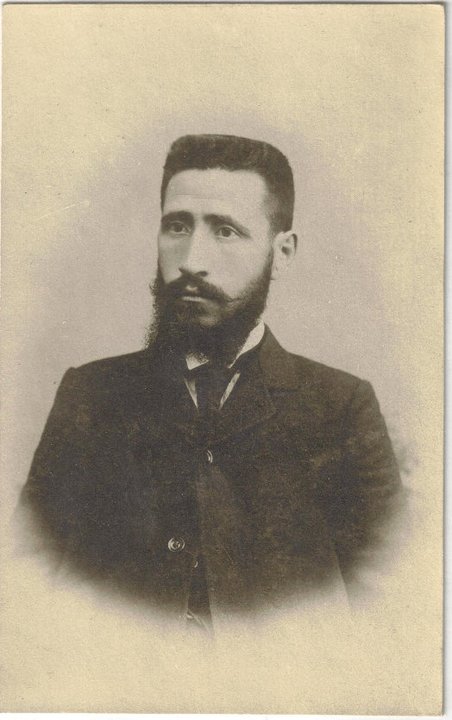
Mishe Razvigorov
Mihail (Mishe) Spirov Razvigorov, also known as Klebel, was a Bulgarian revolutionary and active participant in the Bulgarian national liberation movement in Macedonia and the Adrianople region in the early twentieth century.
Razvigorov was born in 1873 in Shtip into a family of revolutionaries. He and his brothers Aleksandar and Emanuil (Mane) joined the Internal Macedonian-Adrianople Revolutionary Organisation (IMARO), while his nephew Ipokrat Razvigorov and his son Strahil Razvigorov became prominent figures in the organisation after the First World War.
Mishe Razvigorov completed the fifth class of the Bulgarian Boys' High School in Thessaloniki and the third class of the Kyustendil Teacher Training School in 1896. He participated in establishing the Macedonian Youth Society in Kyustendil in 1893. He was expelled from school for a student revolt, after which he completed his education at the Teacher Training School in Kazanlak.
In 1895, after returning to Shtip, Razvigorov joined IMARO. In 1897 he was arrested following revelations connected with the Vinitsa affair and sentenced to life imprisonment in Bodrum Fortress in Asia Minor. In 1902 he was amnestied and settled in Kyustendil, where he took charge of the border post.
He actively participated in preparing and carrying out the Ilinden-Preobrazhenie Uprising in 1903. In 1904 he became district voivode for Shtip and that same year participated in the well-known Kokoshino massacre, where he punished eight supporters of the Serbian cause found to have collaborated with the Turkish authorities.
In 1905 he was a delegate to IMARO's Skopje District Congress, and in 1906 he was elected a member of the organisation's Skopje District Committee. He also became involved in a dispute with Petar Angelov, another leader of the Skopje District Committee.
In 1907, according to testimony, Razvigorov was betrayed by Marko Sekulichki and killed himself while fighting Turkish troops to avoid falling into Ottoman hands. This incident preceded betrayals and splits within IMARO. He is remembered as a revolutionary, activist and military leader, and his grave is preserved as a monument to national history.
Share:


