Kan Krum

Kan Krum
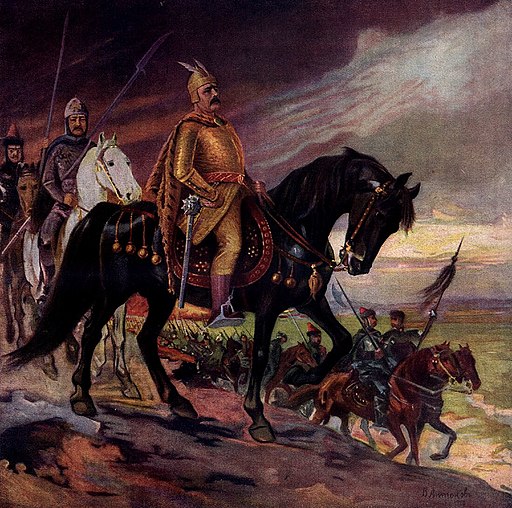
Krum

Krum was a medieval Bulgarian monarch who ascended the throne after Kardam. During his reign, Bulgaria strengthened its position in the Balkan Peninsula and Europe through numerous battlefield victories. Krum introduced laws of general application and carried out an administrative reform that brought the Slavs into government.
Negotiations and victories: Krum confronted the Byzantine Empire and the Franks, consolidating Bulgaria’s territorial position. In 803–805, following the defeat of the Avar Khaganate, he subdued the remnants of that barbarian confederation and established the frontier with the Franks along the Danube. The conquest of Transylvania and the successful exploitation of its salt works secured an important position in international trade.
Confrontation with Byzantium: In 807, the Byzantine emperor Nikephoros I Genikos launched a campaign against Bulgaria but failed to conquer it. In 808, Krum invaded the Struma valley, securing substantial pay and capturing Serdica after a difficult siege. Various measures of resistance were undertaken in Constantinople, including the resettlement of populations and the movement of troops, albeit against their will.
Interesting facts: In the Hambarli inscription, Krum is called by the Byzantine title archon. Also known as Krum the Fearsome, his reign is associated with successful military campaigns and important reforms. Krum remains an outstanding figure in Bulgarian history, raising the state to new heights and strengthening its regional position.
As well as being a gifted military commander, Krum was a talented statesman. He created the first written laws. According to a legend, he questioned Avar prisoners of war about the reasons for the collapse of their state and based his laws on their answers. Information about Krum’s laws appears in the 10th-century Byzantine encyclopaedia Suda, a book containing penitential punishments imposed in Rome during the 1st century.
Krum also took the first steps towards an administrative reform, as shown by the Hambarli inscription. He abolished tribal autonomy in Thrace, entrusting its administration to the kavhan, the ichirgu-boil and his brother. This measure broke with the tradition of dividing the sarakt into a centre, left wing and right wing, and introduced changes to the state’s administrative system. The governors of the new regions were appointed directly by the ruler rather than being Slavic tribal chiefs. Furthermore, a region’s territory no longer depended on the lands inhabited by a particular tribe.
During his short reign, Krum achieved territorial expansion and consolidation of the state on a scale unmatched by any predecessor. His victories in the Balkans strengthened Bulgaria’s position not only in relation to Byzantium but throughout Europe, raising the country to the position of the continent’s third-strongest power. He continued the unification of the peninsula’s Slavs, and after him the conquest of Constantinople became a principal objective of Bulgarian rulers.
Share:


