Revolutionary Kosta Panitsa

Revolutionary Kosta Panitsa
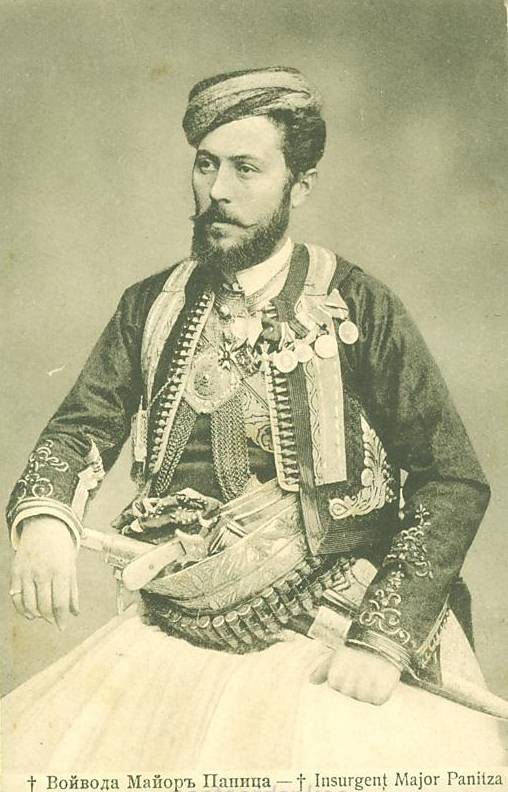
Kosta Panitsa
Kosta Panitsa was a well-known Bulgarian officer and participant in various military conflicts and revolutionary events during the nineteenth century. He was born in 1857 in Tarnovo, and his family originated from the village of Debelets. Although his father did not use the nickname Panitsa as a surname, some of his children, including Kosta, later adopted it.
Panitsa was educated at the Saint Cyril graded school in Tarnovo, but after his father's death he moved to Varna and later went to Bucharest and Odesa, where he studied at military schools. In 1876 he helped prepare the April Uprising and actively participated in the struggle to liberate the Bulgarian people.
In 1877–1878 he participated in the Russo-Turkish War as a volunteer and fought in numerous battles for the liberation of the Bulgarian lands. For his bravery and wartime service, he received the soldiers' Cross of Saint George and was promoted in rank.
After the war, Panitsa continued to participate actively in Bulgaria's political and military life. He was a member of the Bulgarian Secret Central Revolutionary Committee and played an important role in the Unification of the Principality of Bulgaria and Eastern Rumelia in 1885.
In 1890 Panitsa was exposed as the organiser of a plot to assassinate Prince Ferdinand and Prime Minister Stambolov. He was sentenced to death and executed on 16 June of that year.
Kosta Panitsa's life and activities have attracted attention in Bulgarian history and culture, and a documentary about his life was made in 1986. The National Museum of Military History preserves his decorations and personal belongings, bearing witness to the significance of his role in Bulgarian history.
Share:


