Voivode Ilyo

Voivode Ilyo
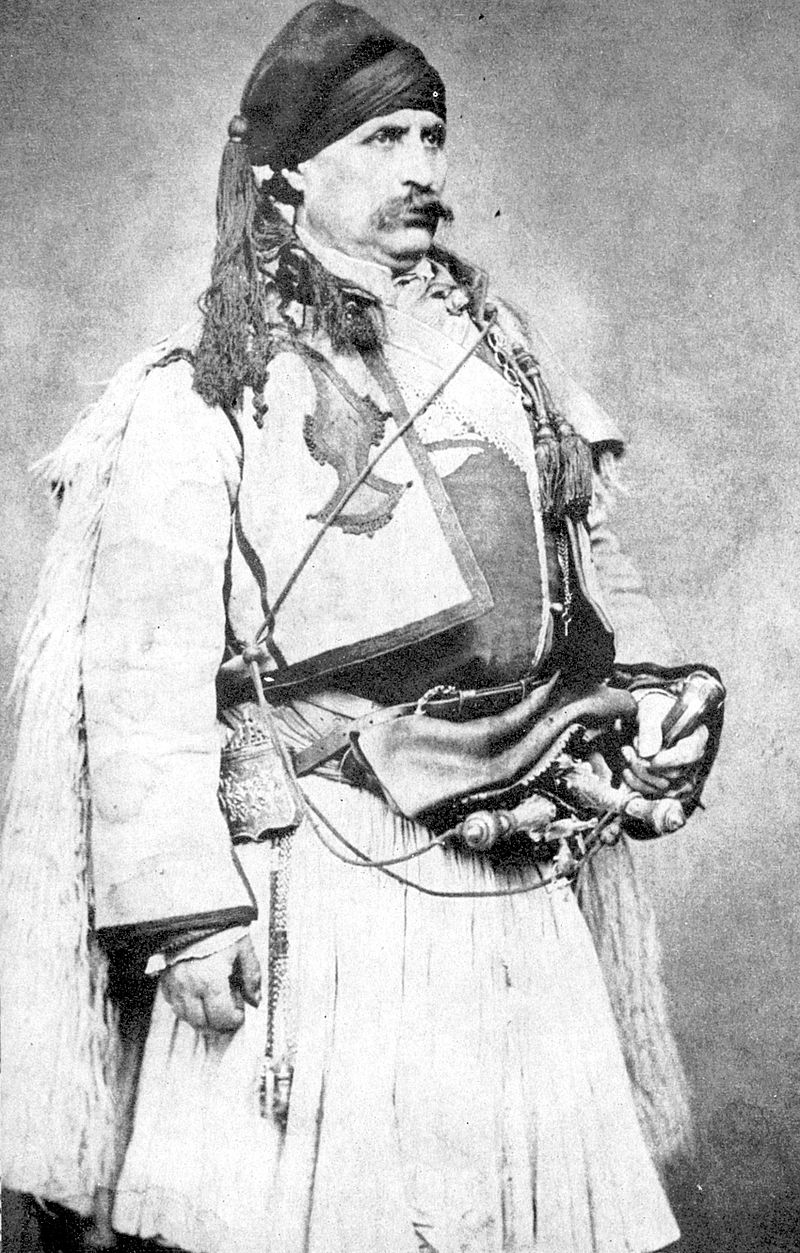
Ilyo
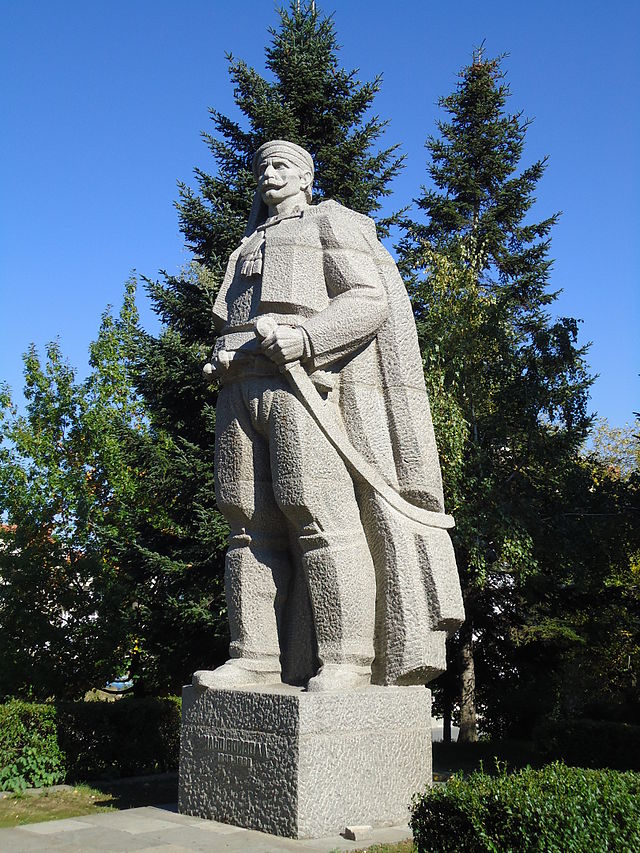
Iliya Markov Popgeorgiev, known as Ilyo the Voivode, Kara Iliya, Dyado Ilyo Maleshevski or Maleshevets, was a Bulgarian hajduk and revolutionary born in 1805 in the Maleshevo town of Berovo, then in the Ottoman Empire. His grandfather, Father Georgi, died leading a detachment in battle against Turkish irregulars near the village of Pastuh. He grew into a dark-complexioned, large man, which led the Turks to call him Kara Iliya, or Black Iliya. Between 1830 and 1838 he spent years in his native village and visited Rila Monastery, where he was appointed a guard.
In 1838 he married and returned to Berovo. In 1850, after a quarrel with the Turkish standard-bearer, Ilyo decided to take revenge and killed the Turk, then formed his own detachment. In the following years his detachment became known in Maleshevo, Piyanets and Osogovo. During the Crimean War of 1853–1856, it grew to 70 men. In 1856, after the Hatt-i Humayun reform decree, the pasha of Skopje sent the district administrator to persuade him to return to peaceful life. On the advice of Metropolitan Auxentius of Kyustendil, Ilyo received a solemn pardon and returned to Berovo. However, after discovering a plot by local Turks to kill him, Ilyo the Voivode killed the conspirators and again took to the mountains.
In 1859 the Turks looted and destroyed his house. His wife Tsona and their children were brought to Kyustendil and kept under supervision. During this period his difficult situation attracted the attention of the teacher Damaskin, who wrote a letter to Nayden Gerov requesting help.
In 1860, pursued by the Turks, Ilyo the Voivode moved his detachment to Serbia and in 1861 participated in the First Bulgarian Legion. There he assisted Georgi Rakovski with the legionaries' military training. He showed exceptional courage in storming Kalemegdan and commanded the legion's battalion.
When the Russo-Turkish War broke out in 1877, Ilyo the Voivode was in hospital, not yet recovered from his wounds. He left hospital and went to Svishtov, where he joined the Russian army. For his services, the Russian command appointed him captain and placed him in command of a volunteer detachment. He led the detachment behind Turkish lines in the Lovech region and, during the crossing of the Balkan Mountains, participated in General Iosif Gurko's Western Detachment.
After Sofia's liberation, Ilyo Markov became commander of all the combined volunteer detachments and joined the unit of Yuri Zadernovsky, squadron-group commander in the 4th Kharkiv Uhlan Regiment. Ilyo the Voivode played a key role in liberating Radomir and Dupnitsa. In January 1878, after receiving permission, he directed his detachment towards Kyustendil and successfully liberated the town through diplomatic moves and military action.
After a brief "Bulgarian Tsardom" was established around Kyustendil, the Turks reoccupied the region, forcing Ilyo the Voivode to withdraw. Subsequently, after the Treaty of Berlin in 1878 placed the Tsarevo Selo and Maleshevo regions under Turkish rule, Ilyo settled in Kyustendil and actively supported the liberation of subjugated Macedonia. He participated in the Kresna-Razlog Uprising of 1878–1879, commanding a detachment along the right bank of the River Struma.
In 1885, despite his advanced age, Ilyo the Voivode participated in the Serbo-Bulgarian War. He led his detachment in the battles at Breznik, Slivnitsa, Vranje, Kraishte and the village of Izvor. After the war, because of his participation, the Serbian government withdrew the pension Prince Obrenović had granted him.
In the 1890s, during the active detachment movement in Macedonia and Adrianople Thrace, Ilyo the Voivode followed and supported the fighters. Despite his old age, he offered valuable advice on establishing IMARO's system of revolutionary detachments.
Ilyo the Voivode died on 17 April 1898 in Kyustendil, and his funeral took place with great honours and the participation of many people from the town and region. Thus ended the life of this exceptionally important and courageous participant in the historic events of the War of Liberation and its aftermath.
Share:


