Revolutionary Hristo Botev

Revolutionary Hristo Botev

Hristo Botev
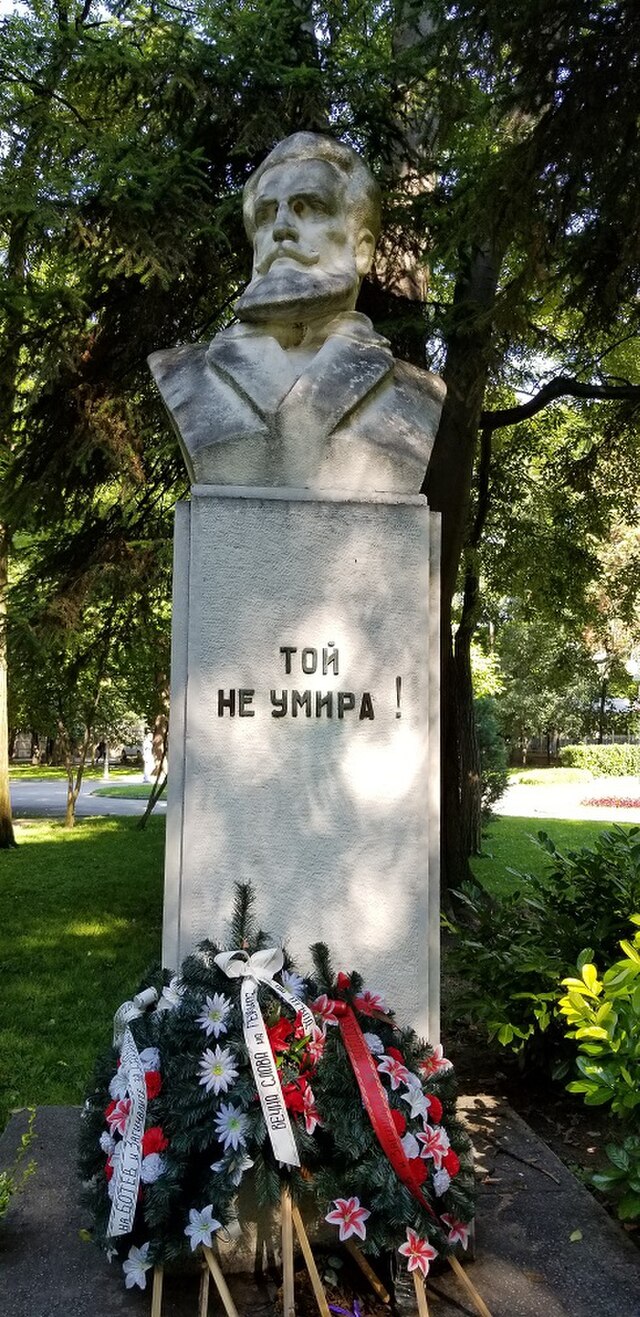

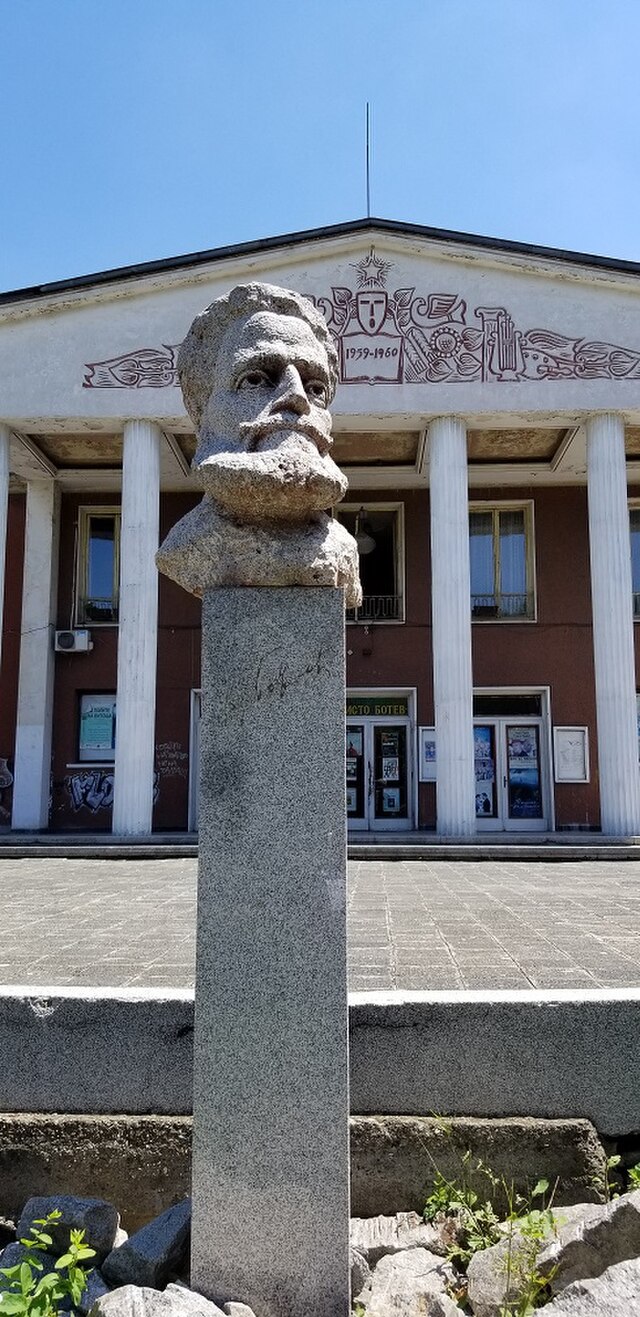


Hristo Botev, born Hristo Botyov Petkov, was a Bulgarian revolutionary, poet and publicist, regarded as a national hero and one of the leading figures of the Bulgarian National Revival. He was born on 6 January 1848, or 25 December 1847 Old Style, in Kalofer, into the family of the teacher Botyo Petkov (1815–1869) and Ivanka Boteva (1823–1911). Alternative hypotheses about his birthplace exist, but researchers now reject them. His father, Botyo Petkov, was a teacher, man of letters and public figure who studied in Odesa and compiled and translated textbooks. His mother, Ivanka, came from a modest Kalofer family. Besides Hristo Botev, they had eight other children: Ana (1850–1867), Petko (1852–1872), Stefan (1854–1890), Kiril (1856–1944), Tota (1859–1864), Genko (1861–1863), another Genko (1863–1866) and Boyan (1866–1885).
In the autumn of 1875, Hristo Botev became actively involved in the work of the Bulgarian Revolutionary Central Committee (BRCC). At the BRCC general assembly on 20–21 August 1875, he was elected one of the committee's five members. He subsequently became its secretary. In the summer of the same year, Botev completed his translation of the Russian historian Dmitry Ilovaisky's book "On the Slavic Origin of the Danubian Bulgarians". However, this period of his life was also marked by complex relationships and conflicts within the BRCC, including with Lyuben Karavelov.
In March 1875, Karavelov and Botev became embroiled in a public dispute that included the confiscation of the latest issue of the newspaper "Zname" (Flag). The causes of this conflict were varied, including accusations of cowardice, suspicions that Karavelov was receiving money from the Serbs, and personal conflicts with the domineering Natalia Karavelova.
Botev and Karavelov continued attacking one another in the press and their correspondence, calling the BRCC's effectiveness into question. In June 1875, Botev managed to buy his own printing press and continued publishing "Zname". During this period Botev also threatened Benkovski to make him carry out the order to execute Karavelov and recover the revolutionary archives, but this did not happen.
After returning to Bucharest, Botev faced various rumours about the embezzlement of public funds. He left the BRCC on 30 September 1875 and did not participate in its activities after the failure of the Stara Zagora Uprising. This period was also overshadowed by rumours and discontent within the Bulgarian community.
After leaving the BRCC, Botev continued publishing "Zname", but family and financial pressures increased. He opened a bookshop, and his brothers began travelling around Romania and Bessarabia, selling his translated books and poems. In October 1875, Botev also printed a "Wall Calendar for 1876" featuring the poem "The Hanging of Vasil Levski".
After leaving the Bulgarian Revolutionary Central Committee (BRCC), Hristo Botev maintained private contacts with other revolutionary activists, such as Stefan Stambolov and Stoyan Zaimov. In the autumn of 1875, after the BRCC's activities had subsided, a new revolutionary group was established in Giurgiu: the Giurgiu Revolutionary Committee. This committee included Stambolov and Zaimov and undertook preparations for the forthcoming April Uprising, keeping itself separate from the activities of most BRCC members, including Hristo Botev.
In early 1876, Hristo Botev obtained a visa to travel to Belgrade and Trieste and may have visited Belgrade in February. He also obtained a Russian visa, but it is uncertain whether he actually travelled to Russia. During this period he played an active role in preparing the revolutionary detachments that were to support the uprising in Bulgaria.
The Giurgiu Committee's plans included active work inside Bulgaria, divided into four revolutionary districts, and the organisation of detachments in Romania to support the uprising. In April 1876, Panayot Hitov refused to lead the detachment for the Vratsa district, and Hristo Botev offered to take on the role himself. He met with Zimnicea, Turnu Măgurele, Corabia and Bechet and proposed that the detachment leave for Bulgaria on 5 May.
The plan was not carried out because of logistical problems, and the crossing was postponed. On 13 May, Hristo Botev arrived in Giurgiu, and on 16 May he boarded the ship "Radetzky" with part of the detachment. In the following days, the detachment faced various challenges, including the suppression of the uprising in the Panagyurishte region and intervention by outside authorities.
On 17 May, Hristo Botev received a letter from Stoyan Zaimov redirecting the detachment to continue towards Serbia. He nevertheless decided to proceed to Bulgaria and directed the ship towards Kozloduy. From there the detachment set out for Vratsa, passing through the villages of Butan and Borovan. Despite clashes with local Circassians, the detachment continued forward. On 18 May, near the village of Banitsa, it entered a more serious battle with a large group of Circassians.
On the evening of 20 May, or 1 June New Style, after the fighting had subsided, Hristo Botev was struck by a bullet and died on the spot. The location of his death and the identity of his killer have been the subject of prolonged debate. The prevailing view today is that he was shot by an Ottoman sniper. However, there are various accounts of this event.
One widely accepted version in popular historiography is that Botev was shot by an Ottoman sniper. Another, less popular version is based on the opinions of certain analysts and experts and holds that Botev was killed in a conspiracy by members of his own detachment. It is known that after landing on the Danube bank, Botev quarrelled with Apostolov and Obretenov because they had misled him about the people's readiness to rise in revolt. According to some analyses involving the distance from which the shot was fired, the light at that time of day, the terrain and the characteristics of the weapons used by the regular army, a conspiracy is more likely. Nevertheless, this theory remains less accepted in the scholarly community.
After Botev's death, his body remained unburied. When it was found by the Ottomans the following day, his head was cut off and displayed in the square in Vratsa that now bears his name.
Share:


