Revolutionary Georgi Benkovski

Revolutionary Georgi Benkovski
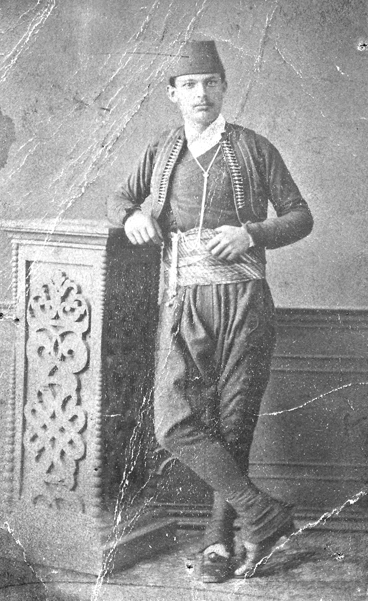
Georgi Benkovski
Georgi Benkovski was a Bulgarian revolutionary, a central figure in organising the April Uprising of 1876 and its leader in the Fourth Revolutionary District. He was born in Koprivshtitsa on 21 September 1843.
While in Bucharest, the hero met Stoyan Zaimov and became fired with enthusiasm for the revolutionary idea. The earliest information about him dates from late March 1875 in Hristo Botev's notes. During this period a scandal erupted between Botev and Karavelov over the latter's role in the Bulgarian Revolutionary Central Committee (BRCC) and the direction the committee should take. Influenced by this conflict, Hristo Botev decided that Karavelov was harmful to the revolutionary cause and should be killed. To this end, he persuaded Benkovski to carry out the execution and take the revolutionary materials. Nevertheless, reasoning that Karavelov had contributed greatly to the liberation cause, Benkovski decided not to kill him and instead handed over the revolutionary materials through a ruse, without resorting to murder.
In the summer of 1875, he joined a group of revolutionary arsonists in Constantinople with the aim of provoking unrest in the Ottoman Empire. Although they reached the capital, the plan was not carried out because of Count N. Ignatiev's intervention and Stoyan Zaimov's indecision. Here he acquired a new identity as Georgi, using the passport of a Pole named Anton Benkovski.
Benkovski then returned to Bucharest and actively participated in the formation and work of the Giurgiu Committee. In November 1875, after the decision to stage an uprising in Bulgaria in the spring of 1876, he was admitted to the committee, although until then he had been unknown in revolutionary circles. He was to play an important role in preparing the coming events, revealing his leadership qualities, courage and determination in the face of the period's challenges.
Under the Giurgiu Committee's plan, Georgi Benkovski was chosen as assistant apostle, or revolutionary organiser, of the Fourth Plovdiv Revolutionary District, centred on Panagyurishte, with Panayot Volov appointed chief apostle. Benkovski, however, quickly distinguished himself through his qualities, showing a good psychological understanding of the Bulgarian peasant's outlook. He attracted followers through his charisma, flair for display, self-confidence and oratory. Zahari Stoyanov observed that everyone said "Benkovski said this" or "Benkovski ordered that", without mentioning Volov. Gradually, Volov judged Benkovski more worthy and voluntarily relinquished leadership of the apostolic group.
From the beginning of their collaboration, Benkovski and Volov divided their activities: Volov conducted revolutionary advocacy in Karlovo, Strelcha and Koprivshtitsa, while Benkovski focused mainly on the villages of Mechka, now Oborishte, Poibrene and Muhovo, and on Panagyurishte and Pazardzhik. Benkovski quickly realised that Plovdiv had a strong Turkish garrison and moved the committee's headquarters to Panagyurishte, where a committee dating from Levski's time had been little affected by the arrests of 1872–1873.
In April 1876, Benkovski organised an assembly at Oborishte, where he received information about General Ivan Kishelski's support for the uprising. He proposed that the delegates grant special authority giving the apostles the right to lead the uprising and choose voivodes. This move provoked opposition, but Benkovski managed to overcome it and persuade the delegates to recognise his powers.
On 20 April 1876 in Koprivshtitsa, after learning of the fighting there, Benkovski proclaimed the uprising in Panagyurishte and formed a revolutionary detachment. He organised the troops and took part in battles against Ottoman forces, distinguishing himself through victories in Panagyurishte and other settlements. Benkovski's detachment played a key role in military operations during the uprising, successfully mobilising and motivating insurgents.
During April 1876, Benkovski continued leading his detachment and participated in battles, defeating Ottoman irregulars and Circassians. He actively coordinated military operations in the region while leading his detachment towards various settlements.
Share:


