Tsar George I Terter

Tsar George I Terter
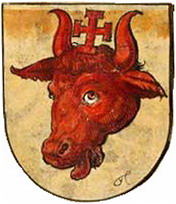
George I Terter
George I Terter, tsar of Bulgaria from 1280 to 1292, was a brother of Eltimir, despot of Kran, and was of Cuman origin. Their family, the Terteroba, was probably connected to the Cuman ruling dynasty, and Khan Köten may have been a close relative or even a direct ancestor.
George I became tsar in 1280 after the death of Tsar Ivan Asen III. In 1276, an uprising began in Bulgaria under Ivaylo against the Tatars, who were killing people and devastating the north-east of the country. Ivaylo became tsar, but after he defeated the Tatar bands, Tsar Constantine Asen regarded him as a threat. The tsar’s army was defeated, he died in battle and the regions of the empire went over to Ivaylo’s side.
Tsaritsa Maria Palaiologina Kantakouzene, who effectively governed in Tarnovo, married Ivaylo. At that time, George Terter belonged to Maria’s entourage. Despite his successes against the Byzantines, Ivaylo was attacked from the rear by the Tatars, and the Byzantines used the opportunity to restore their control. The new Byzantine ruler was Ivan Asen III, who offered George Terter his sister’s hand in marriage to secure an alliance. George Terter joined the new ruler, and he and his sister departed for Constantinople.
George Terter may have become ruler for a brief period by assuming leadership of the boyars. He nevertheless faced a difficult situation in the country: the Tatars invaded in 1285, forcing him to acknowledge himself as a vassal of Khan Nogai. In 1285–1286, Terter returned his Byzantine wife and his son to Ivan Asen III as hostages in exchange for support against the Tatars.
In 1291–1292, after another Tatar invasion, George I Terter was forced to send his heir, Theodore Svetoslav, as a hostage to the Golden Horde. This did not prevent a second Tatar attack during the same period. The situation worsened, and a palace conspiracy arose in Tarnovo, forcing George Terter to abdicate in 1292 and leave the country. He fled to Byzantium and sought refuge with Emperor Andronikos II. Byzantine sources describe the rest of George Terter’s life as sorrowful.
Share:


