Tsar Fruzhin

Tsar Fruzhin
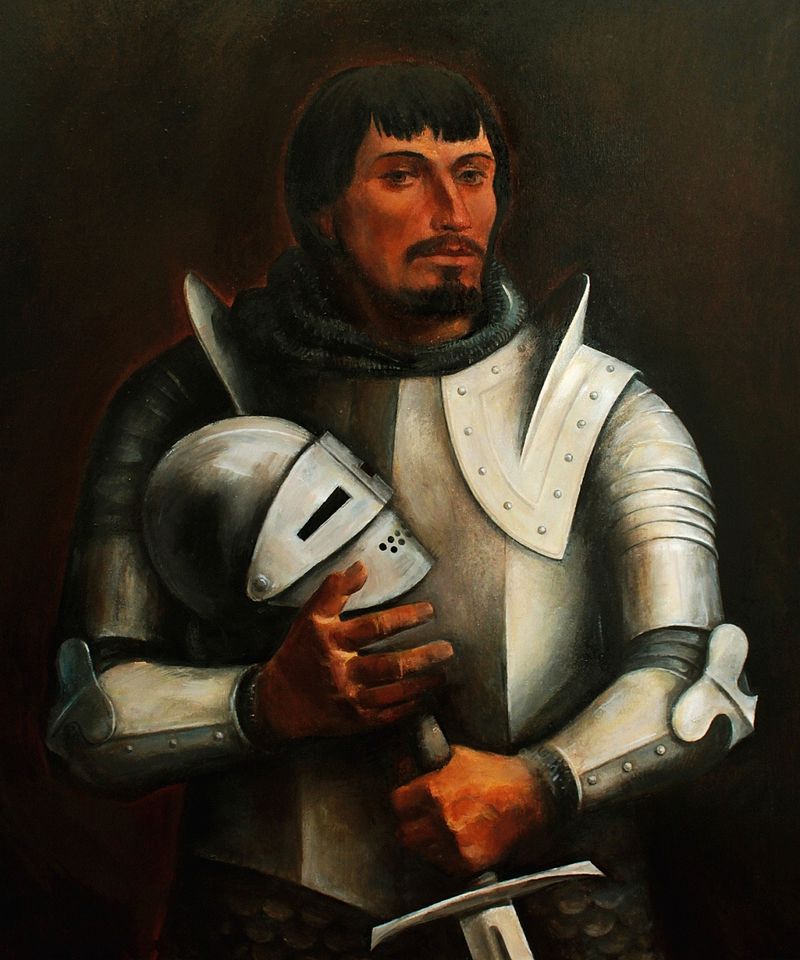
Fruzhin
Fruzhin, also known as Vladislav Fruzhin, Fruzhin Asen or Fruzhin Shishman, was a son of the last tsar of Tarnovo, Ivan Shishman. After his father's death in 1395 at the Battle of Nikopol and his elder brother Alexander Shishman's entry into Ottoman service in Asia Minor, Fruzhin returned to Bulgaria and found refuge in Vidin with his uncle Sratsimir and cousin Constantine.
After the Nicopolis Crusade in 1396, Fruzhin went into exile in Hungary, where he became a vassal of the Hungarian emperor Sigismund and joined the Order of the Dragon. Around 1408–1413, together with his cousin Constantine, he organised anti-Ottoman action in north-western Bulgaria, receiving support from Hungary and Serbia, although without significant success.
In 1425, in cooperation with the Wallachian voivode Dan II and the Hungarian commander Filippo Scolari, Fruzhin took part in a campaign against the Ottomans and briefly captured Silistra. The following year, 1426, he, Scolari and Dan II temporarily controlled Vidin. For his bravery in the battle for the fortress of "Lipa", now the town of Lipova, Fruzhin received recognition from Emperor Sigismund. Later he also owned the "Maxond" estate within the empire ruled by Sigismund.
In May–June 1435, Fruzhin was sent on a diplomatic mission to Albania as an ambassador to the Albanian ruler George Arianiti Komnenos, who was fighting the Ottomans. During this period he used Bulgarian in the negotiations. Despite his efforts, the crusade of 1444, in which Fruzhin participated, ended in defeat at Varna. This failure led to a campaign against Fruzhin, and in 1454 his estates in Maxond were confiscated and granted to the ban of Severin, Jacob Pongrác. An Ottoman register from 1454/1455 mentions a prince named Fruzhin who governed the lands between Svrljig and Pirot.
A legend relates that Fruzhin later became a monk at Chiprovtsi Monastery and died in Brașov, Transylvania, in 1460.
Share:


