Revolutionary Atanas Uzunov

Revolutionary Atanas Uzunov
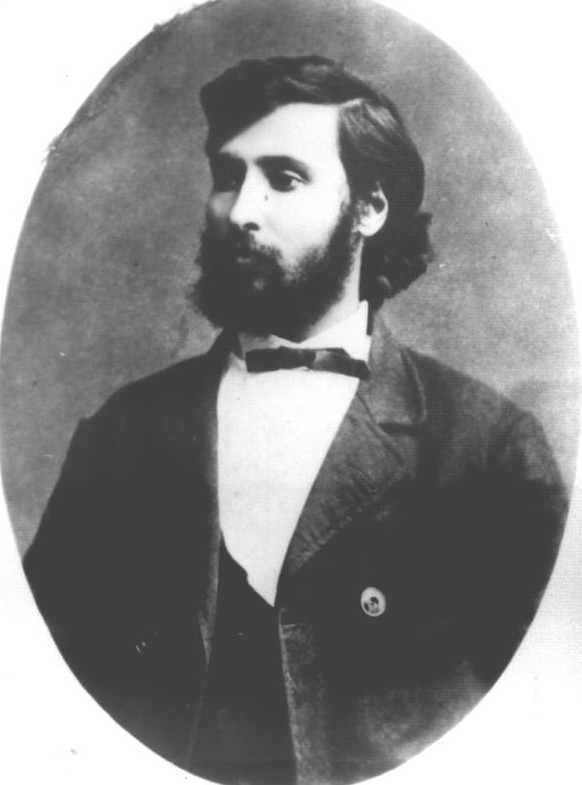
Atanas Uzunov
Atanas Tsvyatkov Uzunov was born in 1851 in Adrianople into the family of the Koprivshtitsa notable Tsvyatko Uzunov. He was a brother of Anastasia Zhelyazkova. In 1856 the family moved to Constantinople, where young Atanas attended Greek and French schools until 1865. He then completed secondary school in Mykolaiv between 1865 and 1871.
After completing his education, he returned to Bulgaria and began teaching in Sliven in 1872. There he established contact with Vasil Levski and took over the leadership of revolutionary activity in the region after the Apostle's death. The Bulgarian Revolutionary Committee (BRCC) elected him as Vasil Levski's replacement and leader of the Internal Revolutionary Organisation (IRO). He used the pseudonyms Tsvyatko Kradlekov, Dalgiyat, Ivan Konokradev, Buyuklyu Kara Mustafa and Georgi Argidiadis.
His activities at this time attracted the attention of Stoyan Zaimov, Mincho Kanchev, Zahari Stoyanov and others. After an attempted assassination of the Haskovo notable Hadzhi Stavri Primo in 1873, Atanas Uzunov was arrested and sentenced to 15 years of penal labour in the Ergani Maden mines in Diyarbakır. In 1874 he became a teacher at the Greek school there.
In 1876, following a brief escape, he left Odesa via Jerusalem, Jaffa and Constantinople, arriving in Odesa. He settled as a teacher in Oryol, Russia.
He served as an interpreter in the Russo-Turkish War of 1877–1878. After the war he was appointed district governor of Lozengrad in 1878 and subsequently worked as an official in Sliven.
Uzunov was selected to teach at the Sofia Classical Secondary School in 1879–1881 and in Lovech in 1882–1884. In 1886–1887 he was elected a parliamentary deputy as a supporter of the Liberal Party.
After the Russophile revolts of 1887, he emigrated to Russia and lived on his wife's estate. In 1904 he was appointed to state service, this time as an inspector at the Bulgarian Exarchate in Constantinople, serving from 1904 to 1906. He subsequently spent his final days in Sofia, where he died on 26 June 1907.
Share:


