Revolutionary Anton Dimitrov

Revolutionary Anton Dimitrov
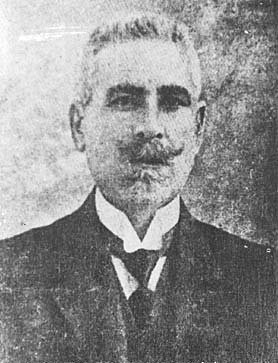
Anton Dimitrov
Anton (Andon) Dimitrov Filahtechev, known by the pseudonyms Karata and Patnik, was a Bulgarian revolutionary and one of the founders of the Internal Macedonian-Adrianople Revolutionary Organisation (IMARO). Born in 1867 in the village of Ayvatovo, then in the Ottoman Empire, he contributed significantly to the struggle to free the Bulgarian lands from Ottoman rule.
In 1889 he graduated from the Bulgarian Boys' Secondary School in Thessaloniki and studied law at the higher school in Constantinople, but did not complete his education because of illness. After returning to Thessaloniki, he taught Turkish at the Bulgarian Boys' Secondary School and Bulgarian at the Turkish secondary school in the same city.
In 1893, with Dr Hristo Tatarchev, Dame Gruev, Ivan Hadzhinikolov, Petar Poparsov and Hristo Batandzhiev, Anton Dimitrov participated in founding the Internal Macedonian-Adrianople Revolutionary Organisation (IMARO). In 1896 he was re-elected at the organisation's Thessaloniki Congress.
In 1903 he took the post of headmaster of the Bulgarian Boys' Class School in Prilep and taught Bulgarian in Bitola. In 1904 he was elected a member-judge of the Bitola Court of Appeal.
In 1908, after the Young Turk Revolution, Anton Dimitrov mediated contact between the Young Turk Committee and IMARO's Bitola detachment leader, Milan Matov.
After the First World War, in which he participated alongside his compatriots, Anton Dimitrov returned to Bulgaria. In 1920 he became chairman of the Executive Committee of the Macedonian Brotherhoods in Bulgaria and helped arrange secret negotiations between Bulgaria and the Ottoman Empire over autonomy for Macedonia.
In 1933, suffering from a serious illness, Anton Dimitrov Filahtechev took his own life in Sofia.
He was an important figure in the history of the Bulgarian revolutionary movement and the struggle to liberate Macedonia from Ottoman rule.
Share:


