Woodcarving

Woodcarving
Woodcarving
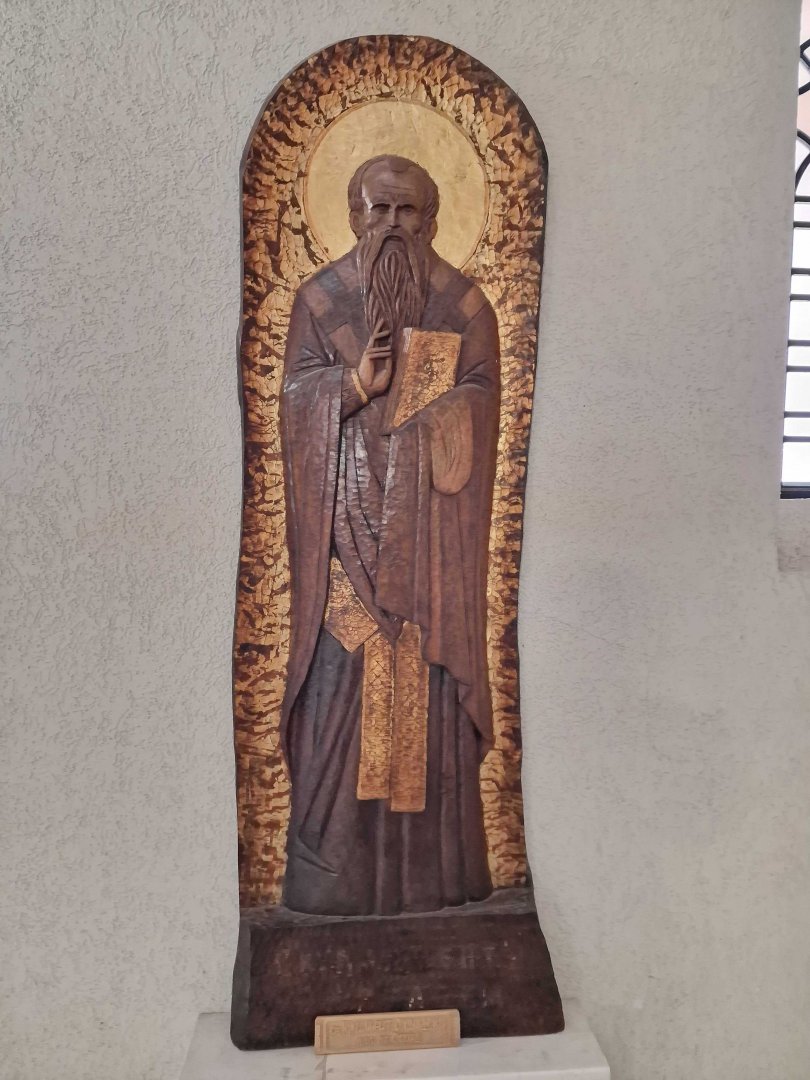
Woodcarving is the working of timber by cutting or carving various decorative motifs and images. The term also refers to the work produced by this creative process.
This form of handicraft has been known since the Neolithic period, when sharp flint stones were used as tools. In the early 13th century, woodcarving developed under the influence of Italian funerary sculpture. In Bulgaria, the craft was already known to the ancient Slavs and later absorbed influences from Byzantine, Roman, Muslim and Russian carving. It reached its height in the 18th and 19th centuries, when crafts and architecture expanded in Bulgaria.
Woodcarving appears in church architecture—in iconostases, pulpits and carved church doors—and in domestic life, in carved ceilings, furniture, chests, wooden utensils, walking sticks and other objects. Characteristic decorative motifs include figurative compositions, interlacing patterns, arabesques, plant designs such as rosettes, sunflowers, vines, oak leaves and the tree of life, and animal images such as lions’ heads, griffins, snakes, eagles, peacocks and nightingales.
Woodcarving also produces church utensils: prosphora seals and altar crosses with miniature depictions of biblical scenes and saints’ lives. The richest collections of these crosses are found at Rila Monastery.
In today’s technological world, woodcarvings can be produced by computer-controlled machines offering greater productivity and precision. Nevertheless, handcrafting retains its place, preserving traditions and conveying the distinctive character of Bulgarian woodcarving. During the Bulgarian National Revival, various carving schools emerged, including those of Debar, Bansko, Samokov, Tryavna and Kalofer. After the Liberation, woodcarving underwent changes, turning towards small objects such as cigarette cases and album boxes.
Share:


