Kazaz silk and wool passementerie

Kazaz silk and wool passementerie
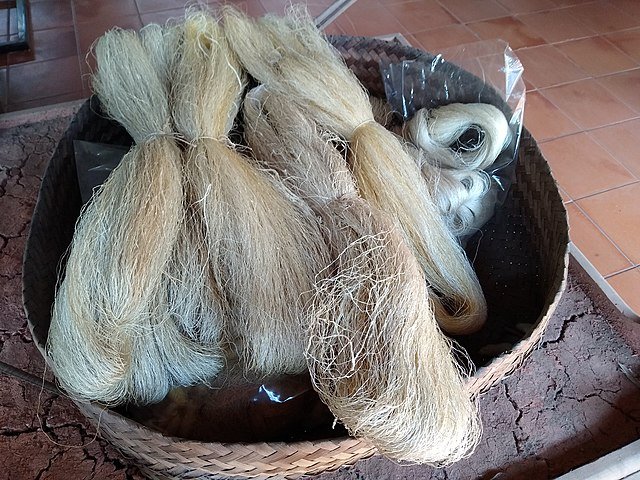
Kazaz silk and wool passementerie
Kazaz passementerie, an artistic craft, played an exceptionally important role in Tryavna's economy alongside woodcarving and icon painting. Its name comes from the Turkish word kazaz, meaning a worker of raw silk. The craft is thought to have been introduced to Tryavna in the late seventeenth century by the Krosnevtsi family, who had learnt it in Edirne. Over time, the Turkish word kazaz became kazas, giving rise to the Bulgarian terms kazasi for its practitioners and kazaslak for the craft.
Tryavna's kazaz craftsmen specialised in making various ornaments by hand: horse trappings known as takami, tasselled ties for the poturi trousers worn by chorbadzhii, and braided edging for traditional Bulgarian clothing. They also made fez tassels, women's belts, watch cords, aiguillettes and belts for officers, guards and others. To make these distinctive items, they used soft white wool, mainly from Dobrudja or the Karnobat area. Linen, cotton or silk yarn was used for finer braiding or weaving. The craftsmen themselves selected the wool, silk and flax and dyed them with lasting plant dyes prepared together with icon painters. After washing the materials several times and drying them in the sun to ensure the colours would hold, they began making the items. Some were accomplished dyers, including members of the Krosnevski family such as Nikola Ts. Donina.
The availability of two main raw materials, wool and silk, was essential to the craft's development in Tryavna. In 1860, about 60 families made their living from it. Like icon painting, it employed people aged from 6 to 80 and played a significant role in the local economy. Despite this success, the market for the work of Tryavna's kazaz craftsmen gradually declined towards the end of the century.
Although the craft belongs to the past, its cultural heritage lives on in museum collections. The richest and most authentic collection is held at the Specialised Museum of Woodcarving and Icon Painting in Tryavna, where visitors can see fine handmade ornaments and textiles made from silk and woollen threads. The objects demonstrate the highly developed skills of Tryavna's craftspeople and illustrate the entire process, from selecting and dyeing the raw materials to the finished work.
Individual exhibits can also be found at the National Ethnographic Museum of the Bulgarian Academy of Sciences and the Regional Ethnographic Museum in Plovdiv, where they form part of broader displays devoted to traditional Bulgarian crafts. Though almost forgotten today, this craft remains a vivid expression of Bulgarian National Revival cultural identity and a testament to the sense of beauty with which the old masters lived and worked.
Share:


