Dairy processing

Dairy processing
Dairy processing
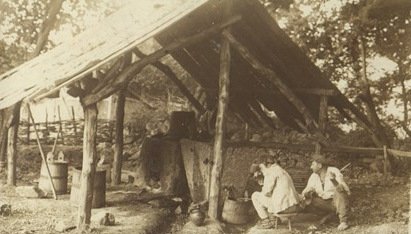
In the nineteenth century, livestock farming played a central role in the livelihoods of the people of Toplesh, a village near the Balkan Mountains. These mountain dwellers, known as balkandzhii, benefited from abundant woodland pasture, water and natural meadows that supported sheep rearing. Mountain dairies were spacious, two-sided buildings situated in the mountains. They served shepherds who kept sheep on summer pasture and milked them. Their equipment included copper cauldrons, wooden vats, troughs, milking pails, milk churns, cloth strainers and other utensils. Milk was collected at the dairies and processed into products such as white brined cheese, kashkaval cheese, butter and curd cheese. The dairy exhibited in the museum displays tools and vessels used to milk sheep and goats, process the milk and store the resulting dairy products. Wooden stirring implements stand near the hearth. Copper cauldrons of different sizes, wooden vats and pails sit on the floor. Milk churns of various capacities, an iron weighing scale and a plunger for churning milk are also displayed. A low table called a paraliya and three-legged stools are arranged for the dairy workers and shepherds to eat at. An earthenware bowl and wooden spoons lie on the table. On the other side are a wooden chest for storing cheese and two wooden worktops needed to prepare dairy products. This mountain dairy in the museum is a reconstruction of a late nineteenth-century dairy from Toplesh.
Share:


