The Landing at Ryahovo

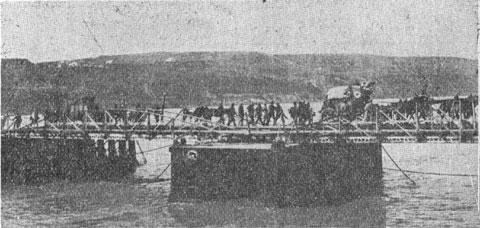
The Landing at Ryahovo
In early September 1916, only days after Romania joined the war on the Entente side, Bulgarian troops successively captured Dobrich, Tutrakan and Silistra, recovering territories taken by Romania during the Second Balkan War. The Bulgarian advance was halted on 19 September at the First Battle of Cobadin.
Strategic plan of the Flămânda offensive (map in Romanian)
In these circumstances, General Alexandru Averescu, newly appointed commander of Romania's Southern Army Group, devised a major counteroffensive. The plan combined an advance at Cobadin by General Zayonchkovsky's Dobruja Army, intended to engage the enemy's main forces, with a Danube crossing by units of the Romanian Third Army deep in the rear of Mackensen's Army Group. If the landing succeeded, the ultimate objective was to defeat the Bulgarian-Turkish-German forces and regain Dobruja. In the event of only partial success, the aim was to establish a permanent bridgehead on the Danube's right bank, strengthening Romanian defence at Cobadin and along the river.
Three infantry divisions, the 10th, 21st and 22nd, were assigned to the landing, with the stretch between Flămânda on the Romanian bank and Ryahovo on the Bulgarian bank selected for the crossing. Installing obstacles against the Austrian river flotilla based near Belene, building a road and transporting troops and equipment through the marshes around Flămânda took twelve days. Meanwhile, on 26 September, the Central Powers began their Carpathian offensive against Romania with Falkenhayn's Army Group.
The battle ended in a Central Powers victory.
Share:


