Battle of Telish

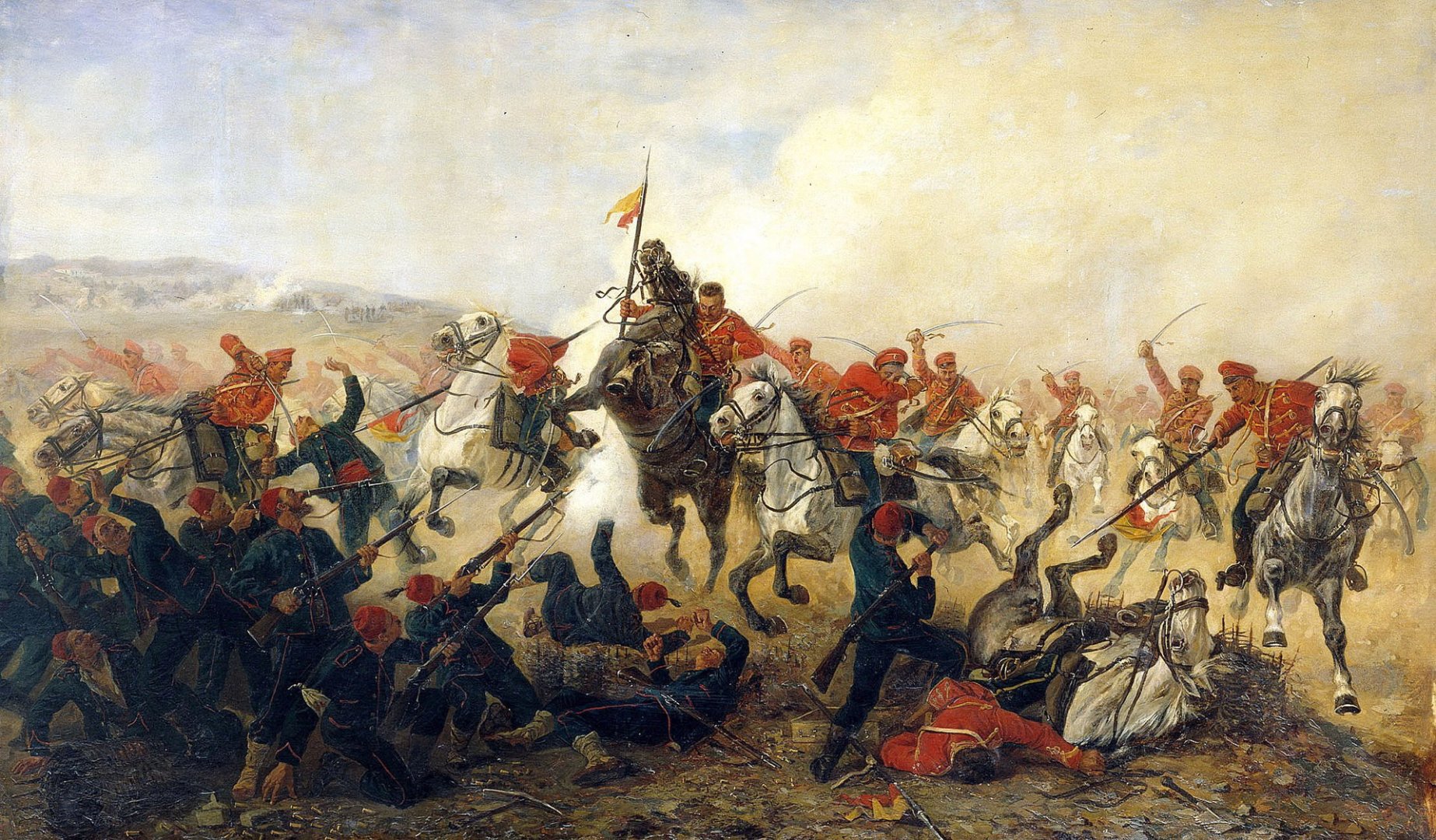


Battle of Telish
The Battle of Telish was a Russian operation to sever the Ottoman Western Army's communications and supply line and complete the encirclement of Pleven during the Russo-Turkish War of 1877–1878.
In early October 1877, the Ottoman garrison at Pleven began building strong fortifications to hold the road to Sofia. Positions at the bridge over the River Vit and the villages of Dolni Dabnik, Gorni Dabnik and Telish were held by substantial garrisons tasked with protecting the town's supply routes.
The Russian plan aimed to cut Osman Pasha's supply lines. On 11 October, Lieutenant General Iosif Gurko decided to capture the strategically important village of Gorni Dabnik. Other detachments were assigned diversionary demonstrations, while Pleven was to receive a heavy artillery bombardment.
Reconnaissance of the Telish fortifications on 11 October produced insufficient information for planning. The enemy's strength and the terrain were poorly understood, leaving the attacking regiments without adequate instructions. Gurko nevertheless considered the task straightforward and intended his detachment to entrench after taking Telish.
The detachments assembled at Svinarski Dol on 12 October and began advancing at about 08:00. The Life Guards Dragoon Regiment covered the attack from the direction of Radomirtsi, watching for approaching enemy forces. The Life Guards Hussar Regiment covered the deployment of the Life Guards Jaeger Regiment for the main attack. Two Jaeger battalions advanced and captured the forward entrenchments. Their assault on the main redoubt was halted 50 paces from the parapet and called off at about 14:00. Under cover of the two cavalry regiments, the troops gradually withdrew to their starting positions.
The attack failed, leaving hundreds of Russians killed or wounded, but it achieved its tactical purpose: the Telish garrison could not help Gorni Dabnik, which surrendered that night. Colonel Alexei Chelishchev was criticised for inadequate reconnaissance and committing insufficient forces. In fact, Telish proved more strongly fortified than Gorni Dabnik, yet was attacked by fewer infantry.
To consolidate the capture of Gorni Dabnik, the Telish garrison also had to be defeated. A second attack was scheduled for 16 October, relying on artillery to avoid further casualties and support the main effort.
On 16 October, seventy-two guns formed a semicircle around the Telish garrison and opened intense fire. After a heavy bombardment, firing stopped at 14:00. Gurko gave Turkish prisoners a letter offering the garrison surrender terms. The offer was accepted: 150 officers and 3,700 soldiers surrendered with four guns. The second attack thus brought minimal Russian casualties and heavy Ottoman losses.
Taking Telish finally severed Osman Pasha's communications and supply line and completed the blockade of Pleven. Russian forces could then release units for advances towards other strategic points, strengthening their position in the region.
Share:


