The Uprising of the Cometopuli

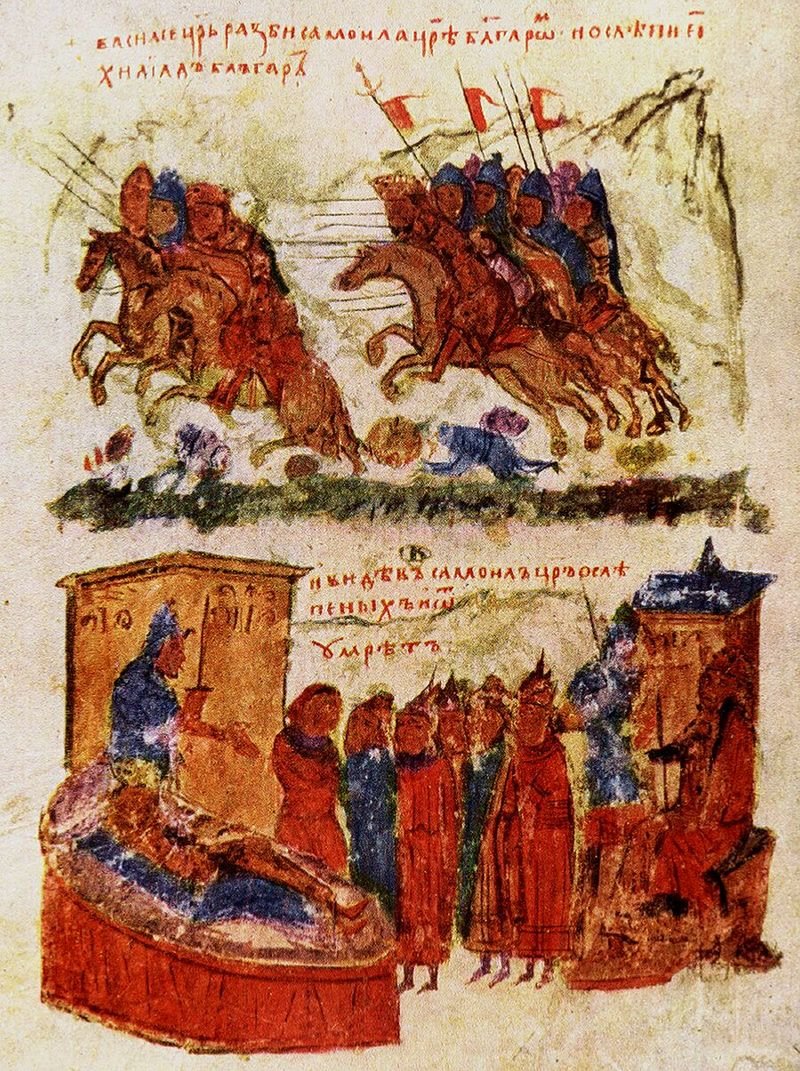
The Uprising of the Cometopuli
The uprising of the Cometopuli was a movement against Byzantium that developed between 969 and 976 in the south-western reaches of the First Bulgarian Empire. It was prompted by the Rus' invasion along the Lower Danube and the Byzantine conquest of eastern Bulgaria in 968–971, gaining strength after the death of the Byzantine emperor John I Tzimiskes in 976. The uprising paved the way for Tsar Samuel's rise and his decades of warfare against Tzimiskes' successor, Basil II.
The uprising established the Cometopuli—David, Moses, Aaron and Samuel—as leading figures in the region. They restored Bulgarian state institutions and governed part of western Bulgaria. It also led to prolonged wars with Byzantium. Basil II launched numerous campaigns against the Bulgarians, but encountered resistance, including at the Battle of the Gates of Trajan in 986, where the Byzantines were defeated. During these wars, following Samuel's military successes against Byzantium, a Bulgarian empire emerged with Ohrid as one of its important centres.
The uprising restored Bulgarian state institutions and established a Bulgarian empire centred on Ohrid. This can be regarded as a success in restoring independence and government of the region by Bulgarian rulers.
The uprising of the Cometopuli did not achieve a final strategic victory, as the Byzantines gradually regained control of the territories. Nevertheless, the movement played an important role in the region's history and remains a symbol of resistance and national awakening.
Share:


