The Macedonian Committee's Armed Expedition

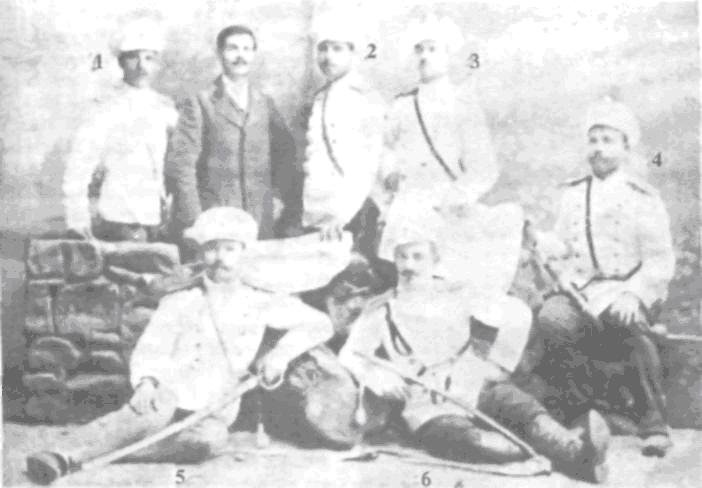
The Macedonian Committee's Armed Expedition
The armed expedition was a planned attack by the Macedonian Committee between June and August 1895. Its aim was to provoke a popular uprising in Ottoman-ruled Macedonia and draw the Great Powers' attention to the failure to implement Articles 23 and 62 of the Treaty of Berlin, which promised reforms in European Turkey.
The decision was taken at the First Macedonian Congress in Sofia in March 1895, when the Macedonian Organisation was established under the Macedonian Committee. The operation was planned and carried out with the knowledge of Konstantin Stoilov's government and Prince Ferdinand I. The committee hoped to exploit the Ottoman Empire's poor reputation in Europe following the Armenian massacres. Bulgaria's Ministry of War supplied weapons and ammunition.
For Bulgarian foreign policy, the expedition was a success. It demonstrated to the Ottoman Empire that Sofia controlled the Macedonian revolutionary movement and could use it if the Ottomans continued to refuse recognition of the Bulgarian ruler's legitimacy, permits for Bulgarian bishops and administrative reforms. Bulgaria's prestige increased, helping restore Bulgarian-Russian relations.
For the Macedonian Committee, however, the expedition was a clear failure that provoked disagreements within the organisation. The Ottoman government exploited the deeds of the bandit voivodes, conducted an investigation in Dospat and circulated exaggerated accounts of Bulgarian atrocities in the European press. The Great Powers did not respond as expected to the raising of the Macedonian Question. Instead of pressuring the Ottoman Empire, they pressured the Bulgarian government, which had to instruct district governors to prevent the formation of detachments for Macedonia and the Edirne region. The Sublime Porte issued an imperial decree for reforms in the European vilayets, but these were cosmetic and remained on paper.
Romania used the expedition as a reason to dissolve Macedonian associations and restrict Bulgarian public and cultural institutions in the country.
The expedition is considered a success for Bulgarian foreign policy because it demonstrated to the Ottoman Empire that Sofia controlled the Macedonian revolutionary movement and could use it to achieve particular objectives. This success signalled Bulgaria's ability to manage and control the situation in Macedonia as a negotiating instrument. Bulgaria increased its regional prestige and improved relations with Russia.
For the Macedonian Committee, on the other hand, the expedition was a clear failure, causing internal disagreements. The Ottoman government exploited the actions of bandit voivodes and conducted an investigation in Dospat, using alleged Bulgarian atrocities to circulate exaggerated information in the European press. Although the Macedonian Question concerned the Great Powers, they did not respond in a way that would satisfy the expectations of the Bulgarian government, which was pressuring the Ottoman Empire. Instead, they pressured the Bulgarian government to prevent the formation of detachments in Macedonia and the Edirne region. The Sublime Porte issued an imperial decree for reforms in the European vilayets, but these proved cosmetic and failed to address the population's real problems.
Romania used the expedition to dissolve Macedonian associations and restrict Bulgarian public and cultural institutions, further complicating the regional situation.
Share:


